Yadav at COP31: Resilience Is Investment, Not a Cost
Synopsis
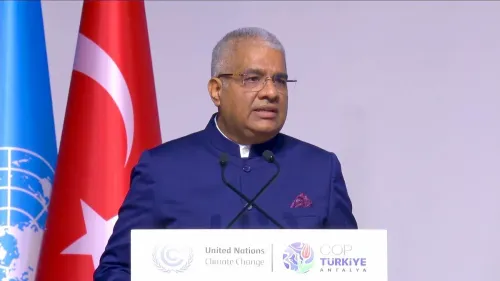
Union Environment Minister Bhupender Yadav participated in the CDRI Ministerial Dialogue at COP31 in Antalya, Türkiye, arguing that resilience spending must be reframed as a development investment rather than an additional cost, reinforcing India's leadership of the Modi-launched coalition.
Key Takeaways
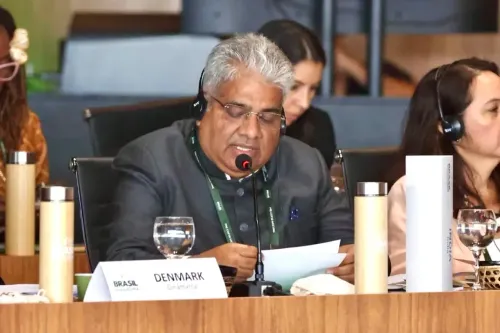
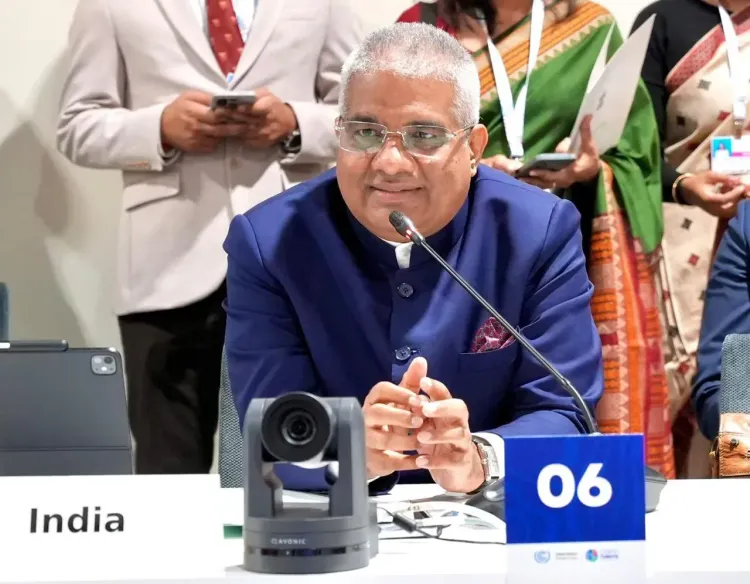
Bhupender Yadav represented India at the CDRI Ministerial Dialogue on the sidelines of COP31 in Antalya, Türkiye on 18 November 2026 .
His central argument: resilience must be treated as an investment in lasting development , not an additional cost.
CDRI was launched by PM Narendra Modi at the UN Climate Action Summit in New York in September 2019 .
The coalition facilitates South-South cooperation on infrastructure standards and disaster risk exchange among member nations.
India has consistently linked domestic disaster-management reforms with international resilience coalitions across successive COP meetings.
Progress on CDRI-funded pilot projects and potential new member countries remain the key deliverables to watch from the Antalya dialogue.
When nations haggle over adaptation finance at climate summits, the numbers can blur into abstraction — but Union Environment Minister Bhupender Yadav arrived at the CDRI Ministerial Dialogue on the sidelines of COP31 in Antalya, Türkiye, on Wednesday, 18 November 2026, with a sharply reframed argument: resilience is not a line item to be trimmed — it is the investment that makes every other development dollar last.
India's CDRI pitch in Antalya
Speaking at the dialogue, Minister Yadav pushed back against the prevailing tendency to treat disaster-resilient infrastructure as an optional upgrade bolted onto development projects after the fact. His core message: 'We must move beyond treating resilience as an additional cost — it constitutes an investment in protecting development, reducing future losses and ensuring that public resources deliver lasting benefits.'
The forum itself is India's creation. The Coalition for Disaster Resilient Infrastructure (CDRI) was launched by Prime Minister Narendra Modi at the UN Climate Action Summit in New York in September 2019, making it one of the most visible institutional expressions of India's post-Paris climate diplomacy. Yadav underscored that lineage, noting CDRI demonstrates 'that countries can come together to address shared risks, exchange expertise and develop practical approaches to strengthening infrastructure resilience.'
Why CDRI matters beyond the summit circuit
CDRI's value proposition is deceptively practical. Rather than operating as another pledging platform, it functions as a technical exchange — connecting infrastructure ministries and disaster-management agencies across disaster-prone nations with shared standards, pilot projects, and risk metrics. India has consistently positioned it as a vehicle for South-South cooperation, bridging the gap between UNFCCC commitments and the unglamorous engineering work of making roads, power grids, and hospitals actually survive the next cyclone or flood.
That framing matters at COP31. Adaptation finance has long been the stepchild of climate negotiations — chronically underfunded relative to mitigation pledges, and harder to sell politically because the payoff is losses avoided rather than megawatts generated. By recasting resilience spending as a fiscal efficiency argument — public resources that 'deliver lasting benefits' — Yadav is offering developed and developing nations alike a language that moves the conversation out of the charity frame and into the investment thesis.
India's climate-diplomacy arc at successive COPs
This appearance fits a recognisable pattern. Successive Indian governments have linked domestic disaster-management reforms — from updated building codes to early-warning systems — with international coalitions, using each COP cycle to demonstrate that adaptation is not passive but architecturally designed. CDRI membership and pilot projects have expanded incrementally since 2019, and ministerial-level dialogues like the one in Antalya are the mechanism through which new member countries and funded initiatives are signalled, even if formal announcements follow later.
The question now is whether the Antalya dialogue moves the needle on CDRI-funded pilots and attracts new sovereign members willing to embed resilience standards into their national infrastructure pipelines — the unglamorous metric that separates a coalition from a communiqué.
Point of View
A recast designed to widen the coalition of willing funders beyond traditional development donors. CDRI has been India's most institutionally durable climate-leadership asset since 2019, and each ministerial dialogue is an opportunity to deepen its technical credibility over its symbolic origins. The broader arc here is India's effort to shape adaptation architecture at the UNFCCC level, not merely respond to it — a posture that becomes more consequential as extreme-weather losses mount globally. Whether Antalya yields concrete new commitments or remains a signalling exercise will determine how much diplomatic capital the Modi government can extract from its CDRI investment.
NationPress
18 Nov 2026
Frequently Asked Questions
What is CDRI and who founded it?
The Coalition for Disaster Resilient Infrastructure (CDRI) is an India-led international partnership that helps countries build infrastructure capable of withstanding climate and disaster risks. It was launched by Prime Minister Narendra Modi at the UN Climate Action Summit in New York in September 2019.
What did Bhupender Yadav say at COP31 in Antalya?
Minister Bhupender Yadav argued that resilience must not be treated as an additional cost but as an investment that protects development, reduces future losses, and ensures public resources deliver lasting benefits.
Where is COP31 being held in 2026?
COP31 is being held in Antalya, Türkiye, in November 2026.
What does CDRI actually do for member countries?
CDRI connects infrastructure ministries and disaster-management agencies across member nations, facilitating technical exchanges, shared resilience standards, and pilot projects to make critical infrastructure — roads, power grids, hospitals — better able to survive extreme weather events.
How does India benefit from leading CDRI?
CDRI strengthens India's standing in global climate diplomacy by positioning it as an architect of adaptation architecture, not merely a recipient of climate finance, while also helping domestically align building standards and disaster management reforms with internationally recognised resilience benchmarks.