Haryana cabinet clears online transfer policy, expands women's panel
Synopsis
Haryana's cabinet quietly overhauled how government employees get transferred — slashing age weightage from 75% to 25%, introducing cadre experience as a new criterion, and doubling hardship factor weight to 50%. Combined with an expanded Women's Commission and a resolution to a years-old colony mapping dispute, Monday's decisions mark one of the Saini government's most substantive administrative resets.
Key Takeaways
Haryana Cabinet approved the Model Online Transfer Policy (MOTP) and Teachers Transfer Policy (TTP) on 22 June 2026 under CM Nayab Singh Saini .
Transfer scoring now uses a 120-point composite framework ; age weightage cut from 75% to 25% .
New 'Experience in Cadre' parameter introduced at 25% weightage ; hardship factors doubled to 50% .
Employees within one year of superannuation cannot be transferred without written consent.
Recognised debilitating diseases expanded to include muscular dystrophy , Behçet disease , and select organ transplant cases.
Haryana State Commission for Women non-official members increased from 5 to 7 via a 2026 ordinance.
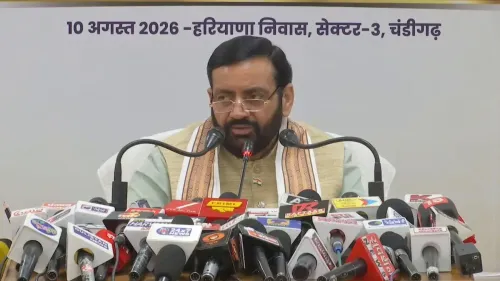
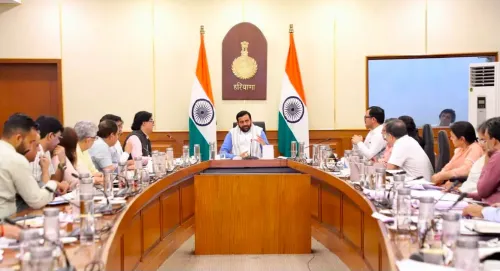
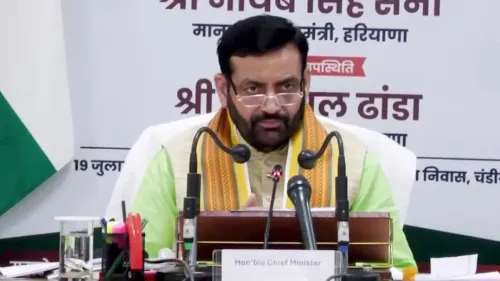
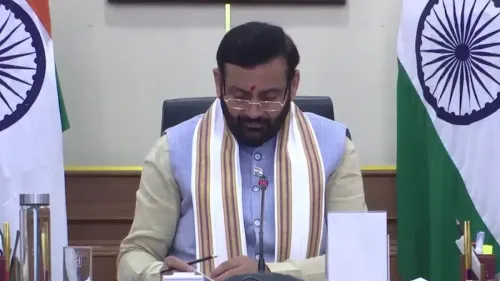
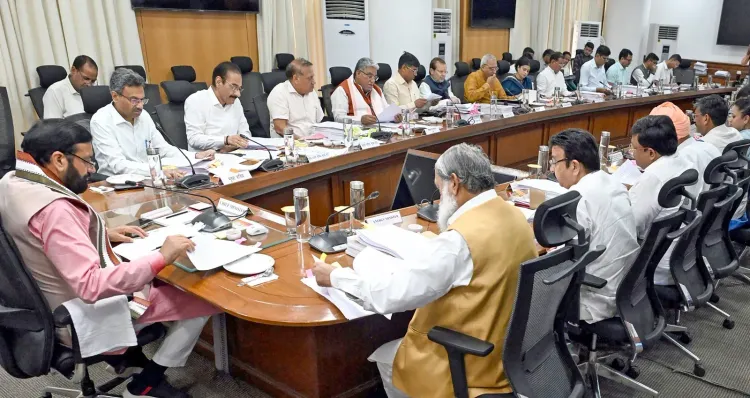
The Haryana Cabinet, chaired by Chief Minister Nayab Singh Saini, on Monday, 22 June approved two landmark workforce management reforms — the Model Online Transfer Policy (MOTP) and the Teachers Transfer Policy (TTP) — aimed at optimising human resource deployment, improving employee satisfaction, and strengthening public service delivery across the state.
Key Changes to the Transfer Scoring Framework
Under the revised system, employee ranking for transfer purposes will be governed by a 120-point composite scoring framework. The weightage assigned to age has been sharply reduced — from 75 per cent to 25 per cent — addressing long-standing concerns that the older system disproportionately favoured seniority over service conditions.
A new parameter, 'Experience in Cadre', has been introduced with a 25 per cent weightage, recognising domain depth as a transfer criterion for the first time. Special hardship factors have been more than doubled, rising from 25 to 50 per cent, giving significantly greater consideration to employees facing genuine personal difficulties.
Protections for Employees with Health Conditions
The list of recognised debilitating diseases eligible for transfer relief has been expanded to include muscular dystrophy, Behçet disease, and specified organ transplant cases — including pancreas and bone marrow transplants. Critically, no employee or teacher within one year of superannuation will be transferred without explicit written consent, a safeguard that did not exist under the previous framework.
Yamuna Nagar and Jagadhari Colony Dispute Addressed
The Cabinet also approved directions to resolve a long-pending mapping dispute affecting colonies under the Municipal Council of Yamuna Nagar and Jagadhari, where buildings were regularised in 1996. The issue emerged in 2021–22 when the Urban Local Bodies Department launched an online no-dues certificate portal integrated with GIS-mapped property data.
Colonies regularised before 2005 lacked authentic layout plans and 'khasra' details, making accurate GIS mapping impossible. As a result, vacant or unmapped plots were automatically classified as 'unapproved,' creating administrative and legal complications for residents. The Cabinet's directions are expected to resolve this classification anomaly.
Women's Commission Expanded
In a separate decision, the Cabinet approved the promulgation of the Haryana State Commission for Women (Amendment) Ordinance, 2026, amending Section 3(2)(b) of the Haryana State Commission for Women Act, 2012. The amendment increases the number of non-official members on the commission from five to seven, expanding its representative capacity and institutional reach.
Together, these decisions signal a broader push by the Saini government to modernise administrative processes and strengthen gender-focused governance institutions. Implementation timelines for the transfer policies are expected to be announced in the coming weeks.
Point of View
Field-experienced employees in Haryana's bureaucracy. Introducing cadre experience as a formal criterion is a structural correction, but its impact will depend entirely on how 'experience' is defined and audited. The doubling of hardship factors to 50% is progressive on paper, yet without a robust verification mechanism, it risks becoming a new avenue for influence-peddling in transfer decisions. The Women's Commission expansion is incremental — two additional non-official members do not transform institutional capacity — but it signals political intent ahead of what is expected to be a competitive electoral cycle in Haryana.
NationPress
21 Sept 2026
Frequently Asked Questions
What is the Haryana Model Online Transfer Policy (MOTP)?
The MOTP is a newly approved transfer framework for Haryana government employees, using a 120-point composite scoring system to determine transfer eligibility. It replaces the older system by reducing age weightage, introducing cadre experience as a criterion, and doubling the weight given to employee hardship factors.
How does the new 120-point transfer scoring system work?
Under the revised framework, age now carries 25% weightage (down from 75%), 'Experience in Cadre' carries 25%, and special hardship factors carry 50%. The system is designed to balance seniority with service conditions and genuine personal difficulties.
Who is protected from transfers under the new Haryana policy?
Employees or teachers within one year of superannuation cannot be transferred without explicit written consent under the new policy. Additionally, employees with recognised debilitating diseases — now expanded to include muscular dystrophy, Behçet disease, and certain organ transplant cases — receive special consideration.
What is the Haryana State Commission for Women Amendment Ordinance 2026?
It is an ordinance amending Section 3(2)(b) of the Haryana State Commission for Women Act, 2012, increasing the number of non-official members on the commission from five to seven. The change expands the commission's representative capacity.
What is the Yamuna Nagar and Jagadhari colony issue that the Cabinet resolved?
Buildings in colonies under the Municipal Council of Yamuna Nagar and Jagadhari were regularised in 1996, but a GIS-mapping exercise launched in 2021–22 could not accurately map plots in colonies regularised before 2005 due to missing layout plans and khasra details. This caused vacant or unmapped plots to be auto-classified as 'unapproved.' The Cabinet's directions are intended to fix this misclassification.