Haryana CMO marks World Stroke Day, flags district hospital care
Synopsis
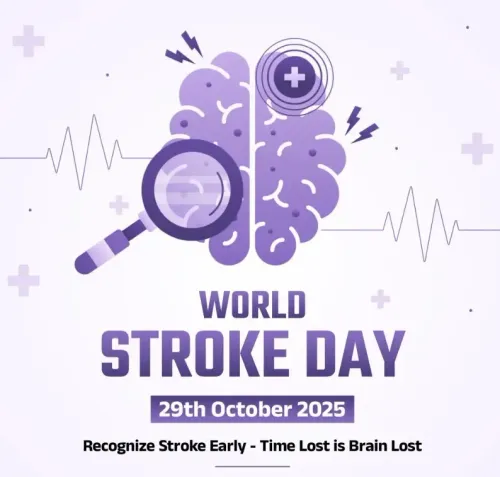
On World Stroke Day 2026, the Haryana CMO's Office announced that stroke care services are being rolled out across all district civil hospitals in the state, urging residents to adopt healthy lifestyles and seek timely treatment to prevent deaths.
Key Takeaways
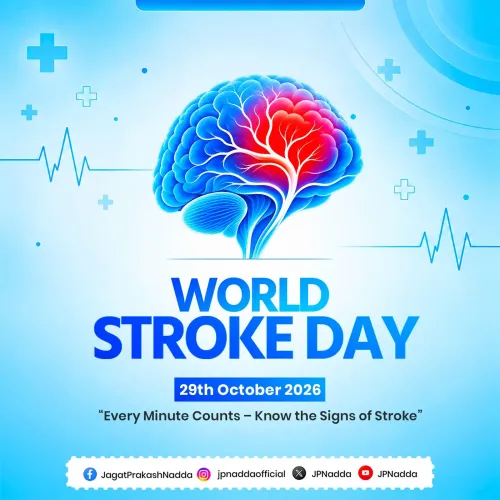
World Stroke Day is observed on 29 October every year to raise global awareness about stroke prevention and treatment.
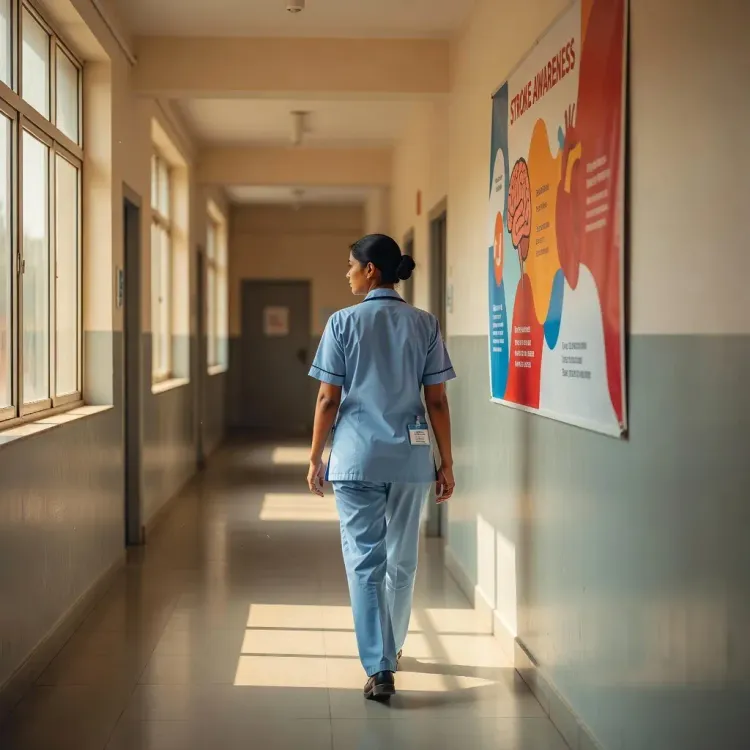
The Haryana government is making stroke care services available at all district civil hospitals across the state.
The goal is to enable timely treatment that can save lives and reduce long-term disability from stroke.
India's NPCDCS (launched 2010) forms the national policy backbone for district-level stroke and cardiovascular care.
The announcement reinforces the role of secondary-care infrastructure in closing the gap between stroke onset and treatment for rural and semi-urban Haryana residents.
Every 40 seconds, someone in India has a stroke — and the minutes that follow can mean the difference between recovery and permanent disability. On World Stroke Day, 29 October 2026, the Chief Minister's Office of Haryana used the global observance to remind residents that stroke care services are being made available across all district civil hospitals in the state.
The post, shared by the official CMO Haryana account, urged citizens to adopt a healthy lifestyle, stay informed about stroke risks, and seek timely treatment. In Hindi, the message read: 'विश्व स्ट्रोक दिवस पर स्वस्थ जीवनशैली अपनाएँ, स्ट्रोक के खतरों से बचें और समय पर उपचार के प्रति जागरूक बनें' — 'On World Stroke Day, adopt a healthy lifestyle, protect yourself from stroke risks, and be aware of timely treatment.'
Stroke care at every Haryana district hospital
The government stated that stroke care services are being made available at all district civil hospitals across Haryana, with the explicit goal of saving lives through early intervention. District civil hospitals are the backbone of secondary-care delivery in the state — the first point of specialist access for millions of residents who live beyond the reach of major city hospitals.
The push fits squarely within a national framework. India launched the National Programme for Prevention and Control of Cancer, Diabetes, Cardiovascular Diseases and Stroke (NPCDCS) in 2010, which tasked states with strengthening district-level detection and management of non-communicable diseases, including stroke. Haryana's communication signals continued alignment with that agenda.
Why World Stroke Day matters — and what timely treatment actually means
World Stroke Day is observed every year on 29 October, a date set aside by the global health community to drive awareness about one of the world's leading causes of death and long-term disability. In India, stroke burden has been rising steadily alongside urbanisation, dietary shifts and sedentary habits — making state-level infrastructure a critical variable.
The clinical case for speed is stark: the gold-standard treatment for ischaemic stroke — clot-dissolving thrombolysis — is effective only within a narrow window after symptom onset. Every district hospital that can diagnose and initiate treatment shortens the journey for patients who would otherwise lose hours travelling to a tertiary centre. That distance, in stroke medicine, is measured in brain cells.
Haryana is using this awareness moment to signal that the infrastructure exists — the next test is whether patients and frontline health workers know to reach it fast enough.
Point of View
But its credibility will ultimately rest on staffing, equipment and utilisation data that have not been made public. Set against India's NPCDCS framework, the move signals continued state-centre alignment on non-communicable disease control, even as the harder challenge — converting awareness into early patient presentation — remains largely unresolved.
NationPress
29 Oct 2026
Frequently Asked Questions
When is World Stroke Day observed?
World Stroke Day is observed every year on 29 October . It is a global awareness campaign focused on stroke prevention, recognition of symptoms, and the importance of timely treatment.
Is stroke care available in Haryana government hospitals?
According to the Chief Minister's Office of Haryana , stroke care services are being made available at all district civil hospitals across the state to ensure patients can receive timely treatment.
What is the NPCDCS and how does it relate to stroke care in Haryana?
The National Programme for Prevention and Control of Cancer, Diabetes, Cardiovascular Diseases and Stroke (NPCDCS) , launched by the Government of India in 2010 , tasks states with strengthening district-level detection and management of stroke and other non-communicable diseases.
Why is timely treatment important for stroke patients?
In stroke care, every minute counts. The most effective treatment for ischaemic stroke — clot-dissolving thrombolysis — must be administered within a narrow time window after symptom onset. Delays in reaching a capable facility directly worsen outcomes.
What lifestyle steps can help prevent stroke?
Health authorities recommend adopting a healthy lifestyle including regular physical activity, a balanced diet, avoiding tobacco and excess alcohol, managing blood pressure and diabetes, and being aware of early stroke symptoms to seek immediate care.