CM Saini: Haryana tops criminal law dashboard with 95.28

Synopsis
Haryana has retained first place on India's national dashboard tracking implementation of the Bharatiya Nyaya Sanhita and allied laws, scoring 95.28. CM Nayab Singh Saini credited the state police and Union Home Minister Amit Shah's guidance for the achievement.
Key Takeaways
Haryana has scored 95.28 on the national dashboard for implementation of India's new criminal laws, retaining the top position among all states.
The dashboard tracks adoption of the Bharatiya Nyaya Sanhita, Bharatiya Nagarik Suraksha Sanhita , and Bharatiya Sakshya Adhiniyam , which came into force in July 2024 .
CM Nayab Singh Saini attributed the ranking to the Haryana Police's commitment and operational efficiency.
The dashboard is overseen by the Ministry of Home Affairs under Amit Shah as part of a central accountability framework for criminal justice reform.
The three new laws replaced colonial-era statutes — the Indian Penal Code, CrPC, and Indian Evidence Act — after being passed by Parliament in December 2023 .
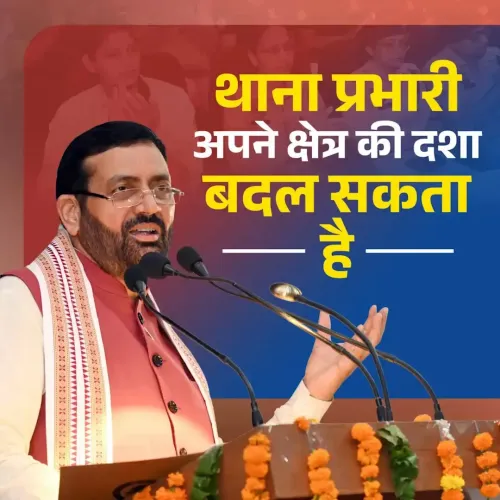
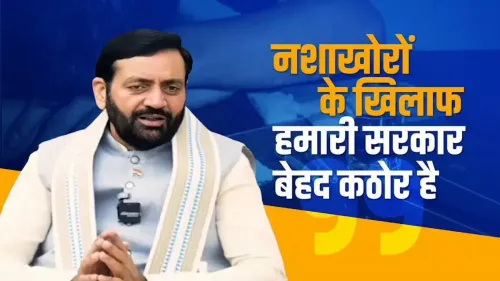
Haryana has held the number-one position on the national implementation dashboard for India's new criminal laws, scoring 95.28 points — and Chief Minister Nayab Singh Saini says the result is proof of the state police's commitment and operational efficiency. The announcement, made on Saturday, 17 October 2026, signals that Haryana's police machinery is leading the country in translating landmark legal reform into on-ground practice.
Posting on X, Saini wrote: 'नए आपराधिक कानूनों के राष्ट्रीय डैशबोर्ड पर 95.28 अंकों के साथ हरियाणा का शीर्ष स्थान बरकरार रहना हमारी पुलिस की प्रतिबद्धता और कार्यकुशलता का प्रमाण है' — 'Haryana retaining the top position on the national dashboard for new criminal laws with a score of 95.28 is proof of our police's commitment and efficiency.' He credited the guidance of Union Home Minister Amit Shah and pledged to further strengthen the state's motto of 'Seva, Suraksha, Sahyog' — 'Service, Security, Cooperation.'
The three laws Haryana is being measured on
The dashboard tracks implementation of three statutes that replaced colonial-era criminal law: the Bharatiya Nyaya Sanhita, the Bharatiya Nagarik Suraksha Sanhita, and the Bharatiya Sakshya Adhiniyam. Passed by Parliament in December 2023 and brought into force from July 2024, the trio overhauled the Indian Penal Code, the Code of Criminal Procedure, and the Indian Evidence Act — sweeping away legal architecture inherited from British rule.
The Ministry of Home Affairs, under Amit Shah, designed the national dashboard as a real-time accountability tool, ranking every state on how completely its police and judicial apparatus has absorbed the new procedures, timelines, and technology mandates embedded in the legislation. A score above 95 places Haryana well clear of the national pack.
Why Haryana's top rank has political weight
For Chief Minister Saini — who took charge of the state in March 2024 — the ranking doubles as administrative validation during a period of political consolidation. The BJP government in Haryana has made law-and-order a central plank, and a top-of-table position on a centrally monitored dashboard reinforces that narrative with hard data.
The result also underscores the centre-state coordination model the Home Ministry has pushed: a standardised national metric that nudges states into competitive compliance rather than voluntary adoption. Haryana retaining — not just reaching — the summit suggests sustained institutional effort, not a one-off performance spike.
With subsequent dashboard updates expected as the new laws embed deeper into daily police and court work, all eyes are on whether Haryana can maintain its lead — and which states are closing the gap.
Point of View
Who has governed for under three years, a publicly verifiable number like 95.28 is precisely the kind of governance credential that transcends partisan argument. The result also reinforces the BJP's centre-state coordination playbook: set a measurable standard nationally, then let state governments campaign on their own score. Whether the ranking translates into citizen-felt improvements in policing and trial speed will be the harder, longer test.
NationPress
17 Oct 2026
Frequently Asked Questions
What is the national dashboard for new criminal laws in India?
It is a real-time monitoring tool set up by the Ministry of Home Affairs to rank states on how effectively they have implemented the Bharatiya Nyaya Sanhita, Bharatiya Nagarik Suraksha Sanhita, and Bharatiya Sakshya Adhiniyam — the three laws that replaced India's colonial-era criminal statutes from July 2024.
What score did Haryana get on the criminal laws dashboard?
Haryana scored 95.28 on the national dashboard, retaining the top position among all Indian states, according to CM Nayab Singh Saini's post on 17 October 2026.
What are the Bharatiya Nyaya Sanhita and the other new criminal laws?
The Bharatiya Nyaya Sanhita replaces the Indian Penal Code, the Bharatiya Nagarik Suraksha Sanhita replaces the Code of Criminal Procedure, and the Bharatiya Sakshya Adhiniyam replaces the Indian Evidence Act. All three were passed in December 2023 and came into force in July 2024.
Who is Nayab Singh Saini?
Nayab Singh Saini is the Chief Minister of Haryana and a BJP leader who assumed office in March 2024.
What role did Amit Shah play in the new criminal laws?
As Union Minister of Home Affairs, Amit Shah oversaw the drafting and passage of the three new criminal laws and has led their nationwide rollout, including the dashboard mechanism used to rank state-level implementation.