Delhi HC issues notice to Delhi Police on Sukesh Chandrashekhar's MCOCA plea
Synopsis
The Delhi High Court has issued notice to the Delhi Police on Sukesh Chandrashekhar's challenge to MCOCA charge framing in a ₹200 crore extortion case — a legal battle that now spans the High Court, Supreme Court, and ED proceedings, with Bollywood actor Jacqueline Fernandez also drawn into the parallel money laundering case.
Key Takeaways
The Delhi High Court issued notice to Delhi Police on 31 July on Sukesh Chandrashekhar's plea against MCOCA charge framing.
Justice Madhu Jain posted the matter for further hearing on 23 September .
Chandrashekhar argues the trial court acted as a 'post office,' failing to independently verify MCOCA's statutory requirements before framing charges.
The underlying FIR, registered in August 2021 , alleges extortion of around ₹217 crore from a businessman's wife, allegedly orchestrated from jail.
Co-accused advocate B.
Mohanraj was recently granted bail after nearly five years as an undertrial in the same case.
Jacqueline Fernandez pleaded not guilty last month in the linked ₹200 crore money laundering case .
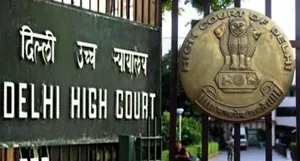
The Delhi High Court on Friday, 31 July issued notice to the Delhi Police on a petition filed by alleged conman Sukesh Chandrashekhar challenging a trial court order that directed framing of charges against him in the ₹200 crore extortion case registered under the Maharashtra Control of Organised Crime Act (MCOCA). A single-judge bench of Justice Madhu Jain sought the police's response and scheduled the next hearing for 23 September.
What Chandrashekhar's Plea Argues
Chandrashekhar has challenged the trial court's order dated 30 May, formally signed on 3 June, contending that it mechanically accepted the prosecution's case without independently examining whether the material on record disclosed the essential ingredients of MCOCA offences. In his appeal, he argued that the trial court acted as a 'post office' — merely endorsing the prosecution's position and deferring every defence objection to the trial stage.
The petition further contends that the trial court failed to examine whether an organised crime syndicate, as required under MCOCA, was actually established on the record. Chandrashekhar has also argued that the prosecution itself treats the present case as the first alleged offence of the purported syndicate, meaning the statutory threshold for invoking MCOCA was not met.
Additional Grounds Raised
The appeal flags several procedural concerns: the trial court allegedly failed to scrutinise statutory approvals and sanctions obtained by the prosecution, ignored contradictions between the versions put forward by the Delhi Police and the Enforcement Directorate (ED), and overlooked the fact that a supplementary chargesheet was still proposed to be filed even as charges were being framed.
Chandrashekhar has also questioned the simultaneous invocation of cheating offences under Sections 419 and 420 of the IPC alongside Section 66D of the Information Technology Act, and argued that the trial court inadequately considered the complainant's role and the surrounding circumstances before directing charge framing.
Charges Framed Against Chandrashekhar
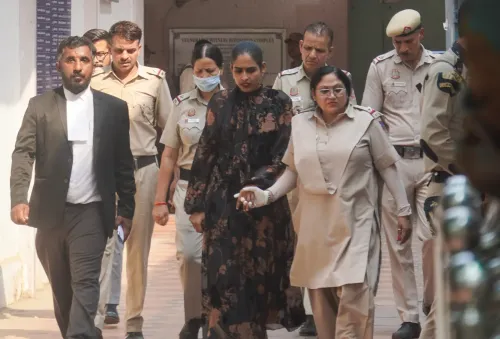
The charges directed against him span Sections 170, 384, 386, 388, 419, 420, 506 and 120B of the IPC, Section 66D of the IT Act, and Sections 3(1)(ii), 3(2), 3(3), 3(4), 3(5) and 4 of the MCOCA. The underlying MCOCA case stems from an FIR registered by the Delhi Police Special Cell in August 2021, alleging that Chandrashekhar and associates extorted around ₹217 crore from the wife of a businessman by falsely promising to secure legal relief for her husband. According to the prosecution, the alleged extortion syndicate was operated by Chandrashekhar from jail with the help of associates and corrupt prison officials.
Where Related Proceedings Stand
The Delhi High Court has handled several connected matters in recent months. Earlier this month, it granted regular bail to advocate B. Mohanraj, a co-accused, holding that his continued detention as an undertrial was unwarranted after nearly five years in custody — particularly given a trial involving 24 accused, 403 prosecution witnesses, and chargesheets exceeding 10,000 pages that is unlikely to conclude within a reasonable time.
The court had previously refused regular bail to Chandrashekhar's wife, Leena Maria Paul, in the MCOCA case, finding that material on record prima facie indicated her involvement in the alleged organised crime syndicate. The Supreme Court subsequently issued notice to the Delhi Police on her challenge to that bail rejection.
Both Chandrashekhar and Paul have, however, secured bail in the parallel money laundering proceedings initiated by the ED. In Chandrashekhar's case, the trial court granted bail under the Prevention of Money Laundering Act (PMLA), holding that he had remained in custody for more than half the maximum prescribed sentence and that continued incarceration would violate his right to personal liberty, given that both the predicate offence and PMLA proceedings had remained stayed for years.
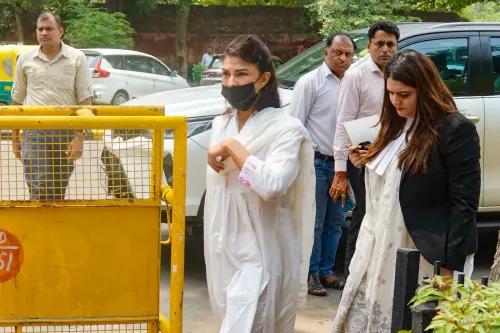
Separately, Bollywood actor Jacqueline Fernandez last month pleaded not guilty before a Delhi court in the ₹200 crore money laundering case linked to Chandrashekhar and expressed her willingness to face trial. The court also framed money laundering charges against Chandrashekhar, Paul, and 14 others, all of whom denied the allegations. The Delhi High Court's next hearing on Chandrashekhar's MCOCA plea is set for 23 September.
Point of View
And the defence's claim that this is the syndicate's first alleged offence is legally significant, not merely tactical. The parallel bail grants in PMLA proceedings, on grounds of prolonged incarceration, also signal a systemic problem: a 24-accused case with over 400 witnesses and 10,000-page chargesheets is structurally incapable of delivering timely justice, which courts are increasingly being forced to acknowledge through bail rather than trial reform.
NationPress
31 Jul 2026
Frequently Asked Questions
Why did the Delhi High Court issue notice to Delhi Police in the Sukesh Chandrashekhar case?
The Delhi High Court issued notice to the Delhi Police on 31 July after Sukesh Chandrashekhar filed a plea challenging a trial court order directing that MCOCA charges be framed against him in the ₹200 crore extortion case. Justice Madhu Jain sought the police's response and listed the matter for 23 September.
What is the MCOCA case against Sukesh Chandrashekhar?
The MCOCA case stems from an FIR registered by the Delhi Police Special Cell in August 2021, alleging that Chandrashekhar and associates extorted around ₹217 crore from the wife of a businessman by falsely promising legal relief for her husband. The prosecution claims the syndicate was run from jail with the help of associates and corrupt prison officials.
What are Chandrashekhar's main arguments against the MCOCA charges?
He contends that the trial court failed to independently verify whether MCOCA's statutory ingredients were met, particularly whether an organised crime syndicate existed, and that the court acted as a 'post office' by endorsing the prosecution without scrutiny. He also argues that the prosecution treats this as the syndicate's first alleged offence, meaning the MCOCA threshold was not legally satisfied.
What is the current bail status of Sukesh Chandrashekhar and Leena Maria Paul?
Both Chandrashekhar and his wife Leena Maria Paul have secured bail in the parallel ED money laundering proceedings. However, the Delhi High Court previously refused Paul regular bail in the MCOCA case, and the Supreme Court has issued notice to Delhi Police on her challenge to that refusal.
How is Jacqueline Fernandez connected to this case?
Bollywood actor Jacqueline Fernandez is an accused in the ₹200 crore money laundering case linked to Chandrashekhar. Last month, she pleaded not guilty before a Delhi court and expressed her willingness to face trial, alongside Chandrashekhar, Paul, and 14 others against whom money laundering charges were also framed.