SC issues notice to Delhi Police on Leena Maria Paul's bail plea in MCOCA case
Synopsis
The Supreme Court has stepped into the Sukesh Chandrashekhar extortion saga, issuing notice to Delhi Police on a bail plea by his wife Leena Maria Paul — who has already been in custody for over four-and-a-half years without charges being framed under the stringent MCOCA. With Jacqueline Fernandez now facing trial in the parallel money laundering case, India's most high-profile alleged prison-run extortion network is heading toward multiple courtroom reckonings simultaneously.
Key Takeaways
The Supreme Court on 17 June issued notice to Delhi Police on Leena Maria Paul's bail plea under MCOCA ; next hearing on 27 July .
Paul challenges a Delhi High Court order dated 5 May that refused her bail, holding her role in the alleged syndicate 'central, not peripheral.' The case stems from an alleged ₹217 crore extortion of a businessman's wife, with the FIR filed by Delhi Police Special Cell in August 2021 .
Paul has been in custody for more than four-and-a-half years without charges being framed under MCOCA, though she secured bail in the parallel ED money laundering case .
Approximately ₹21 crore was allegedly deposited into accounts linked to Paul between June 2020 and August 2021 .
Actor Jacqueline Fernandez pleaded not guilty this month in the linked ₹200 crore money laundering case; charges framed against Chandrashekhar, Paul, and 14 others .
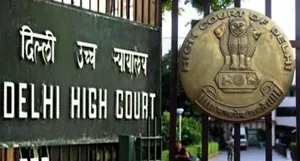
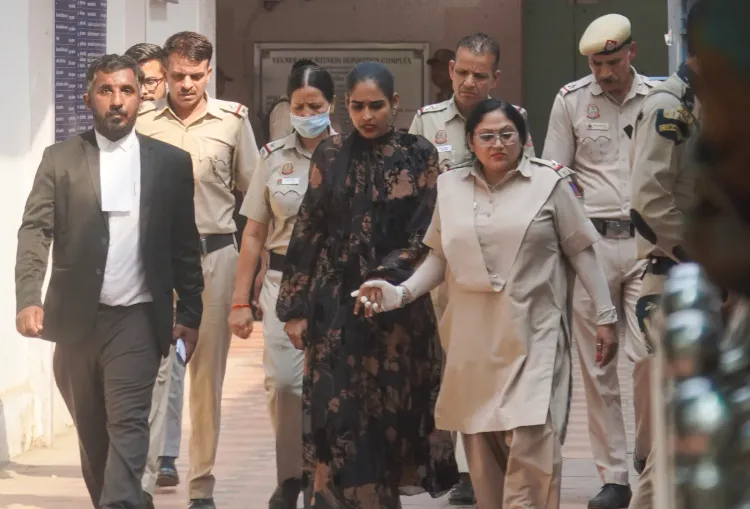
The Supreme Court on Wednesday, 17 June issued notice to the Delhi Police on a bail application filed by Leena Maria Paul, wife of alleged conman Sukesh Chandrashekhar, in a case registered under the Maharashtra Control of Organised Crime Act (MCOCA) linked to an alleged ₹200 crore extortion racket. A bench comprising Justice Joymalya Bagchi and Justice Vipul M. Pancholi sought Delhi Police's response and listed the matter for further hearing on 27 July.
Background to the Bail Challenge
Paul has moved the Supreme Court challenging a Delhi High Court order dated 5 May that refused her regular bail in the MCOCA proceedings. The High Court, in a judgment by a single-judge bench of Justice Prateek Jalan, held that the material on record prima facie indicated her involvement in the alleged organised crime syndicate's activities.
Notably, Paul had previously secured bail in a parallel Enforcement Directorate (ED) money laundering case — making her continued detention under MCOCA the central legal contest before the apex court.
What the Prosecution Alleges
According to the prosecution, the case originates from an FIR registered by the Delhi Police Special Cell in August 2021. The complaint alleged that Chandrashekhar and associates extorted approximately ₹217 crore from the wife of a businessman on the false pretext of arranging legal relief for her jailed husband.
Prosecutors further alleged that Chandrashekhar ran the extortion network from inside prison with the help of associates and corrupt jail officials. Paul, according to the prosecution, played a central role — maintaining continuous contact with Chandrashekhar while he was incarcerated, coordinating with his associates, facilitating disposal of crime proceeds, and allegedly financing a 'Silent Calling App' used by Chandrashekhar to orchestrate the extortion.
The prosecution also claimed that approximately ₹21 crore was deposited into bank accounts linked to Paul and her business entities between June 2020 and August 2021, and that several luxury cars and other assets were allegedly acquired using proceeds of crime.
Why the High Court Refused Bail
The Delhi High Court, in its 5 May ruling, held that Paul's role in the alleged syndicate was 'not peripheral, but central to the functioning' of the organisation. Justice Jalan referenced an earlier High Court judgment that had already recorded prima facie findings that Paul 'was involved in running an organised crime syndicate since 2013 with the motive of pecuniary gain by cheating and extortion.'
While the court acknowledged that Paul had undergone more than four-and-a-half years of custody without charges being formally framed, it held that prolonged incarceration alone could not override the stringent twin bail conditions prescribed under MCOCA — a law designed to deal with organised crime and carrying a high threshold for pre-trial release.
The Broader Case and Jacqueline Fernandez Link
The proceedings have drawn considerable public attention because of their intersection with a parallel money laundering prosecution. Earlier this month, Bollywood actor Jacqueline Fernandez pleaded not guilty before a Delhi court in the ₹200 crore money laundering case connected to Chandrashekhar and expressed her willingness to face trial. A Delhi court also framed money laundering charges against Chandrashekhar, Paul, and 14 others, all of whom denied the allegations and sought trial.
With the Supreme Court now formally in the picture on the MCOCA bail question, the 27 July hearing will be closely watched for any interim relief or directions to the Delhi Police.
Point of View
Including from inside prison. Yet Paul's four-and-a-half years in custody without charge-framing raises a legitimate due process question that the court will have to weigh: at what point does procedural delay itself become a ground for relief, irrespective of the severity of the alleged offence? The High Court's answer — that prolonged incarceration cannot override MCOCA's bail bar — is legally defensible but will face scrutiny at the Supreme Court level. The parallel ED bail already granted to Paul adds an asymmetry that the apex court is unlikely to ignore.
NationPress
26 Sept 2026
Frequently Asked Questions
Why has the Supreme Court issued notice to Delhi Police in Leena Maria Paul's case?
The Supreme Court issued notice to Delhi Police on 17 June after Leena Maria Paul challenged the Delhi High Court's refusal to grant her regular bail in an MCOCA case linked to the alleged ₹200 crore Sukesh Chandrashekhar extortion racket. The bench has sought Delhi Police's response before the next hearing on 27 July.
What is the MCOCA case against Leena Maria Paul about?
The case stems from an FIR filed by the Delhi Police Special Cell in August 2021, alleging that Sukesh Chandrashekhar and associates — including Paul — extorted approximately ₹217 crore from a businessman's wife under the false pretext of securing legal relief for her jailed husband. Paul is accused of coordinating with Chandrashekhar while he was in prison and channelling proceeds of crime.
Why did the Delhi High Court refuse bail to Leena Maria Paul?
The Delhi High Court on 5 May held that Paul's role in the alleged organised crime syndicate was 'central, not peripheral,' and that the material on record prima facie established her involvement. It ruled that her four-and-a-half years of custody without charge-framing could not override MCOCA's stringent twin bail conditions.
Has Leena Maria Paul received any bail in related cases?
Yes. Paul had earlier secured bail in the parallel money laundering proceedings investigated by the Enforcement Directorate (ED). Her continued detention under MCOCA — despite ED bail — is the central legal issue now before the Supreme Court.
What is Jacqueline Fernandez's connection to this case?
Bollywood actor Jacqueline Fernandez is a co-accused in the parallel ₹200 crore money laundering case linked to Sukesh Chandrashekhar. Earlier this month, she pleaded not guilty before a Delhi court and expressed willingness to face trial. Money laundering charges were also framed against Chandrashekhar, Paul, and 14 others in the same proceedings.