Himachal Pradesh welcomes 57th GST Council reform proposals
Synopsis
At the 57th GST Council meeting chaired by Nirmala Sitharaman, Himachal Pradesh welcomed compliance reforms but drew a hard line: simplification must not erode enforcement or revenue. The state also pressed for toll exemptions, a hilly-states GoM, API duty rationalisation, and continuation of revenue protection beyond the original five-year window.
Key Takeaways
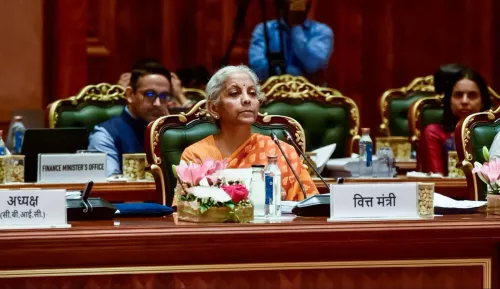
The 57th GST Council meeting was held in New Delhi on 8 October 2026 under Union Finance Minister Nirmala Sitharaman .
Himachal Pradesh welcomed reforms covering registration, return filing, refunds, assessment and adjudication processes.
The state supported a proposed GST exemption on its toll collection mechanism and measures for small taxpayers and CSD canteens .
Himachal Pradesh demanded 14% year-on-year revenue growth protection for five years and continuation of protection thereafter.
The state renewed its call for a Group of Ministers on hilly states and rationalisation of the inverted duty structure on APIs .
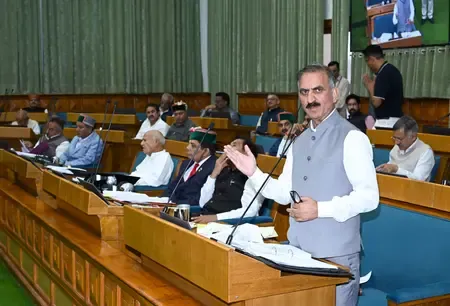
The Himachal Pradesh government on Thursday, 8 October 2026, formally welcomed the reform proposals tabled at the 57th GST Council meeting in New Delhi, stating that the measures would make the Goods and Services Tax (GST) system more taxpayer-friendly and streamline compliance procedures. The meeting was chaired by Union Finance Minister Nirmala Sitharaman.
Key Reforms on the Table
The proposed reforms span registration, return filing, refunds, assessment, adjudication and related processes, with the stated aim of making GST compliance simpler, more transparent and more efficient. The state government specifically welcomed proposals designed to ease the burden on small taxpayers, as well as measures relating to defence establishments and Canteen Stores Department (CSD) canteens.
A state-specific proposal concerning the leasing of the right to collect tolls was also deliberated. Himachal Pradesh welcomed the proposed GST exemption on its toll collection mechanism, calling it a relief for the state's infrastructure financing model.
Enforcement Must Not Be Compromised, Says State
While backing compliance facilitation for genuine taxpayers, Himachal Pradesh struck a note of caution. The state emphasised that GST reforms must maintain an appropriate balance between ease of compliance and effective enforcement. It said proposals that could weaken enforcement, facilitate fraudulent practices or adversely affect legitimate revenue should be carefully reviewed to ensure that taxpayer facilitation does not come at the cost of revenue protection and the prevention of tax evasion. This reflects a broader tension in GST reform discussions — where simplification can sometimes create gaps exploited by bad-faith actors.
Compensation and Revenue Protection Demands
The state reiterated its long-standing demand for full compensation for revenue implications arising from GST implementation, with a view to safeguarding fiscal stability. It pressed for 14 per cent year-on-year growth in protected revenue for five years, and called for revenue protection to continue thereafter until actual state revenue reaches the level of protected revenue determined for the fifth year. This demand echoes the grievances of several states whose compensation claims remain contested since the original GST compensation mechanism lapsed.
Special Focus on Hill States and Pharma Sector
Himachal Pradesh also renewed its push for the constitution of a Group of Ministers (GoM) on hilly states to address region-specific concerns — a proposal that has been pending for multiple Council sessions. Separately, the state highlighted the need to correct the inverted duty structure in the pharmaceutical sector by reducing the tax rate on active pharmaceutical ingredients (APIs). Such rationalisation, it argued, would help minimise the accumulation of input tax credit (ITC) and associated refund claims while boosting domestic API manufacturing and the broader pharmaceutical industry — a sector in which Himachal Pradesh holds a significant national footprint. How the Council weighs these demands against competing state interests will shape the final shape of the reforms.
Point of View
But its reiteration signals that hill states feel fiscally exposed. The push for an API duty fix is worth watching: Himachal hosts a disproportionate share of India's pharmaceutical manufacturing, and an inverted duty correction here could have supply-chain consequences well beyond the state's borders. The GoM on hilly states, meanwhile, has been pending long enough that its absence is itself becoming a political talking point.
NationPress
8 Oct 2026
Frequently Asked Questions
What were the main GST reforms discussed at the 57th GST Council meeting?
The 57th GST Council meeting, chaired by Union Finance Minister Nirmala Sitharaman in New Delhi on 8 October 2026, discussed reforms covering registration, return filing, refunds, assessment and adjudication processes. The proposals aim to make GST compliance simpler, more transparent and more efficient, with specific relief measures for small taxpayers and defence-related entities.
What did Himachal Pradesh specifically demand at the GST Council?
Himachal Pradesh demanded continuation of revenue protection at 14 per cent year-on-year growth for five years and beyond, a GST exemption on its toll collection mechanism, constitution of a Group of Ministers on hilly states, and rationalisation of the inverted duty structure on active pharmaceutical ingredients (APIs).
Why is Himachal Pradesh calling for an API duty fix?
The state says the current inverted duty structure in the pharmaceutical sector causes excessive accumulation of input tax credit and large refund claims. Reducing the GST rate on active pharmaceutical ingredients (APIs) would improve cash flow for manufacturers and boost domestic pharma production, a key sector for Himachal Pradesh.
What is the Group of Ministers on hilly states, and why is it pending?
The GoM on hilly states is a proposed body to address region-specific GST concerns of states like Himachal Pradesh, whose geographical and economic characteristics differ markedly from plains states. Himachal Pradesh has reiterated this demand at multiple GST Council sessions; the proposal has not yet been formally constituted.
How does Himachal Pradesh's stance balance compliance ease with enforcement?
The state supported reforms that facilitate genuine taxpayers but warned that proposals weakening enforcement or enabling fraud must be carefully reviewed. It argued that taxpayer facilitation should not come at the cost of revenue protection or anti-evasion measures — a position aimed at ensuring reforms do not inadvertently create compliance loopholes.