Himachal Pradesh Cabinet Seeks Public Input on Panchayat Election Rules Amendments
Synopsis
The Himachal Pradesh Cabinet, under Chief Minister Sukhvinder Singh Sukhu, has called for public feedback on proposed amendments to panchayat election rules and introduced significant changes in social security provisions. This initiative aims to enhance democratic participation and provide better support for destitute women.
Key Takeaways
Public Participation: The Cabinet is actively seeking public feedback on proposed electoral amendments.
Amendments Overview: Changes to reservation rules for panchayats are set to take effect.
Support for Women: New provisions redefine 'destitute' to support abandoned women.
Hydroelectric Projects: Several uninitiated projects will be canceled to streamline resources.
Increased Heli-Taxi Services: Frequency of services on key routes will be enhanced significantly.
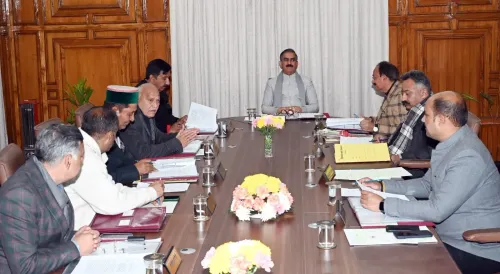
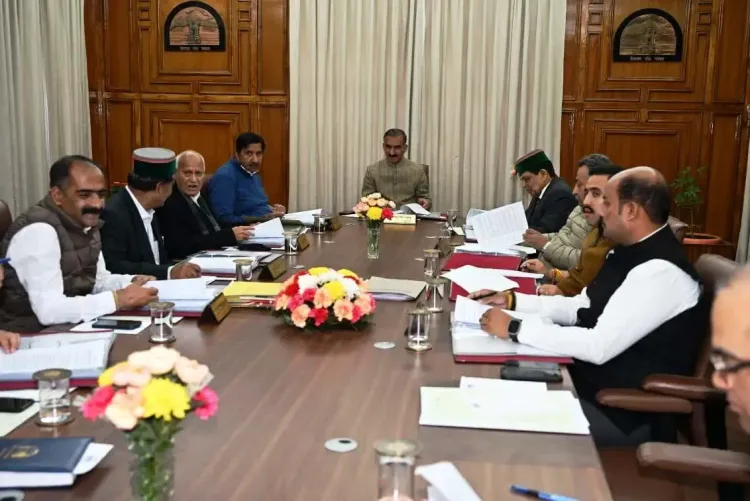
Shimla, March 7 (NationPress) In a significant move, the Himachal Pradesh Cabinet, led by Chief Minister Sukhvinder Singh Sukhu, convened on Saturday to request public feedback on the suggested changes to Rules 28, 87, 88, and 89 of the Himachal Pradesh Panchayati Raj (Elections) Rules established in 1994.
The suggested changes indicate that panchayats which have been reserved for two consecutive terms since 2010 will not be subject to reservation in the upcoming panchayat elections.
Additionally, the Cabinet approved alterations to the Social Security Pension Rules from 2010, providing a clearer definition of ‘Destitute’ and streamlining the certification process for accessing benefits. Under the new guidelines, women who have been abandoned by their husbands and lack an independent income source will now qualify as destitute.
The Cabinet also resolved to allocate 40 percent of the Local Area Development Fund under the Swaran Jayanti Energy Policy to support children financially. Furthermore, it has agreed to annul 15 hydroelectric projects that have not been initiated despite having benefited from the one-time amnesty scheme.
Moreover, the Cabinet has allocated the 10 MW small hydroelectric project at Pandoh to the Bhakra Beas Management Board (BBMB), contingent upon the return of unused land to the state government. The state will receive 13 percent of free power along with an additional 5 percent from the BBMB, according to an official statement.
In another decision, the Cabinet approved the Operation and Maintenance Policy for transferring village infrastructure of both Single Village and Multi Village Schemes to gram panchayats.
The establishment of the Regional Cooperative Milk Producers Union Ltd in Dhagwar, which will include milk producers from Kangra, Hamirpur, Chamba, and Una, was also sanctioned. The National Dairy Development Board will oversee management and operations of the Dhagwar Milk Processing Plant.
Furthermore, the Cabinet has increased the frequency of heli-taxi services on the Chandigarh-Shimla-Chandigarh route from three to 12 sorties weekly, with services operating twice a day for six days. The government will provide viability gap funding to assist these operations.
Lastly, the Cabinet agreed to cover the salaries of outsourced employees working on the Jal Jeevan Mission in the Jal Shakti Vibhag using state funds, as the Government of India has not yet provided the necessary financial support.
Point of View
The Himachal Pradesh Cabinet's decision to seek public input reflects a commitment to transparency and democratic engagement. The amendments proposed could significantly impact local governance and the representation of marginalized communities, especially women. This approach may lead to a more inclusive political environment.
NationPress
29 Sept 2026
Frequently Asked Questions
What are the key proposed amendments to the Panchayat election rules?
The key amendments suggest that panchayats reserved for two consecutive terms since 2010 will not be reserved in the upcoming elections.
How has the definition of 'Destitute' changed?
The definition has been clarified to include women abandoned by their husbands who lack an independent income source.
What is the purpose of the Local Area Development Fund allocation?
40 percent of the Local Area Development Fund will be allocated to provide financial assistance to children.
What changes were made regarding hydroelectric projects?
The Cabinet decided to cancel 15 hydroelectric projects that failed to commence despite receiving benefits from the one-time amnesty scheme.
What is the status of the Jal Jeevan Mission's outsourced employees?
The Cabinet has agreed to release salaries for these employees using state resources due to a lack of funds from the Government of India.