CM Saini: HKRN Has Given Job Security to 1.20 Lakh Workers
Synopsis
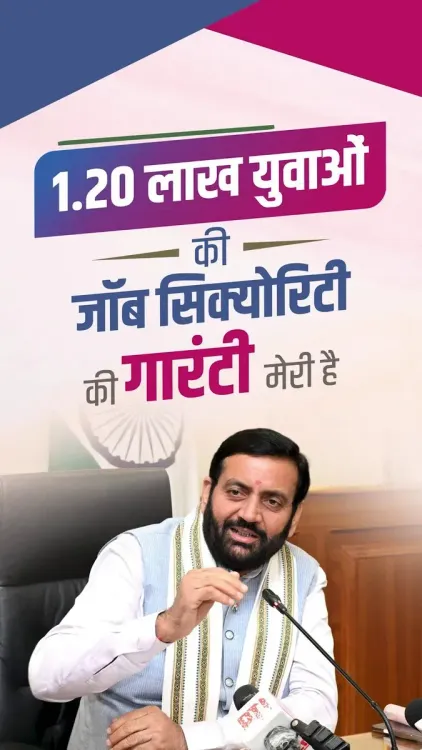
Haryana CM Nayab Singh Saini announced that the Haryana Kaushal Rozgar Nigam has secured jobs for 1.20 lakh personnel, marking a significant step in the state's drive to formalise contractual employment and reduce dependence on outsourcing agencies.
Key Takeaways
Haryana Kaushal Rozgar Nigam (HKRN) has provided job security to 1.20 lakh personnel , according to CM Nayab Singh Saini.
HKRN was created to shift contractual and outsourced workers into a more regularised state employment framework.
The move targets skilled workers who previously lacked continuity and benefits under private outsourcing arrangements.
Haryana's approach mirrors similar state-level employment corporations used elsewhere in India to address youth unemployment.
Further recruitment drives and state budget allocations for HKRN will determine the scheme's long-term reach.
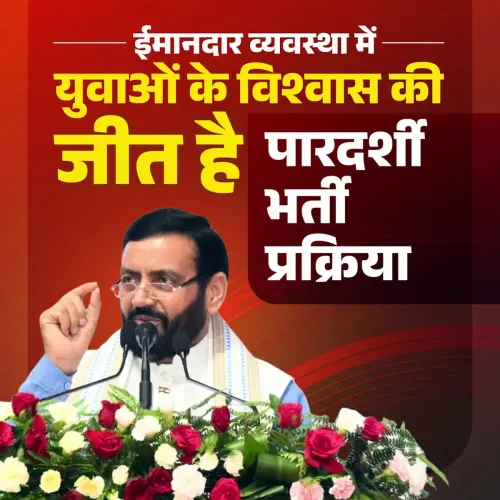
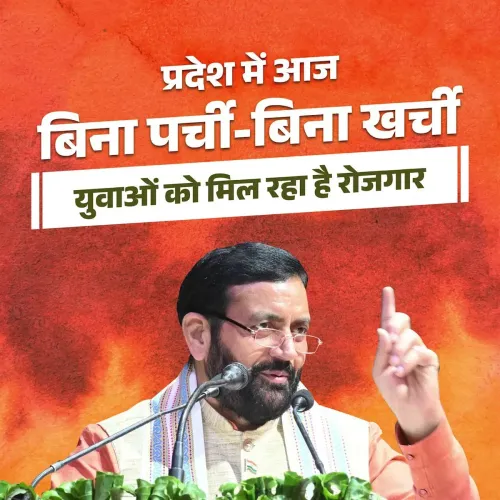
A single number is doing the heavy lifting in Haryana's employment story right now. Haryana Chief Minister Nayab Singh Saini announced on Friday, 14 August 2026 that the Haryana Kaushal Rozgar Nigam (HKRN) has extended job security to 1.20 lakh personnel — a figure the state government is positioning as proof that its push to formalise contractual work is gaining real ground.
CM Saini stated: 'Haryana Kaushal Rozgar Nigam (HKRN) ke madhyam se 1.20 lakh karmiyon ko naukri ki suraksha pradan ki hai' — ('Through the Haryana Kaushal Rozgar Nigam, job security has been provided to 1.20 lakh personnel.')
What HKRN Does — and Why It Matters
The Haryana Kaushal Rozgar Nigam was established as a state corporation with a specific mandate: bring contractual and outsourced workers under a more regularised employment framework, cutting out the middleman agencies that had long defined — and complicated — public-sector hiring in the state. The model targets skilled workers who previously operated in a grey zone of short-term contracts, limited benefits, and no guarantee of continuity.
The shift is significant for Haryana's workforce. Contractual workers absorbed through HKRN gain formal job security that outsourcing arrangements typically do not provide. For the 1.20 lakh personnel now covered, that translates to a more stable livelihood — and for the state government, a political proof-point ahead of any future electoral cycle.
Haryana's Bet on Formalisation
Haryana is not alone in this approach. Several Indian states have deployed similar corporations to address youth unemployment and reduce dependence on private staffing agencies for government work. What distinguishes HKRN is its scale of absorption in a relatively short operational window — 1.20 lakh is a substantial number for a single state-level body.
The broader pattern points to a deliberate policy direction under the BJP government in Haryana: formalise, regularise, and claim credit for employment outcomes that contractual arrangements previously made invisible. Whether the pipeline sustains — through fresh recruitment drives or expanded budget allocations — will determine how durable this milestone proves to be.
One hundred and twenty thousand workers now have something they did not before: a guarantee. Whether that guarantee holds, and how many more can be brought under it, is the question Haryana's government has just put on the record.
Point of View
Claimable welfare outcome. For CM Saini, who took office in 2024, a six-figure beneficiary count offers a tangible governance credential in a state with a historically competitive electoral landscape. The formalisation model also carries a fiscal subtext — regularising workers through a state body shifts accountability from private agencies to the government, raising the stakes for delivery. How HKRN scales from here will test whether this is a structural reform or a headline milestone.
NationPress
29 Sept 2026
Frequently Asked Questions
What is Haryana Kaushal Rozgar Nigam (HKRN)?
HKRN is a Haryana state corporation set up to provide direct, regularised employment to skilled and contractual workers, replacing the outsourcing agency model previously used for government staffing.
How many workers have been given job security through HKRN?
According to CM Nayab Singh Saini, HKRN has provided job security to 1.20 lakh (120,000) personnel in Haryana.
Who is Nayab Singh Saini?
Nayab Singh Saini is the Chief Minister of Haryana and a BJP leader who assumed office in 2024.
What is the benefit of HKRN for contractual workers?
Workers absorbed through HKRN gain formal job security and more stable employment conditions, replacing short-term contracts with limited benefits that outsourcing arrangements typically offered.
Is the HKRN model unique to Haryana?
No — several Indian states have used similar state-level employment corporations to formalise contractual work and address youth unemployment, though HKRN's scale of absorption is notable.