Amit Shah launches PM Family Care Tracker pilot in Gujarat, covers kids from birth to 18
Synopsis
Gujarat has become the first state to unify health, nutrition, and education records for every child under a single digital identity — from pregnancy to age 18. Amit Shah's PM Family Care Tracker pilot in Gandhinagar is being positioned as a national blueprint, with automated alerts, real-time dashboards, and a Health Passport assigned at birth.
Key Takeaways
Amit Shah launched the PM Family Care Tracker (PM-FCT) pilot in Gandhinagar, Gujarat on 28 June .
The platform integrates data from the Health , Women and Child Development , and Education departments under a single digital interface.
Every mother and child is assigned a unique digital identity using the ABHA number and Birth Registration Number .
The tracker monitors children from pregnancy through age 18 , covering immunisation, nutrition, growth, schooling, and adolescent health.
Welfare kits were distributed under schemes including the Balshakti scheme and Chief Minister Matrushakti Yojana .
Gujarat Health Minister Praful Pansheriya committed to making the Gandhinagar pilot a model for the entire country .
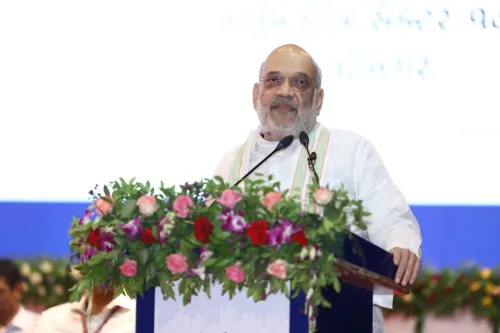
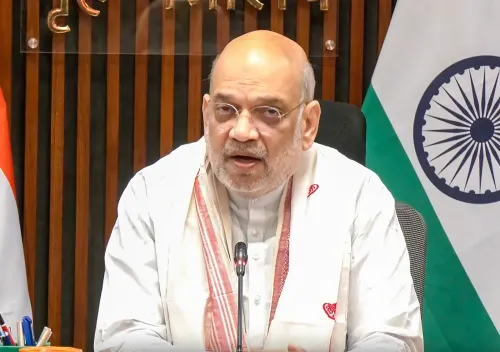
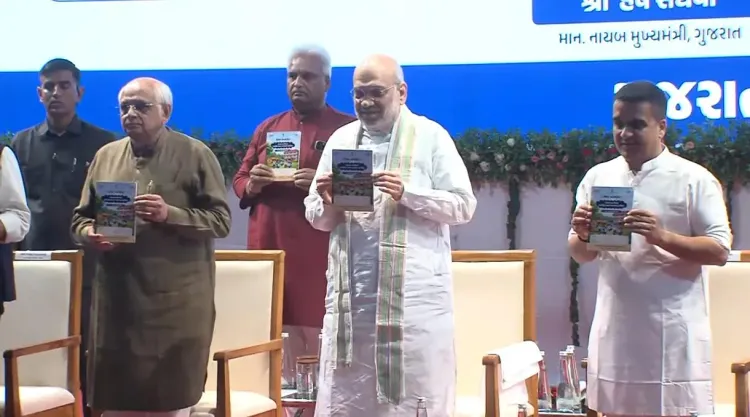
Union Home and Cooperation Minister Amit Shah on Sunday, 28 June launched the pilot phase of the PM Family Care Tracker (PM-FCT) and Health Passports in Gandhinagar, Gujarat, marking the debut of an integrated digital platform designed to monitor the health, nutrition, and education of children from pregnancy through the age of 18 years. The initiative consolidates data from three state departments under a single digital interface — a first of its kind in India.
What the PM-FCT Platform Does
The PM Family Care Tracker integrates records from the Health Department, the Women and Child Development (WCD) Department, and the Education Department of Gujarat. It links health data through the Poshan Tracker and school records through the Child Tracking Portal (CTS), assigning every mother and child a unique digital identity using the ABHA number and the Birth Registration Number.
The platform enables real-time monitoring across the full spectrum of maternal and child development — covering pre-pregnancy services, maternal care, newborn healthcare, immunisation, nutrition, growth tracking, school enrolment, attendance, and adolescent health. Automated alerts and follow-up mechanisms aim to ensure no beneficiary misses a scheduled service. Real-time dashboards are available at the state, district, and taluka levels for planning and decision-making.
What the Gujarat Government Said
Gujarat Health Minister Praful Pansheriya, addressing the launch event, credited the initiative to Shah's vision of departmental convergence. 'Under his guidance, this project is being launched today. It is through his vision that the Gujarat Health Department, the Women and Child Development Department, and the Education Department have been brought together so that data from all three departments can be integrated,' Pansheriya said.
Pansheriya described the tracker as more than a technological exercise. 'This is not merely a digital platform but one driven by emotions and concern, ensuring that not a single child is deprived of any vaccine,' he said, adding that every child would receive a card from an early age containing records of hereditary diseases, illnesses, treatments, and medical history up to age 18.
He also reaffirmed the state's commitment to scaling the model nationally. 'We assure you that not only Gandhinagar but the entire state of Gujarat will establish this as a successful pilot project for the whole of India,' Pansheriya said.
Welfare Kits Distributed at the Launch
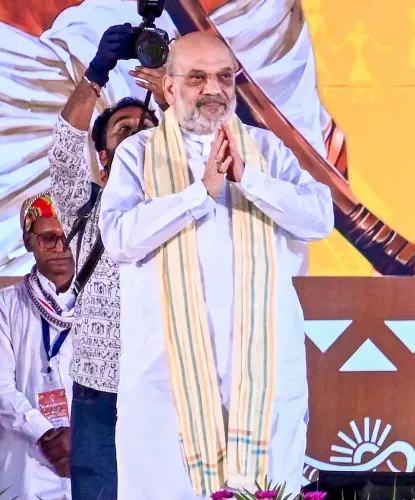
During the event, Shah also distributed welfare kits under schemes of the WCD Department. These included Anganwadi admission kits, preschool kits, and nutritional support kits for children and pregnant women.
Three-year-old Ayushi Bajaniya received an Anganwadi admission kit and preschool kit following her enrolment at an Anganwadi centre. Riyanshi Thakor, previously identified as underweight, received nutritional support under the Balshakti scheme after treatment through Poshan Sangam, including take-home rations. Pregnant beneficiary Hina Chauhan received a kit under the Chief Minister Matrushakti Yojana containing four packets of nutritional supplements, one kilogram of tuver dal, two kilograms of gram, and one litre of fortified groundnut oil. Eligible beneficiaries reportedly receive such kits every month during the first pregnancy for a period of two years.
Broader Health Context and National Ambitions
The launch coincided with the statewide Pulse Polio campaign, which also began on Sunday. Pansheriya noted that India has remained polio-free since 2007, and that the PM-FCT aims to bring similar rigour to the prevention of 11 serious diseases through timely vaccination. 'Today, when vaccines are administered for the prevention of 11 serious diseases, this entire project aims to ensure that there is not a single lapse and that not even one child is left behind,' he said.
Officials stated that the platform is expected to contribute towards the goals of Viksit Gujarat @2047 and Viksit Bharat @2047, with early identification of at-risk children and timely intervention at its core. Notably, this is the first time Gujarat has formally unified three major welfare departments under a single child-tracking digital identity. If the Gandhinagar pilot succeeds, it is positioned for statewide and potentially national replication.
Point of View
Not the dashboard. India has a long history of well-designed welfare portals that stall at the field worker level, where digital literacy and connectivity remain uneven. Linking ABHA numbers to birth registration and school records is structurally sound, but the Anganwadi worker — already overburdened with reporting mandates — becomes the critical bottleneck. Whether Gandhinagar's pilot translates into a genuine national model or another scheme awaiting scale will depend on whether the Centre mandates interoperability standards before the next state tries to replicate it.
NationPress
28 Jun 2026
Frequently Asked Questions
What is the PM Family Care Tracker (PM-FCT)?
The PM Family Care Tracker is an integrated digital platform launched in Gandhinagar, Gujarat on 28 June, designed to monitor the health, nutrition, and education of children from pregnancy through the age of 18 years. It consolidates records from three state departments — Health, Women and Child Development, and Education — under a single digital identity using the ABHA number and Birth Registration Number.
Where was the PM-FCT pilot launched and why Gandhinagar?
The pilot was launched in Gandhinagar, Gujarat, selected as the initial rollout location before a planned statewide and potentially national expansion. Gujarat Health Minister Praful Pansheriya committed to making it a successful model for the rest of India.
What is a Health Passport under this scheme?
A Health Passport is a digital card assigned to every child from an early age, containing records up to the age of 18 — including information on hereditary diseases, other illnesses, treatments, and complete medical history. It is linked to the child's unique ABHA number and Birth Registration Number.
Which services does the PM Family Care Tracker cover?
The platform covers the full spectrum of maternal and child welfare, including pre-pregnancy services, maternal care, newborn healthcare, immunisation tracking for 11 serious diseases, nutrition monitoring, growth tracking, school enrolment, attendance, and adolescent health services. It also sends automated alerts to ensure no beneficiary misses a scheduled service.
How does the PM-FCT connect to broader national goals?
Officials stated that the platform is expected to contribute towards the goals of Viksit Gujarat @2047 and Viksit Bharat @2047 by enabling early identification of at-risk children and timely intervention in health, nutrition, and education services.