Amit Shah ties Raksha Bandhan with Type-1 diabetic girls in Gandhinagar, hails free insulin drive
Synopsis
Amit Shah marked Raksha Bandhan not just with ritual but with policy — celebrating the occasion alongside Type-1 diabetic girls in Gandhinagar while spotlighting a constituency-level free-insulin programme that, if scaled, could set a national precedent for managing juvenile diabetes in India's public health system.
Key Takeaways
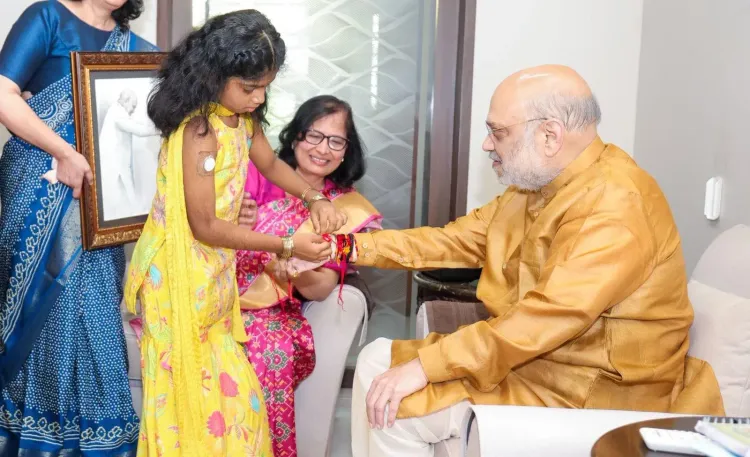
Amit Shah celebrated Raksha Bandhan on 28 August with girls suffering from Type-1 juvenile diabetes in Gandhinagar .
The initiative provides free insulin for life to children aged 0–18 years in the Gandhinagar parliamentary constituency.
The programme follows guidelines issued on 30 April under Rashtriya Bal Swasthya Karyakram (RBSK) 2.0 .
An integrated system covering screening, diagnosis, treatment, and follow-up has been established under Shah's supervision in Gandhinagar.
Shah called the initiative historic, noting that even many developed countries have not implemented a comparable free-insulin system for children.
Gujarat CM Bhupendra Patel's government has been credited with delivering the scheme at the grassroots level.
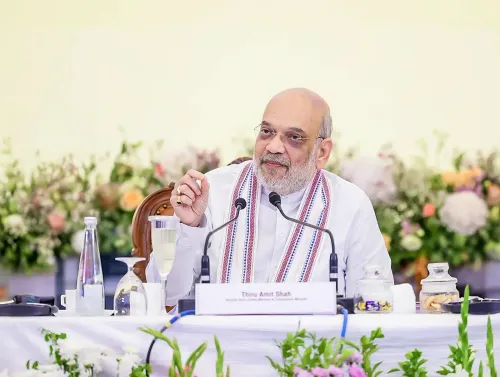
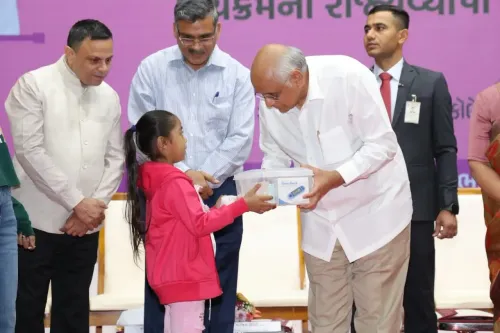
Union Home Minister Amit Shah on Friday, 28 August celebrated Raksha Bandhan with girls suffering from Type-1 juvenile diabetes in Gandhinagar, as the young patients tied rakhi to him during a ceremony that also spotlighted the constituency's free-insulin initiative for children up to 18 years of age. Shah, who also serves as the Gandhinagar Lok Sabha MP, used the occasion to underscore the government's commitment to accessible healthcare for economically weaker families.
What the Initiative Covers
The programme provides free insulin for life to children aged zero to 18 years diagnosed with Type-1 juvenile diabetes in the Gandhinagar parliamentary constituency. An integrated system covering screening, diagnosis, insulin supply, treatment, monitoring, and follow-up has been established locally. The initiative follows guidelines issued on 30 April for Diabetes Mellitus in children under the Rashtriya Bal Swasthya Karyakram (RBSK) 2.0 framework.
Why This Matters for Affected Families
Children with Type-1 diabetes require insulin injections throughout their lives, and according to party sources, the cumulative cost of lifelong treatment can place a substantial financial burden on economically weaker and deprived families. The Gandhinagar model attempts to remove that barrier entirely by integrating every stage of care — from first screening to long-term follow-up — under a single system, reportedly set up under Shah's direct supervision.
What Shah Said
Speaking at the Raksha Bandhan celebration, Shah described the initiative as historically significant. 'Under the leadership of Prime Minister Narendra Modi, this is a historic initiative, because even many developed countries have not been able to implement such a system of providing insulin free of cost,' he said.
He framed the programme around three principles: 'service, sensitivity and security.' Shah added, 'For the BJP government, public service is not merely a responsibility, but the core principle of sensitive governance. Only when the health of a daughter is protected, will the future of the family and society be secure.'
Connecting the occasion to the spirit of Raksha Bandhan, he said the free-insulin drive was 'a symbol of our commitment towards the protection of daughters and the health of daughters.'
Broader Context and State Role
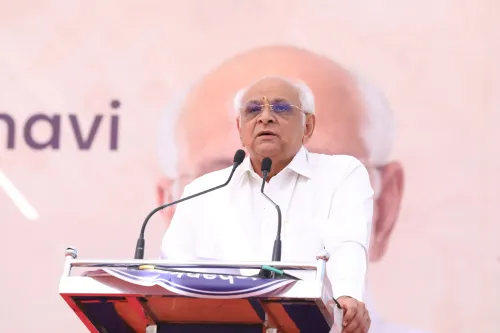
Shah also credited the Gujarat state government under Chief Minister Bhupendra Patel with actively channelling central welfare schemes to citizens at the ground level. He noted that the Centre's broader health-sector push under Prime Minister Modi had made healthcare services more accessible to ordinary citizens across India. Notably, the Gandhinagar model could serve as a template for scaling the RBSK 2.0 diabetes guidelines to other constituencies and districts.
What Comes Next
With the integrated system already operational in Gandhinagar, attention will now turn to whether the free-insulin model is replicated across Gujarat and eventually at the national level under RBSK 2.0. Health advocates have long argued that Type-1 diabetes management remains critically underfunded in India's public health infrastructure, making the Gandhinagar pilot a closely watched proof of concept.
Point of View
It deserves replication — but that requires budget commitments and health-worker capacity that a single MP's oversight cannot guarantee across India's 543 constituencies. The claim that 'even developed countries' have not matched this is worth scrutinising: several European nations provide subsidised or free insulin to minors through universal health coverage. The initiative is meaningful; the hyperbole around it is not.
NationPress
28 Aug 2026
Frequently Asked Questions
What is the free-insulin initiative Amit Shah highlighted on Raksha Bandhan?
It is a programme in the Gandhinagar parliamentary constituency that provides free insulin for life to children aged 0–18 years diagnosed with Type-1 juvenile diabetes. The initiative follows RBSK 2.0 guidelines issued on 30 April and covers the full care cycle from screening and diagnosis to treatment and follow-up.
Why do children with Type-1 diabetes need lifelong insulin?
Type-1 diabetes is an autoimmune condition in which the body produces no insulin, making external insulin injections a lifelong medical necessity. Without consistent access to insulin, the condition can be life-threatening, and the cost of uninterrupted supply can be prohibitive for low-income families.
What is Rashtriya Bal Swasthya Karyakram (RBSK) 2.0?
RBSK 2.0 is an updated national child health screening and early intervention programme under which guidelines for managing Diabetes Mellitus in children were issued on 30 April. The Gandhinagar initiative operates within this framework to extend free insulin to eligible children.
Who is eligible for free insulin under the Gandhinagar scheme?
Children aged between zero and 18 years diagnosed with Type-1 juvenile diabetes in the Gandhinagar parliamentary constituency are eligible. The integrated system provides screening, diagnosis, free insulin, and long-term monitoring at no cost to the family.
Could this model be extended to other parts of India?
That remains to be seen. Shah's remarks suggest the Gandhinagar system could serve as a template, and RBSK 2.0 provides the national policy framework. However, scaling it across India would require sustained budgetary allocation and trained health workers at the district level — details that have not yet been officially announced.