Nepal glacier collapse sparks anti-China misinformation wave
Synopsis
Scientists and both governments agree: a Himalayan glacier collapse caused this week's deadly China-Nepal border flood — yet social media accounts, including one claiming to be a Nepal investigative outlet, falsely blamed Chinese construction, keeping an information war alive even after the facts were settled.
Key Takeaways
A glacier on the Nepal side of the Himalayas collapsed, causing a deadly flash flood along the China-Nepal border this week.
Both Beijing and Kathmandu agreed on the scientific analysis confirming a natural glacial origin for the disaster.
Social media posts falsely claimed a Chinese dam in Tibet or mega infrastructure projects caused the flood.
The account Nepal Correspondence posted on Wednesday that Chinese construction in the Himalayas was responsible, calling it 'a purposeful ecological disaster.' Researchers from institutions including the Chinese Academy of Sciences and Newcastle University have identified climate-driven glacial instability — not construction — as the primary flood risk in the region.
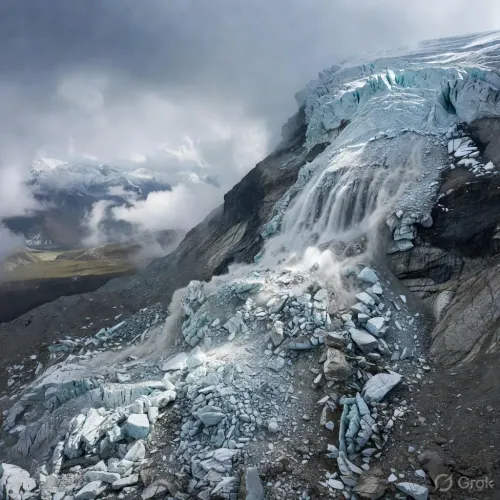
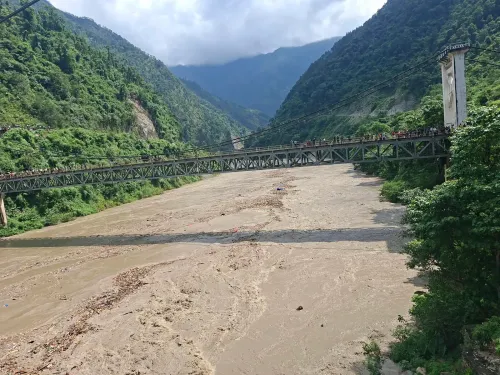
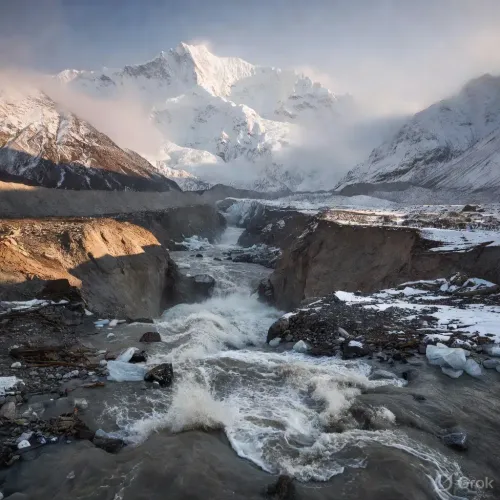
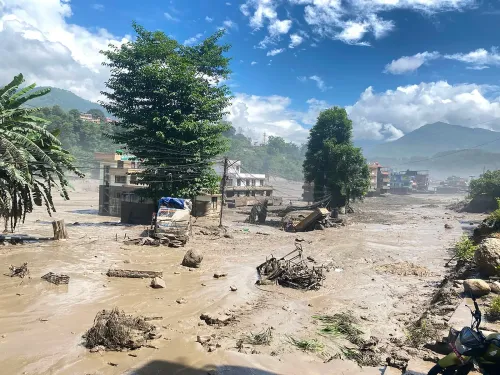
A glacier collapse on the Nepal side of the Himalayas triggered a deadly flash flood along the China-Nepal border this week, but the disaster's clear scientific origin did little to stop a surge of social media misinformation that falsely attributed the catastrophe to Chinese-built infrastructure in the region.
What scientists say happened
According to scientists, a glacier high on the Nepal side of the Himalayan range collapsed, sending catastrophic volumes of water and debris downstream. Both Beijing and Kathmandu subsequently agreed on this scientific analysis, leaving little ambiguity about the natural origin of the event.
How misinformation spread
The initial uncertainty over the cause of the flood created an opening for speculation on social media. Users began questioning whether the disaster originated from the Chinese side of the border, with some posts claiming a Chinese dam in Tibet had collapsed, while others pointed to mega infrastructure projects in the area as the culprit.
A social media account called Nepal Correspondence — which describes itself as a Nepal-based investigative journalism platform — posted on Wednesday that the flash flood was caused by Chinese construction in the Himalayas. 'This is not only a purposeful ecological disaster but is cruel too,' the post read.
Why it matters
The episode illustrates how natural disasters in geopolitically contested regions can rapidly become vectors for information warfare. Even after official consensus was reached between Beijing and Kathmandu, the war of information over China's activities in the region continued to brew online, underscoring the difficulty of correcting viral falsehoods once they take hold.
The Himalayas and surrounding areas — including Gyirong Port on the China-Nepal border — have seen significant Chinese infrastructure investment in recent years, providing fertile ground for narratives that conflate development activity with environmental harm.
The competitive backdrop
Analysts including Brahma Chellaney have long argued that China's upstream dam and infrastructure projects pose downstream risks to South Asian neighbours, a view that gives misinformation narratives a degree of surface plausibility even when the facts do not support them. Institutions such as the Chinese Academy of Sciences and researchers at Newcastle University have studied glacial lake outburst floods in the region, noting that climate-driven glacial instability — not construction — is the dominant risk factor.
What's next
As climate change accelerates glacial melt across the Himalayas, similar events are expected to become more frequent, meaning the information environment around each disaster will be an ongoing challenge for governments and fact-checkers alike. How Kathmandu and Beijing coordinate public communication in the aftermath of future events may determine whether misinformation gains traction again.
Point of View
Often before any evidence is available. What mainstream coverage tends to underplay is the structural advantage misinformation holds: a false claim that confirms a pre-existing geopolitical suspicion travels faster than a scientific correction. The existence of genuine controversies around Chinese upstream projects — however unrelated to this specific event — gives such narratives just enough plausibility to persist. Governments and multilateral science bodies will need far more proactive real-time communication strategies if they hope to close the window that initial uncertainty opens for bad-faith actors.
NationPress
28 Aug 2026
Frequently Asked Questions
What caused the Nepal flash flood this week?
A glacier on the Nepal side of the Himalayan range collapsed, sending catastrophic amounts of water and debris downstream. Both the governments of Beijing and Kathmandu agreed on this scientific conclusion.
Did a Chinese dam or construction project cause the Nepal flood?
No. Scientists identified a glacial collapse on the Nepal side as the cause, and both Beijing and Kathmandu accepted this analysis. Claims blaming Chinese dams in Tibet or infrastructure projects were identified as misinformation.
What is Nepal Correspondence and what did it claim?
Nepal Correspondence is a social media account that describes itself as a Nepal-based investigative journalism platform. It posted on Wednesday that the flash flood was caused by Chinese construction in the Himalayas, calling it 'a purposeful ecological disaster.'
Why does misinformation about China and the Nepal flood spread so easily?
Initial uncertainty about the disaster's cause created a window for speculation. China's significant infrastructure presence in the Himalayan region — including near Gyirong Port — gives false narratives surface plausibility, making them harder to debunk quickly.
Are Himalayan glacial floods expected to increase?
Yes. Researchers at institutions including the Chinese Academy of Sciences and Newcastle University have noted that climate-driven glacial instability is the dominant risk factor for such events in the Himalayas, and their frequency is projected to rise as global temperatures increase.