Amit Shah releases Narcotics Control Vision 2026-2029, demands ruthless crackdown on drug traffickers
Synopsis
At India's highest narcotics coordination forum, Amit Shah unveiled a four-year anti-drug roadmap targeting synthetic drugs and darknet trafficking — and destroyed ₹12,525 crore worth of seized narcotics in a single day. The Vision Document 2026-2029 is the most comprehensive federal drug-control blueprint in years, with an explicit accountability mandate: every NCB metric must improve by next year.
Key Takeaways
Home Minister Amit Shah released the Narcotics Control Vision Document 2026-2029 at the 10th NCORD apex meeting in New Delhi on 26 June .
Shah called for an intelligence-led, technology-driven, ruthless approach against drug traffickers, while urging compassion toward addicted youth.
Agencies destroyed seized drugs worth ₹12,525 crore in a single day under the Online Drug Disposal Fortnight Campaign .
The Vision Document targets demand reduction, supply reduction, and rehabilitation , with specific focus on synthetic drugs and darknet trafficking.
New NCB zonal offices in Jammu and Guwahati were inaugurated; the NCB Annual Report 2025 was also released.
Shah set a one-year performance benchmark, directing that no NCB indicator should fall below current levels in the next annual report.
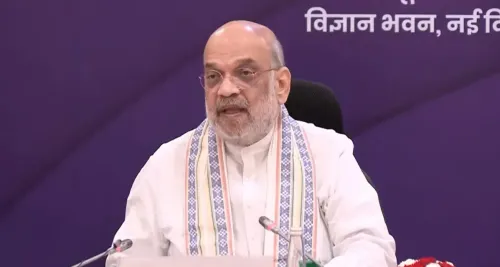
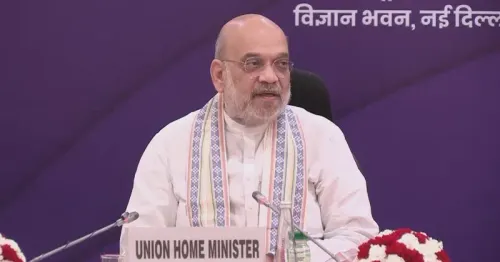
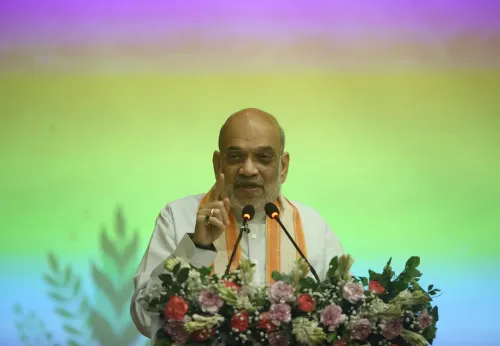
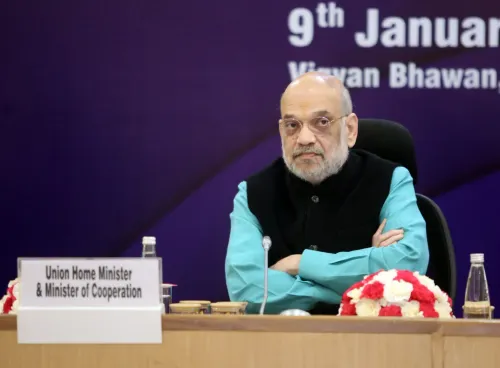
Union Home Minister Amit Shah on Friday, 26 June released the Narcotics Control Vision Document 2026-2029 and called for a technology-driven, 'ruthless approach' by law enforcement agencies against drug traffickers — while urging compassion toward those struggling with addiction. The announcement came at the 10th apex-level meeting of the Narco-Coordination Centre (NCORD) held in New Delhi.
Key Announcements at the NCORD Meeting
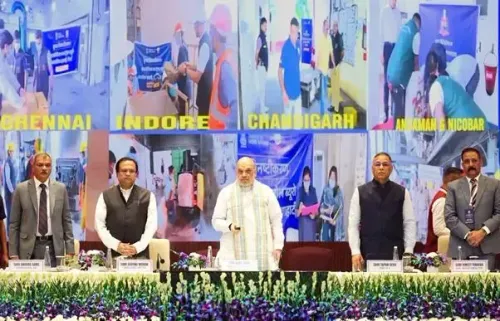
Chairing the meeting, Shah released the NCB Annual Report 2025 and inaugurated newly constructed Narcotics Control Bureau (NCB) zonal offices in Jammu and Guwahati. He also launched the 'Online Drug Disposal Fortnight Campaign', commending narcotics and law enforcement agencies for destroying seized drugs worth ₹12,525 crore in a single day.
The meeting was jointly organised by the Ministry of Home Affairs (MHA) and the NCB, bringing together representatives from central ministries, state governments, and drug law enforcement agencies to review and strengthen anti-drug efforts nationwide.
What Shah Said: Intelligence-Led, Network-Centric Strategy
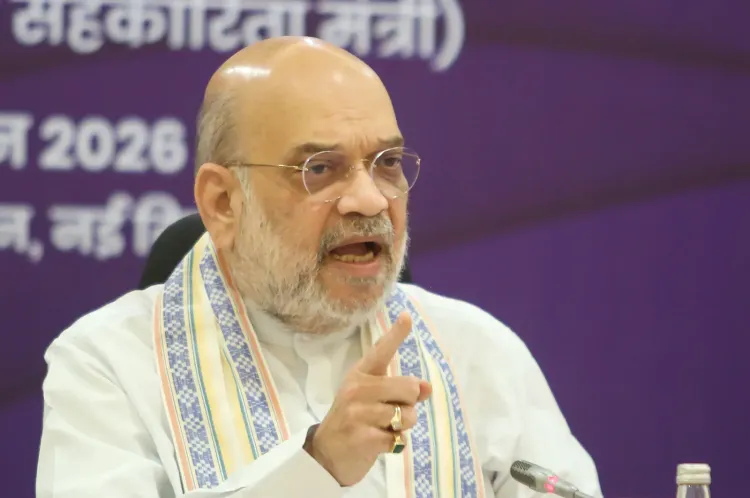
'If we fight against drug trafficking collectively, we will cover a long distance in this battle in the next three years,' Shah said. He outlined a multi-pronged operational doctrine: 'Our response must be intelligence-led. We need to adopt a technology-driven approach. We will have to fight using a network-centric strategy. We must move forward with a ruthless approach; only then can we achieve victory against this challenge.'
Crucially, Shah drew a clear distinction in that doctrine — the 'ruthless approach' is directed exclusively at traffickers, not at victims. 'Their approach towards the youth, who have got addicted to drugs, should be of compassion,' he said, urging officials to intensify efforts toward Nasha Mukt Bharat (Drug-Free India) and deliver measurable improvements within the next one year so the two-year strategy can be recalibrated for greater effectiveness.
What the Vision Document 2026-2029 Covers
The Narcotics Control Vision Document 2026-2029, prepared after extensive stakeholder consultations, is designed to serve as a national roadmap for tackling the drug menace through coordinated action. Its three core pillars are demand reduction, supply reduction, and rehabilitation.
Notably, the document directly addresses two emerging threats: the rapid proliferation of synthetic drugs and the growing use of the darknet for drug trafficking — challenges that traditional enforcement frameworks were not built to handle. It also provides a framework for strengthening awareness campaigns, treatment facilities, and rehabilitation services for those affected by substance abuse.
Why This Matters
The NCORD apex meeting is the highest-level inter-agency coordination forum on narcotics in India, and its 10th edition signals sustained institutional attention on a problem that has intensified in border states and among urban youth. India's geographic position — flanked by the Golden Crescent to the northwest and the Golden Triangle to the northeast — makes it both a transit and consumption market. The pivot toward technology and darknet surveillance reflects an acknowledgement that the drug trade has outpaced conventional policing.
Shah's instruction that every metric in the NCB Annual Report must improve by the next edition adds a rare accountability benchmark to what is often a policy announcement without measurable targets. How enforcement agencies operationalise the Vision Document's framework will determine whether the 2026-2029 roadmap translates into verifiable outcomes.
Point of View
Which previous frameworks largely sidestepped. But the real test is enforcement bandwidth: India's NCB remains understaffed relative to the scale of the problem, and new zonal offices in Jammu and Guwahati, while symbolically important, are marginal additions. Shah's accountability instruction — that every metric must improve — is the kind of measurable mandate that rarely survives bureaucratic inertia. The ₹12,525 crore single-day destruction figure is striking, but destruction statistics have historically been easier to generate than supply-chain disruption at the source. Whether the intelligence-led, network-centric doctrine translates into prosecutions and convictions, rather than seizure headlines, will be the true measure of this roadmap.
NationPress
26 Jun 2026
Frequently Asked Questions
What is the Narcotics Control Vision Document 2026-2029?
It is a four-year national roadmap released by Home Minister Amit Shah on 26 June at the 10th NCORD apex meeting, covering demand reduction, supply reduction, and rehabilitation. It specifically addresses synthetic drugs and darknet-based drug trafficking, and was prepared after extensive stakeholder consultations.
What did Amit Shah mean by a 'ruthless approach' against drug traffickers?
Shah called for an intelligence-led, technology-driven, network-centric enforcement strategy directed strictly at drug traffickers — not at those addicted to drugs, toward whom he urged compassion. The phrase signals a hardline operational posture for law enforcement agencies under the new Vision Document.
How much in seized drugs was destroyed during the NCORD meeting?
Narcotics and law enforcement agencies destroyed seized drugs worth ₹12,525 crore in a single day as part of the 'Online Drug Disposal Fortnight Campaign' launched at the meeting.
What is NCORD and why is its 10th meeting significant?
The Narco-Coordination Centre (NCORD) is India's apex inter-agency forum for narcotics coordination, bringing together central ministries, state governments, and drug enforcement agencies. The 10th apex-level meeting marks a decade of high-level federal coordination on drug control, with the new Vision Document setting the agenda for the next three years.
Which new NCB offices were inaugurated at the meeting?
Home Minister Amit Shah inaugurated newly constructed NCB zonal offices in Jammu and Guwahati, expanding the bureau's operational footprint in two strategically important regions bordering drug-trafficking corridors.