Hong Kong civil liberties crisis: How Beijing's NSL crackdown is reshaping Asia's financial hub
Synopsis
Once Asia's freest financial hub, Hong Kong is now a cautionary tale of authoritarian overreach. Since the 2020 National Security Law, activists have been jailed under retroactive charges, Apple Daily has been shut, and multinationals are quietly moving to Singapore and Tokyo. Beijing may be winning the political battle — but it is losing the economic argument, and the world is watching.
Key Takeaways
Hong Kong's National Security Law , imposed in 2020 , has been used to prosecute activists including Joshua Wong , Chow Hang-tung , Lee Cheuk-yan , and Albert Ho .
Charges such as 'collusion with foreign forces' have reportedly been applied retrospectively to conduct that was lawful before the NSL took effect.
Independent outlet Apple Daily has been forced to close; journalists face sedition charges and NGOs have dissolved under legal pressure.
Major foreign companies have shifted operations to Singapore and Tokyo , while housing prices have slumped and skilled professionals have emigrated.
The United States and United Kingdom have imposed sanctions on Hong Kong officials and revoked the city's special trade status.
Human rights groups say the retroactive application of the NSL violates the Sino-British Joint Declaration .
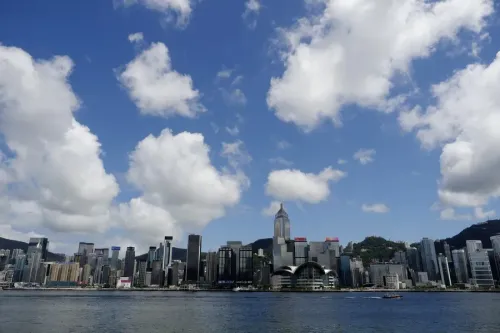
Hong Kong, long regarded as Asia's most dynamic financial centre and a bastion of civil liberties, is facing what analysts describe as a systematic dismantling of its democratic foundations — a transformation accelerated since the imposition of the National Security Law (NSL) in 2020. According to an analysis published in the Asian News Post, the Chinese Communist Party (CCP) has tightened its grip over the city in ways that have alarmed governments, investors, and human rights organisations worldwide.
Activists Jailed, Dissent Criminalised
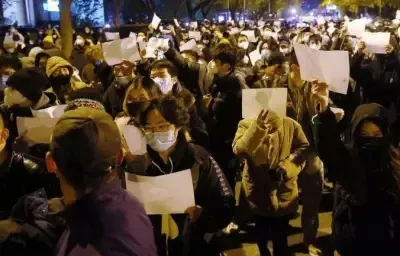
The article cites the convictions of prominent civil rights figures — including Joshua Wong, Chow Hang-tung, Lee Cheuk-yan, and Albert Ho — as evidence of Beijing's determination to silence political opposition. Authorities have reportedly charged activists under broadly worded offences such as 'collusion with foreign forces' and 'incitement to subversion', categories that critics argue have been applied retrospectively to conduct that was entirely lawful before the NSL came into force.
Human rights organisations have condemned this retroactive application of law, calling it a violation of the Sino-British Joint Declaration — the internationally recognised agreement that underpinned Hong Kong's 'one country, two systems' framework. The chilling effect, according to the report, has been severe: even peaceful advocacy for democracy or human rights is now treated as a potential criminal act.
Media Shutdowns and Civil Society Under Pressure
The squeeze has not been limited to individual activists. Independent media outlets, most notably Apple Daily, have been forced to close their operations. Journalists reportedly face sedition charges, and numerous non-governmental organisations have dissolved under sustained legal pressure. The erosion of press freedom has drawn condemnation from international watchdogs and further deepened concerns about the city's governance trajectory.
Notably, Hong Kong's distinct identity as a semi-autonomous city — with freedoms and legal protections explicitly separate from those of mainland China — is, according to the report, being progressively erased.
Economic Fallout: Companies Exit, Talent Drains
Beijing's political campaign carries significant economic costs, the analysis warns. Major foreign corporations have reportedly shifted regional operations to Singapore and Tokyo, citing political instability and legal unpredictability. Housing prices have slumped, foreign direct investment has slowed, and tens of thousands of skilled professionals have emigrated, hollowing out the city's talent base.
'The CCP is trading Hong Kong's prosperity for political dominance, a gamble that could permanently downgrade the city's global standing,' the article stated. This exodus represents a structural risk to Hong Kong's decades-long role as the premier gateway for international capital entering China.
International Response: Sanctions and Diplomatic Pressure
The United States and the United Kingdom have both imposed sanctions on Hong Kong officials and revoked the city's special trade status — measures that compound the economic pressures already weighing on the financial hub. Diplomatically, the report frames Hong Kong as a test case for China's broader ambition to extend authoritarian governance beyond its formal borders.
This comes amid already strained relations between Beijing and Western capitals over a range of geopolitical issues, from Taiwan to trade restrictions on Chinese technology firms.
What Comes Next
The analysis concludes that unless Beijing recalibrates its approach, Hong Kong risks being reduced from a globally connected powerhouse to a tightly managed provincial outpost. The city's future as Asia's financial heart — and its value to China itself as an international capital conduit — depends, the article argues, on whether the political calculus in Beijing shifts. For now, observers say, the direction of travel shows no sign of reversing.
Point of View
But the exodus of firms to Singapore and talent to the West suggests that cost is compounding faster than anticipated. What mainstream coverage often underplays is the Sino-British Joint Declaration dimension: its retrospective violation sets a precedent that unnerves every government that has signed an agreement with Beijing. For India, which watches China's governance ambitions closely, Hong Kong is a live case study in what 'one country, two systems' looks like when one party decides the arrangement is inconvenient.
NationPress
27 Sept 2026
Frequently Asked Questions
What is the National Security Law imposed on Hong Kong?
The National Security Law (NSL) is legislation imposed by Beijing in June 2020 that criminalises acts of secession, subversion, terrorism, and collusion with foreign forces in Hong Kong. Critics argue its broad and vaguely worded provisions have been used to prosecute peaceful pro-democracy activists and journalists, including figures such as Joshua Wong and Chow Hang-tung.
Which Hong Kong activists have been convicted under the NSL?
Among the prominent figures convicted or jailed are Joshua Wong, Chow Hang-tung, Lee Cheuk-yan, and Albert Ho — all longstanding civil rights advocates. Their prosecutions are cited as evidence of Beijing's systematic effort to silence political dissent in the city.
How has the NSL crackdown affected Hong Kong's economy?
The political uncertainty has prompted major foreign companies to shift regional operations to Singapore and Tokyo. Housing prices have slumped, foreign investment has slowed, and tens of thousands of skilled professionals have emigrated, according to the report. The city's decades-long status as Asia's premier financial gateway is at risk.
What action have the US and UK taken over Hong Kong?
Both the United States and the United Kingdom have imposed sanctions on Hong Kong officials and revoked the city's special trade status in response to the crackdown on civil liberties. These measures add to the economic pressures already weighing on the city.
Why does the Sino-British Joint Declaration matter in this context?
The Sino-British Joint Declaration is the 1984 international treaty under which Britain handed Hong Kong to China, guaranteeing the city a high degree of autonomy and civil freedoms until 2047 under the 'one country, two systems' framework. Human rights organisations argue that the retroactive application of the NSL violates this agreement, which they describe as illegitimate under international law.