HP CM Office: 75,409 Girls Benefit from Beti Hai Anmol Yojana
Synopsis
The Himachal Pradesh government's Beti Hai Anmol Yojana has enrolled 75,409 BPL girls since August 2021, providing each a ₹21,100 fixed deposit, ₹12,000 lump-sum aid, and annual scholarships redeemable at age 18.
Key Takeaways
75,409 girls from BPL families have benefited from Himachal Pradesh's Beti Hai Anmol Yojana since 12 August 2021 .
Each eligible girl receives a fixed deposit of ₹21,100 , redeemable with interest at age 18 .
A one-time lump-sum assistance of ₹12,000 is also provided to the family at birth.
Annual scholarships are disbursed through the girl's school years to support educational continuity.
The scheme targets girls born into BPL (Below Poverty Line) households after 12 August 2021 .
The initiative complements the national Beti Bachao Beti Padhao framework launched in 2015 .
A fixed deposit of ₹21,100, a lump-sum grant of ₹12,000, annual scholarships, and a maturity payout with interest at age 18 — that is the financial promise the Himachal Pradesh government is making to every girl born into a Below Poverty Line (BPL) family after 12 August 2021, and so far 75,409 daughters have stepped into that safety net.
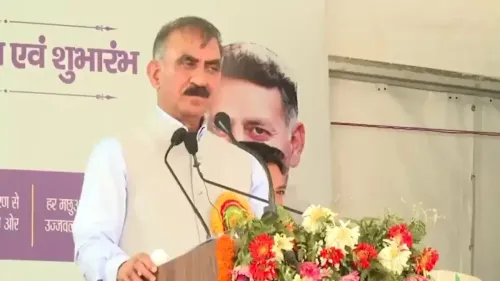
The Chief Minister's Office of Himachal Pradesh announced on 24 September 2026 that the Beti Hai Anmol Yojana — translating to 'The Daughter is Priceless Scheme' — has now reached this milestone beneficiary count, underscoring the state's sustained push to convert welfare intent into household-level financial security for its most vulnerable girls.What the scheme actually puts in a girl's hands
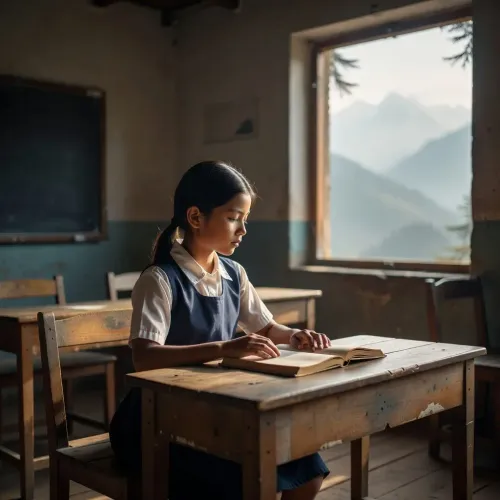
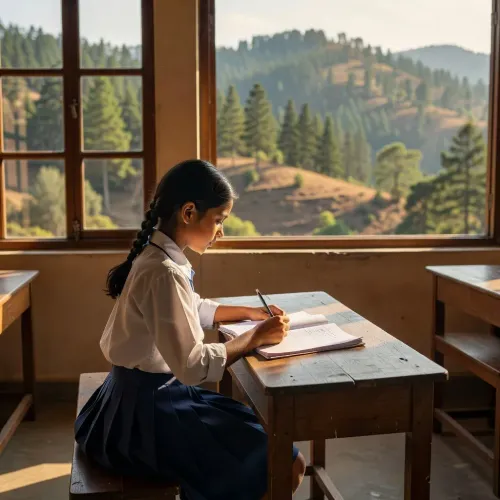
The architecture of Beti Hai Anmol Yojana is deliberately layered. At birth, a fixed deposit of ₹21,100 is created in the girl's name — a sum designed to sit, grow, and be redeemed when she turns 18, with accumulated interest. Alongside that, a one-time assistance of ₹12,000 goes directly to the family, cushioning the immediate costs that often make a newborn girl feel like a burden in a cash-strapped household. Annual scholarships run through her school years, tethering financial support to educational continuation — the precise lever policymakers have identified as critical to keeping girls enrolled rather than married off early.
Together, these three instruments — the FD, the lump sum, and the recurring scholarship — address three distinct dropout moments: birth, early childhood, and the mid-school years when economic pressure on poor families tends to peak.
Where this fits in India's girl-child welfare arc
The scheme sits within a well-established national policy tradition. The central Beti Bachao Beti Padhao programme, launched in 2015, set the ideological template — improve child sex ratios, promote education, and mobilise state governments into action. Himachal Pradesh's approach sharpens that template by anchoring benefits to concrete age and education milestones, a design feature that conditional cash transfer research across Indian states has consistently flagged as more effective than one-off payouts.
Himachal Pradesh, a northern hill state with relatively stronger human development indicators than many peers, has used such targeted schemes to address pockets of gender disparity that aggregate statistics can obscure — particularly in remote, economically weaker tribal and rural belts where BPL concentration is highest.
75,409 — and the road still ahead
The figure of 75,409 beneficiaries — cited directly by the CMO — represents girls enrolled since the scheme's revised implementation began post-August 2021. How the state funds further expansion, whether benefit amounts are revised upward in coming budget sessions, and how effectively the scholarship component is tracked for actual school-retention outcomes will determine whether this number becomes a floor or a ceiling.
For now, the government's message is unambiguous: in Himachal Pradesh, a girl born poor is not born without a plan.
Point of View
A design the state appears to be doubling down on. With over 75,000 beneficiaries in roughly five years, the scheme's political utility for the ruling government is clear: a tangible, name-able number to anchor gender-welfare messaging. The sharper policy question is whether the scholarship component is generating measurable school-retention gains among BPL girls, or whether the FD is the headline and the educational link is undertracked. Future budget allocations and any upward revision of benefit amounts will be the real test of whether this is a flagship or a frozen figure.
NationPress
24 Sept 2026
Frequently Asked Questions
What is the Beti Hai Anmol Yojana in Himachal Pradesh?
Beti Hai Anmol Yojana is a Himachal Pradesh government scheme that provides girls from BPL families — born after 12 August 2021 — with a ₹21,100 fixed deposit (payable with interest at age 18), a ₹12,000 one-time grant, and annual scholarships to support their education and financial security.
Who is eligible for Beti Hai Anmol Yojana?
Girls born into Below Poverty Line (BPL) families in Himachal Pradesh after 12 August 2021 are eligible for benefits under the scheme.
How many girls have benefited from Beti Hai Anmol Yojana so far?
According to the Chief Minister's Office of Himachal Pradesh, 75,409 girls have benefited from the scheme as of September 2026.
What financial benefits does Beti Hai Anmol Yojana provide?
The scheme provides three financial benefits: a fixed deposit of ₹21,100 in the girl's name (with interest paid at age 18), a one-time lump-sum assistance of ₹12,000 to the family, and annual scholarships throughout the girl's school years.
How does Beti Hai Anmol Yojana relate to Beti Bachao Beti Padhao?
Beti Hai Anmol Yojana is a state-level scheme by Himachal Pradesh that builds on the spirit of the central Beti Bachao Beti Padhao programme launched in 2015, which aimed to improve child sex ratios and promote girl-child education across India.