HP Climbs to 5th in Education Quality, CM Office Vows Full Budget
Synopsis
Himachal Pradesh has climbed from 21st to 5th in quality education rankings and reported a significant rise in CBSE school enrolments, with the Chief Minister's Office pledging uninterrupted resources and budget to sustain both gains.
Key Takeaways
Himachal Pradesh has moved from 21st to 5th place in quality education rankings, a jump of 16 positions.
Student enrolment in CBSE-affiliated schools in the state has seen a 'remarkable increase,' according to the CM Office.
The Chief Minister's Office has committed that no shortage of resources or budget will be permitted in either area.
Progress aligns with the national framework of the National Education Policy 2020 and the Right to Education Act, 2009 .
The Ministry of Education's Performance Grading Index is the key instrument through which such state-level rankings are tracked and validated.
The next PGI report and Himachal Pradesh's education budget allocations will be critical tests of whether the gains are sustained.
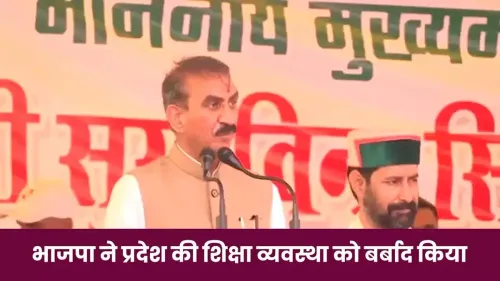
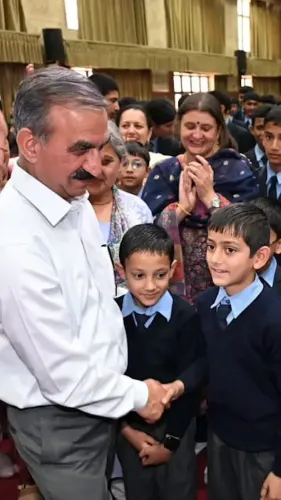
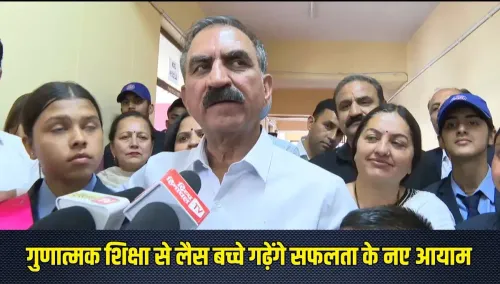
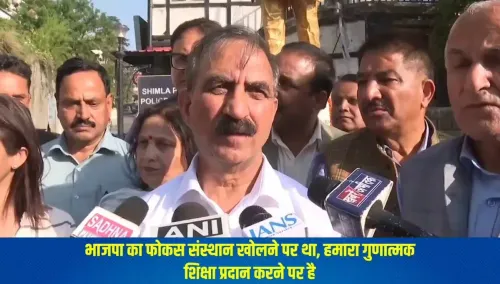
The Chief Minister's Office of Himachal Pradesh announced on Friday, 24 July 2026, that the state has risen from 21st place to 5th place in quality education rankings, while also recording a notable increase in student enrolment in CBSE-affiliated schools. The office pledged that no shortage of resources or budget would be allowed in sustaining this progress.
The post, shared by the official Chief Minister's Office, Himachal Pradesh (@CMOFFICEHP), stated in Hindi: 'गुणवत्तापूर्ण शिक्षा के क्षेत्र में हिमाचल 21वें स्थान से 5वें स्थान पर पहुँचा है' ('Himachal has moved from 21st to 5th place in the field of quality education'). It further noted that enrolment of children in CBSE schools has also seen a remarkable increase, and committed that 'no shortage of resources and budget will be allowed' in either area.
Context
Himachal Pradesh has historically maintained one of the higher literacy rates among Indian states, but movement in quality-of-education rankings represents a more demanding benchmark than basic literacy. Indian states are assessed on school education quality and access through structured indices monitored by the Ministry of Education, including the Performance Grading Index (PGI), which evaluates governance, learning outcomes, infrastructure, and equity across all states and union territories.
A jump of 16 positions — from 21st to 5th — would represent a significant leap in any such ranking cycle, signalling systemic improvements rather than incremental gains. The announcement comes alongside a reported surge in CBSE school enrolments, reflecting growing parental preference for central board schooling in the state.
Policy Backdrop
The policy environment underpinning this progress draws from two landmark frameworks. The Right to Education Act, 2009 made free and compulsory education a fundamental right and drove enrolment growth across states including Himachal Pradesh. The National Education Policy (NEP) 2020 subsequently shifted the focus toward quality outcomes, teacher training, foundational literacy and numeracy, and holistic development — metrics that directly influence state rankings.
Post-pandemic recovery has also played a role nationally, with several states reporting enrolment rebounds in central board schools as families returned children to formal schooling. CBSE, as India's national school board, has seen its affiliated school network expand in smaller states, and Himachal Pradesh appears to be among the beneficiaries of this trend.
Stakeholders and Impact
The most direct beneficiaries of this trajectory are school students and families across Himachal Pradesh, particularly those in CBSE-affiliated institutions who gain access to a nationally recognised curriculum and board examinations. Higher rankings also carry reputational and administrative weight, potentially attracting greater central government attention and funding to the state's education sector.
Teachers, school administrators, and local government bodies stand to see increased institutional investment if the CM Office's budget commitment is translated into allocations in the upcoming state education budget. The pledge that 'resources and budget' will face no cuts signals a protective stance toward education spending even amid broader fiscal pressures that many hill states face.
What's Next
Attention will now turn to the release of the next Performance Grading Index report by the Ministry of Education, which will either corroborate or contextualise the state's claimed ranking improvement. Equally significant will be Himachal Pradesh's education budget allocations in the coming fiscal cycle, which will test whether the CM Office's commitment to uninterrupted funding translates into concrete expenditure lines. Sustained improvement at this level will require continued investment in teacher quality, school infrastructure, and learning outcome measurement — all areas where the NEP 2020 framework provides a ready roadmap.
Point of View
Ring-fencing education spending is both a policy statement and a political one. The claim of a 16-position jump in quality rankings, if validated by the next Performance Grading Index cycle, would place Himachal Pradesh among the top-performing states nationally — a rare achievement that would carry significant credibility. The broader pattern here mirrors a nationwide trend where state governments are increasingly using education metrics as a proxy for overall governance quality, making the forthcoming PGI report a high-stakes data point for the state.
NationPress
24 Jul 2026
Frequently Asked Questions
What rank has Himachal Pradesh achieved in education quality?
According to the Chief Minister's Office of Himachal Pradesh, the state has risen to 5th place in quality education rankings, up from 21st place previously.
Which ranking index measures state education quality in India?
The Performance Grading Index (PGI) , published by the Ministry of Education , is the primary instrument used to rank Indian states and union territories on school education quality, access, and governance.
Why are CBSE school enrolments rising in Himachal Pradesh?
The CM Office cited a 'remarkable increase' in CBSE school enrolments in Himachal Pradesh , consistent with a broader national trend of post-pandemic enrolment recovery and growing parental preference for central board schooling in smaller states.
What is the National Education Policy 2020 and how does it relate to this?
The National Education Policy (NEP) 2020 is India's overarching school and higher education reform framework that prioritises learning outcomes, teacher training, and foundational skills — the same metrics that drive improvements in state education rankings like the PGI.
Will Himachal Pradesh increase its education budget?
The Chief Minister's Office of Himachal Pradesh has pledged that no shortage of resources or budget will be allowed in the areas of quality education and CBSE school enrolment, though specific budget figures are yet to be announced.