Tharoor backs Wangchuk after fast ends, vows Parliament push
Synopsis
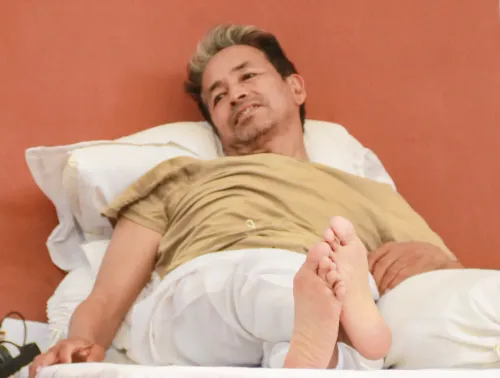
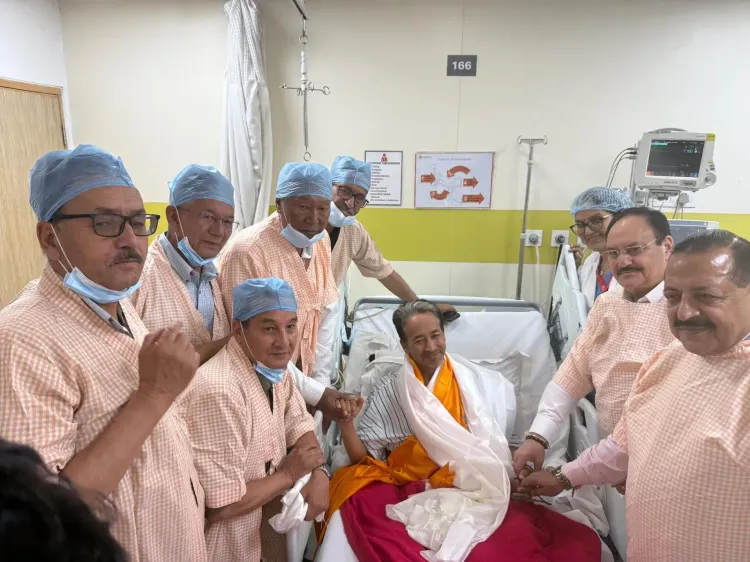
Congress MP Dr. Shashi Tharoor on 24 July 2026 welcomed Sonam Wangchuk's decision to end his hunger strike, calling it an 'extraordinary sacrifice', and pledged to continue pressing for a fair and accountable education system in Parliament and across democratic platforms.
Key Takeaways
Shashi Tharoor expressed relief that Sonam Wangchuk ended his hunger strike and wished him a full and speedy recovery.
Tharoor described the fast as an 'extraordinary sacrifice' that brought national attention to what he called a crisis in education.
He was explicit that the end of the fast does not end the struggle for a fair, transparent and accountable education system.
Tharoor pledged to raise the students' concerns in Parliament, in the media, and on every democratic platform available to him.
Ladakh , created as a Union Territory without a legislature in 2019 , lacks a direct legislative channel for residents to hold the administration accountable on education and governance.
The National Education Policy 2020 's implementation in remote Union Territories like Ladakh has faced scrutiny over equity and access.
Congress MP Dr. Shashi Tharoor on Friday, 24 July 2026 expressed relief at the end of Sonam Wangchuk's hunger strike, pledging to continue raising the demand for a fair and accountable education system in Parliament, the media, and on every democratic platform available to him.
Context
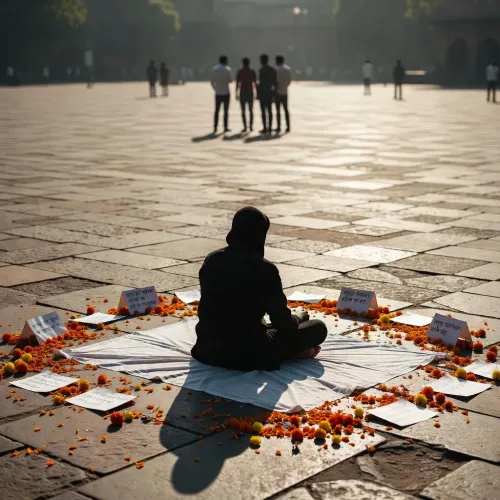
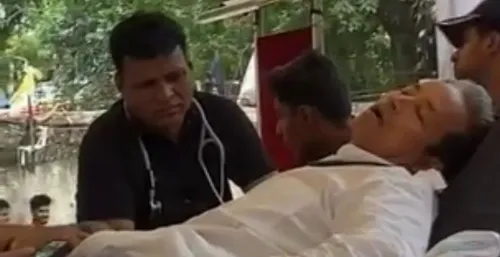
Sonam Wangchuk, the Ladakhi engineer, educator and founder of SECMOL (Students' Educational and Cultural Movement of Ladakh), had undertaken a fast to draw national attention to what he and his supporters describe as a crisis in education delivery and governance in the Union Territory of Ladakh. Tharoor, welcoming the end of the fast, described it as an 'extraordinary sacrifice' that succeeded in bringing the issue to national prominence.
In his post, Tharoor was unequivocal that the cessation of the hunger strike does not mark the end of the underlying struggle. 'The end of a hunger strike is not the end of this struggle,' he wrote, framing the episode as one chapter in a longer campaign for institutional accountability.
Policy Backdrop
The concerns voiced by Wangchuk and Ladakhi students sit at the intersection of two significant policy shifts. The National Education Policy 2020 restructured school and higher education across India, introducing new regulatory bodies and a push for multidisciplinary learning and equity — but its on-ground implementation in remote Union Territories has been uneven.
The constitutional reorganisation of 2019 bifurcated the erstwhile state of Jammu and Kashmir, creating Ladakh as a Union Territory without a legislature. That move concentrated administrative authority at the Centre, prompting persistent local protests over governance, development funding and the delivery of public services — including education. Critics argue that without an elected assembly, residents of Ladakh lack the legislative channel to hold the administration accountable on such issues.
Stakeholders and Impact
SECMOL, the NGO Wangchuk founded, has for decades worked to improve educational access and cultural preservation for Ladakhi youth. The students who participated in or supported the protest are seeking, in Tharoor's words, 'justice, not silence' — a phrase that captures the frustration of a young population that feels its aspirations are being unaddressed by the institutions meant to serve them.
Dr. Tharoor, a former Union Minister and former UN Under-Secretary-General representing Thiruvananthapuram in Kerala, has positioned himself as a parliamentary amplifier for the campaign. His commitment to raise the matter in Parliament signals that the issue may surface through formal legislative mechanisms — questions, adjournment motions or debates on education and Union Territory governance.
What's Next
With Wangchuk recovering and Tharoor pledging sustained advocacy, attention will shift to whether the Ministry of Education and the Ministry of Home Affairs — which oversees Union Territory administration — respond with concrete policy measures or dialogue. Parliamentary sessions will be a key arena to watch for follow-up questions on education reforms in Ladakh.
The broader pattern here is familiar: a public intellectual with a national platform amplifying a regional youth-led campaign to force institutional response. Whether that response materialises will test the proposition, as Tharoor put it, that 'democracy is strongest when it responds to the hopes and concerns of its young people.'
Point of View
He signals that this will become a legislative pressure point, not merely a social-media moment. The framing around youth and democratic responsiveness is also significant: it positions the opposition as the guardian of young aspirations at a time when Union Territory governance and the implementation of NEP 2020 remain contested. Whether the government engages or stonewalls will shape the political salience of Ladakhi grievances heading into the next parliamentary session.
NationPress
24 Jul 2026
Frequently Asked Questions
Why did Sonam Wangchuk go on a hunger strike?
Sonam Wangchuk undertook a hunger strike to draw national attention to what he and his supporters describe as a crisis in education delivery and governance in Ladakh, a Union Territory created in 2019 without a legislature. The specific circumstances of the 2026 fast are still emerging.
What did Shashi Tharoor say about Wangchuk's fast ending?
Tharoor said he was 'relieved' that Wangchuk ended his fast, called it an 'extraordinary sacrifice', and pledged to continue raising the demand for a fair and accountable education system in Parliament, the media, and every democratic platform available to him.
What is SECMOL and why is it relevant?
SECMOL, the Students' Educational and Cultural Movement of Ladakh, is an NGO founded by Sonam Wangchuk that works to improve educational access and cultural preservation for Ladakhi youth. It has been central to campaigns highlighting education gaps in the region.
How does Ladakh's Union Territory status affect education?
Since Ladakh became a Union Territory without a legislature in 2019, administrative authority is concentrated at the Centre. Residents lack a directly elected assembly to legislate on or hold the administration accountable for local issues including education delivery.
Will Shashi Tharoor raise the Ladakh education issue in Parliament?
Yes. Tharoor explicitly stated he will raise the students' concerns in Parliament, in addition to pursuing the issue through media and other democratic platforms, signalling potential parliamentary questions or debates on education reforms in Ladakh.