HP CM Office: 2 MW Solar Plant Lights Up Spiti Valley

Synopsis
The Chief Minister's Office of Himachal Pradesh has announced installation of a 2 megawatt solar power plant in Spiti Valley, one of India's most remote high-altitude regions, highlighting the project's visible impact on local women and the broader push for decentralised renewable energy in tribal areas.
Key Takeaways
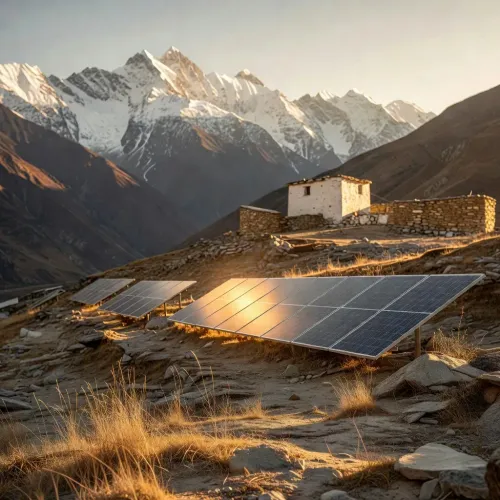
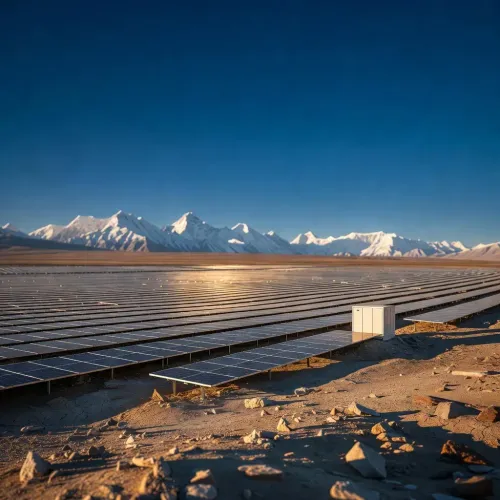
A 2 megawatt solar power plant has been installed in Spiti Valley , Lahaul and Spiti district, Himachal Pradesh.
The Chief Minister's Office of Himachal Pradesh shared the update on 18 October 2026 , citing visible joy among women residents as a key outcome.
Spiti Valley is a high-altitude cold desert where conventional grid extension is logistically and financially prohibitive.
Himachal Pradesh has pursued small-scale solar installations in remote tribal valleys since the 2010s to supplement hydro power.
The project aligns with India's national renewable energy targets while addressing the specific terrain and climate challenges of Himalayan communities.
Further rollout of micro-solar projects in Lahaul-Spiti and related state budget allocations are expected to be the next milestones to watch.
At 13,000-plus feet, where winter bites hard and roads vanish under snow for months, the women of Spiti Valley have a new reason to smile — and the Chief Minister's Office of Himachal Pradesh made sure the country heard about it on Sunday, 18 October 2026.
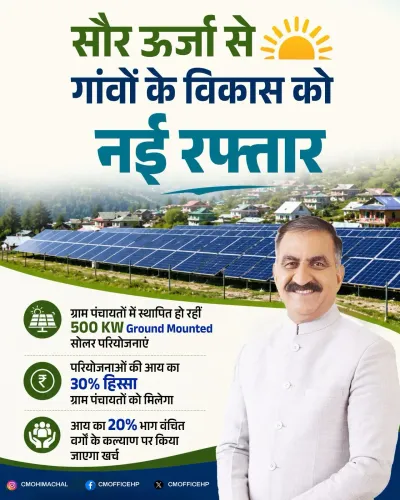
The official post, written in Hindi, captures a moment of genuine warmth: 'बहनों के चेहरों पर खुशी देखकर मन को सुकून मिला' — 'seeing the joy on the faces of the sisters brought peace to the mind.' At the centre of that joy is a newly installed 2 megawatt solar power plant in the valley, a modest number on a national grid map but a transformational one for one of India's most geographically isolated communities.
What 2 MW Means in a High-Altitude Cold Desert
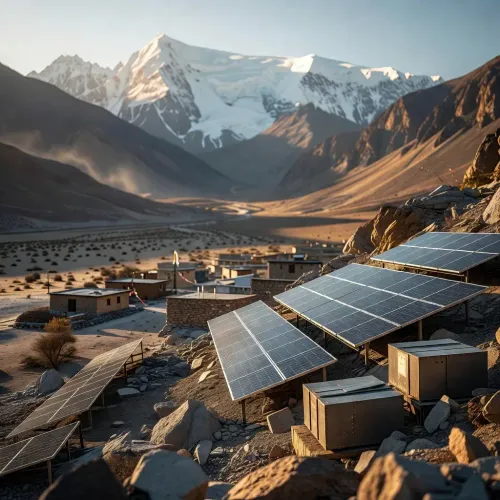
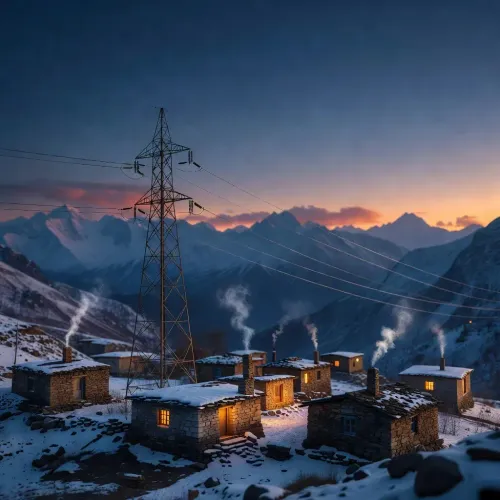
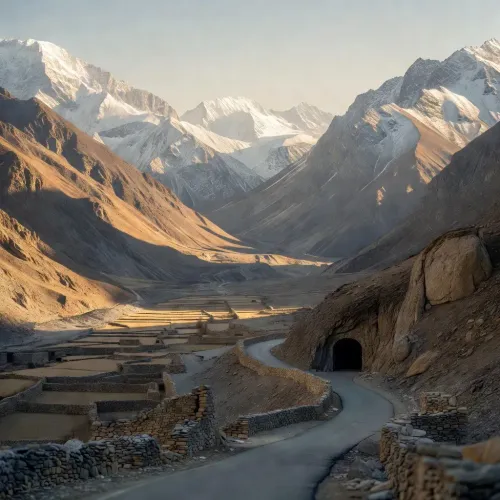
Spiti Valley, nestled inside Lahaul and Spiti district of Himachal Pradesh, is a high-altitude cold desert where conventional grid extension is an engineering nightmare. Transmission lines must survive sub-zero temperatures, avalanches, and near-zero oxygen levels for construction crews. A decentralised solar plant sidesteps all of that — it generates power where the people are, without hundreds of kilometres of vulnerable cable.
Himachal Pradesh has been deploying small-scale solar installations in remote tribal valleys since the 2010s, using them to supplement hydro power that, while abundant in principle, is seasonally unreliable and infrastructure-heavy. A 2 MW plant at this altitude represents a meaningful jump in local generation capacity for a population spread thin across a dramatic landscape.
Why Women's Faces Are the Metric That Matters
The post is deliberate in its framing. It does not cite megawatt-hours or capital expenditure. It cites the expressions of women in the valley. That is not rhetorical decoration — it is policy logic. In high-altitude tribal communities, reliable electricity directly reduces the burden of domestic labour: it powers water pumps, light-based heating supplements, small food-processing equipment, and mobile charging that keeps families connected during months of road closure.
The broader Himalayan pattern is consistent: state governments in Uttarakhand, Ladakh, Sikkim, and now increasingly Himachal Pradesh have found that decentralised renewables deliver social returns that grid extension — even when technically feasible — simply cannot match on the same timeline or cost curve.
Spiti in the Larger Renewable Push
India's national renewable energy targets cascade down to state-level obligations, but for Himalayan states the challenge is not ambition — it is execution at altitude. Himachal Pradesh has historically relied on hydropower for the bulk of its electricity, yet the vulnerability of hydro to climate-driven glacial variability has sharpened the case for solar diversification. Projects in Lahaul-Spiti serve dual purpose: they add clean capacity and they demonstrate that the state's commitment to tribal-area development is not rhetorical.
What to watch next: whether the Himachal government's next budget carries fresh allocations for further micro-solar rollout in Lahaul-Spiti — and whether this plant becomes a replicable template for similarly isolated pockets across the Himalayan arc.
For a valley that has endured on resilience alone, a solar plant is not just infrastructure. It is an acknowledgement, in kilowatts, that the state sees you.
Point of View
A framing increasingly common across Himalayan state governments. Decentralised solar in tribal areas also reduces dependence on hydro power at a time when glacial variability is making river flows less predictable, giving these micro-projects strategic energy-security value beyond their modest megawatt numbers. For the ruling dispensation in Shimla, visible infrastructure delivery in geographically difficult constituencies like Spiti carries outsized political significance — these are voters the state has historically struggled to reach. Whether this plant becomes a replicable model or a one-off showcase will be the real test of policy intent.
NationPress
18 Oct 2026
Frequently Asked Questions
What is the 2 MW solar plant installed in Spiti Valley?
A 2 megawatt solar power plant has been installed in Spiti Valley in Himachal Pradesh's Lahaul and Spiti district, providing decentralised electricity to one of India's most remote high-altitude communities.
Where is Spiti Valley located?
Spiti Valley is located in the Lahaul and Spiti district of Himachal Pradesh, in the western Himalayas. It is a high-altitude cold desert region with extreme weather and limited road connectivity.
Why is solar power important for Spiti Valley?
Conventional electricity grid extension to Spiti Valley is extremely difficult due to high altitude, avalanches, and harsh terrain. Decentralised solar plants generate power locally, bypassing the need for long, vulnerable transmission lines.
How has Himachal Pradesh been addressing energy access in tribal areas?
Himachal Pradesh has been deploying small-scale solar installations in remote tribal valleys since the 2010s to supplement hydro power and improve energy access for isolated communities, aligned with India's national renewable energy targets.
What is the significance of highlighting women in the Spiti solar plant announcement?
In high-altitude tribal communities, reliable electricity directly reduces the burden of domestic labour for women — powering water pumps, heating supplements, food-processing tools, and mobile charging — making women's welfare a concrete measure of a project's real-world impact.