HP CM Office: 2.56 Lakh Farmers Now Practise Natural Farming
Synopsis
The Chief Minister's Office of Himachal Pradesh reports that 2,56,870 farmers are now cultivating 44,784.73 hectares under natural farming, with the state's new initiative driving steady growth in adoption aimed at boosting incomes of small and marginal farmers.
Key Takeaways
2,56,870 farmers in Himachal Pradesh are currently practising natural farming, according to the CMO's official post dated 4 July 2026 .
Natural farming now covers 44,784.73 hectares of agricultural land across the state.
The state government's new initiative is credited with a steady increase in farmer adoption of chemical-free cultivation.
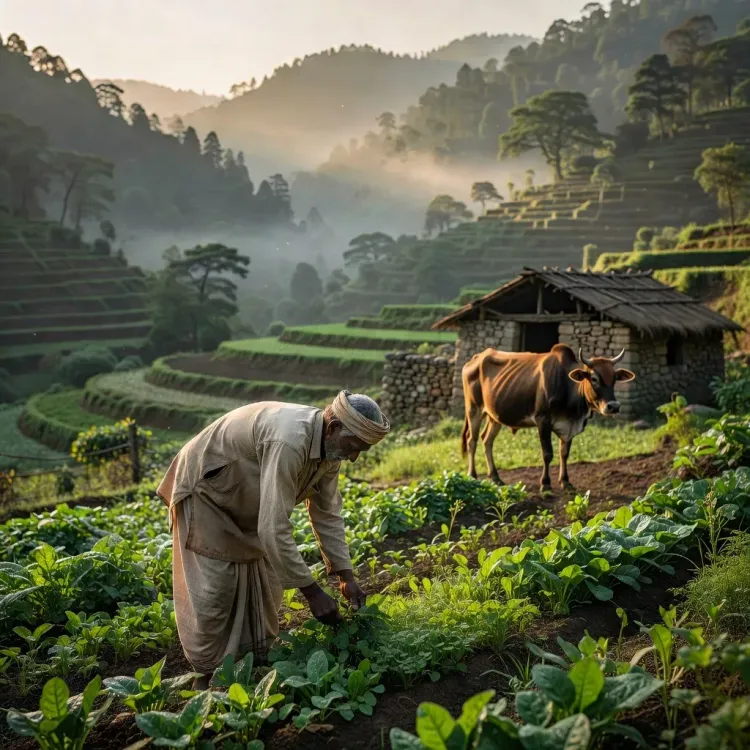
The programme specifically targets small and marginal farmers , including those with dairy animals, to enhance rural incomes.
Himachal Pradesh's drive aligns with the Central Government's Paramparagat Krishi Vikas Yojana , launched in 2015 to promote natural and organic farming clusters.
Future policy attention will focus on budget allocations and income outcomes as the programme scales further.
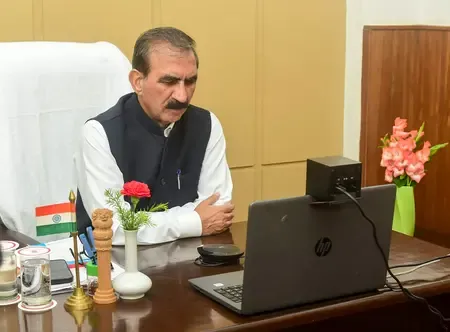
The Chief Minister's Office of Himachal Pradesh announced on Saturday, 4 July 2026 that the state's natural farming programme has reached a significant scale, with farmers across the hill state continuing to adopt chemical-free cultivation under a renewed government push.
The post, shared from the official CMO Himachal Pradesh account, states: 'Vartaman mein pradesh ke 2,56,870 kisaan 44,784.73 hectare bhoomi par prakritik kheti kar rahe hain' — meaning, 'At present, 2,56,870 farmers in the state are practising natural farming on 44,784.73 hectares of land.' The statement adds that the number of farmers adopting natural farming is steadily rising due to the state government's new initiative, with a stated aim of putting more money in the hands of small and marginal dairy and other farmers.
Context
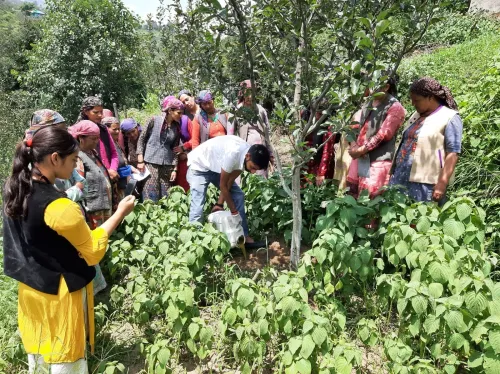
Natural farming refers to chemical-free, low-external-input cultivation rooted in traditional agricultural practices. It is distinct from certified organic farming in that it relies on farm-produced biological inputs — such as cow dung and urine-based preparations — rather than commercially purchased organic inputs. Himachal Pradesh, a predominantly hill state with a large proportion of small and marginal landholdings, has positioned itself as an early mover in scaling this model across diverse agro-climatic zones.
The CMO's post comes amid a broader national conversation about the sustainability of input-intensive agriculture, particularly for smallholders in rainfed and fragile mountain ecosystems where chemical fertiliser costs have risen sharply.
Policy Backdrop
The Central Government's Paramparagat Krishi Vikas Yojana (PKVY), launched in 2015, laid an early foundation for organic and natural farming clusters across Indian states, including Himachal Pradesh. The scheme provided cluster-based support for farmer groups to transition away from synthetic inputs, with financial assistance for certification and market linkages.
Since the mid-2010s, multiple Indian states — particularly in hill and rainfed belts — have expanded natural farming drives, citing reduced cultivation costs and improved soil health as twin benefits. Himachal Pradesh's reported trajectory mirrors this broader pattern, though the state has increasingly framed its programme around direct income support for small and marginal farmers, including those with dairy animals.
Stakeholders and Impact
Small and marginal farmers, who form the backbone of Himachal Pradesh's agrarian economy, are the primary target group. The CMO's reference to dairy farmers alongside crop cultivators signals an integrated livelihood approach — natural farming inputs such as jeevamrit (a microbial culture) are often produced using cattle, making dairy-linked households natural participants in the model.
If the reported figures hold, the programme now covers a substantial share of the state's cultivated area. Reduced dependence on purchased chemical inputs can lower per-acre costs for smallholders, though the transition period often requires technical support and market access for produce sold at a premium.
What's Next
The state government's emphasis on 'continuously growing' farmer numbers suggests that coverage targets are likely to feature in upcoming agriculture budget discussions and policy statements. Observers will watch for specific financial allocations, extension support mechanisms, and whether the state links natural farming certification to premium market access or procurement schemes.
With Himachal Pradesh positioning natural farming as a vehicle for rural income enhancement — not merely an environmental goal — the programme's next phase will be judged by measurable income outcomes for the small and marginal farmers it aims to reach.
Point of View
Framing an environmental programme explicitly as an income intervention for small farmers — a politically significant rebranding. The inclusion of dairy farmers broadens the coalition of beneficiaries and strengthens the scheme's rural economy narrative. Himachal Pradesh's scale — over 2.5 lakh farmers — positions the state as a reference point in national natural farming discourse, adding weight to any future ask for Central funding or mission-mode status. The forward-looking tone of the post, stressing 'continuously rising' numbers, sets an expectation of measurable progress that the administration will need to substantiate with income and productivity data.
NationPress
4 Jul 2026
Frequently Asked Questions
How many farmers are practising natural farming in Himachal Pradesh?
According to the Chief Minister's Office of Himachal Pradesh, 2,56,870 farmers are currently practising natural farming in the state as of July 2026.
How much land is under natural farming in Himachal Pradesh?
The CMO's post states that natural farming is being carried out on 44,784.73 hectares of land across Himachal Pradesh.
What is natural farming and how is it different from organic farming?
Natural farming is a chemical-free cultivation method that uses farm-produced biological inputs — such as cow dung and urine-based preparations — rather than purchased organic inputs. It is generally lower-cost than certified organic farming and is well-suited to smallholders in hill and rainfed regions.
What is the Paramparagat Krishi Vikas Yojana?
The Paramparagat Krishi Vikas Yojana (PKVY) is a Central Government scheme launched in 2015 to promote organic and natural farming clusters across Indian states, providing financial and technical support to farmer groups transitioning away from synthetic inputs.
Why is Himachal Pradesh promoting natural farming for dairy farmers?
The state government is targeting small and marginal dairy farmers because cattle are a key source of natural farming inputs such as jeevamrit , making dairy-linked households natural participants in the model. The broader goal is to increase rural incomes by reducing input costs and potentially accessing premium markets.