HP CM Office: AIIMS-level facilities coming to Himachal
Synopsis
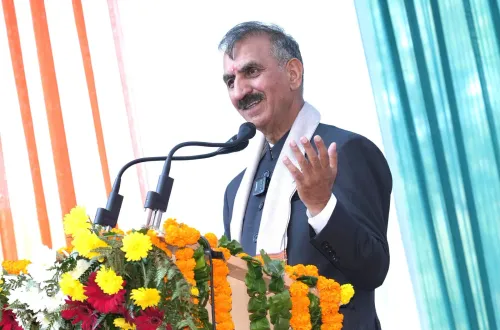
The Chief Minister's Office of Himachal Pradesh has announced plans to establish AIIMS-standard medical facilities in the state, directly addressing medical students and framing the initiative as a generational mission to end the state's reliance on Delhi for super-specialty care.
Key Takeaways
The Chief Minister's Office of Himachal Pradesh announced on 27 October 2026 that AIIMS-equivalent facilities are being planned for the state.
The statement was directed at medical students, urging them to see themselves as future custodians of public health in Himachal.
The initiative aligns with the Pradhan Mantri Swasthya Suraksha Yojana (PMSSY) , launched in 2003 to decentralise super-specialty care across India.
Himachal Pradesh's dispersed population and difficult terrain have historically made advanced medical infrastructure both logistically and financially challenging to build.
Specific details — site, project cost, construction timeline, and funding approvals — have not yet been formally announced.
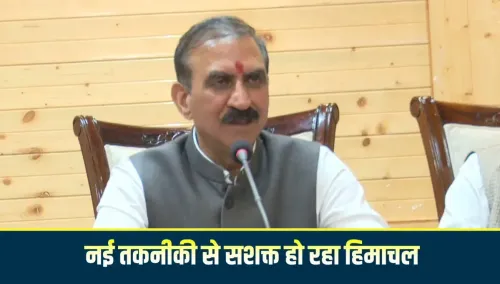
A mountain state historically dependent on Delhi for super-specialty care is now being promised world-class medical infrastructure at home. On Tuesday, 27 October 2026, the Chief Minister's Office of Himachal Pradesh posted on X, addressing medical students directly with a vision for transforming healthcare in the state.
The post, in Hindi, declared: 'Aadhunik sansaadhan aavashyak hain' — 'Modern resources are essential.' It went further: 'In this direction, we are establishing facilities in Himachal similar to Delhi AIIMS. Today you are students; tomorrow the responsibility of society's health will rest on your shoulders.'
The AIIMS benchmark and what it means for hill-state healthcare
The All India Institute of Medical Sciences (AIIMS), New Delhi is India's gold standard for tertiary care and medical education — a towering benchmark that most states can only aspire to replicate. For Himachal Pradesh, a northern hill state with a dispersed population spread across difficult terrain, the gap between that benchmark and local reality has long driven patients and their families on exhausting, expensive journeys to the capital.
That outward flow is precisely what successive governments have tried to stem. The Pradhan Mantri Swasthya Suraksha Yojana (PMSSY), launched in 2003, was designed with this exact correction in mind — building new AIIMS-pattern institutions and upgrading government medical colleges in underserved states to bring super-specialty care closer to where people actually live.
Students as tomorrow's frontline — the pitch behind the promise
The Chief Minister's Office framed the announcement not just as an infrastructure commitment but as a generational call to action. By speaking directly to medical students — telling them that 'tomorrow, the responsibility of society's health will rest on your shoulders' — the message layered a sense of personal mission onto a policy pledge. It is a calculated register: tying institutional investment to individual purpose.
Himachal's terrain has historically made large-scale health infrastructure projects both logistically complex and financially demanding. Site selection, project costs, construction timelines, and central approvals under PMSSY are all details that remain to be formally announced. What the post signals, clearly, is that the state government is positioning this ambition as a flagship priority — one it wants its future doctors to feel personally invested in.
For a state where geography has always been destiny, a credible AIIMS-scale facility would not just expand postgraduate medical seats — it would fundamentally rewrite the relationship between Himachalis and the healthcare system. The students in the room today may well be the specialists staffing it tomorrow.
Point of View
Position the state government as the driver of equity, and anchor the pitch to an aspirational audience — in this case, the medical students who will eventually staff whatever gets built. What gives it added weight is the structural reality: Himachal Pradesh genuinely lacks tertiary care depth relative to its needs, and patient outflow to Delhi is a documented, recurring pressure. The harder question is delivery. PMSSY-linked projects have a track record of long gestation periods, cost overruns, and delayed operationalisation in hill states. Until site selection, budgetary allocation, and central approvals are formalised, the announcement sits in the political-aspiration column rather than the policy-implementation column — though it clearly signals where the state government wants its healthcare story to go.
NationPress
27 Oct 2026
Frequently Asked Questions
Is there an AIIMS in Himachal Pradesh?
As of October 2026, Himachal Pradesh does not have a fully operational AIIMS. The state government has announced intentions to establish AIIMS-equivalent facilities, but specific site, funding, and timeline details have not yet been formally confirmed.
What is the Pradhan Mantri Swasthya Suraksha Yojana (PMSSY)?
PMSSY is a central government scheme launched in 2003 to address regional imbalances in healthcare by establishing new AIIMS-pattern institutions and upgrading government medical colleges across underserved states.
Why does Himachal Pradesh need AIIMS-like facilities?
Himachal Pradesh's dispersed population and mountainous terrain have historically limited access to super-specialty care, forcing residents to travel to Delhi or other metros for advanced treatment — a gap the state government aims to close with local tertiary-care infrastructure.
What did the Himachal Pradesh Chief Minister's Office say about healthcare?
On 27 October 2026 , the CMO stated that modern resources are essential and that Himachal is working to establish facilities comparable to Delhi AIIMS, while urging medical students to take ownership of the state's future health.
When will AIIMS-like facilities be built in Himachal Pradesh?
No formal construction timeline, project cost, or site selection has been announced yet. The Chief Minister's Office has signalled the commitment as a priority, but formal approvals and details are still awaited.