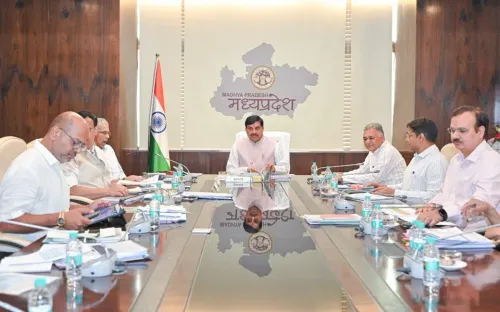
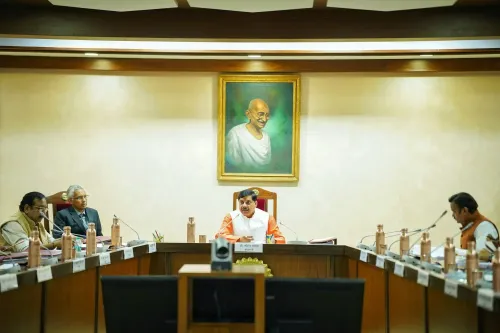
HP CM Office lays foundation of 50-bed AYUSH Hospital in Dharamshala
Synopsis
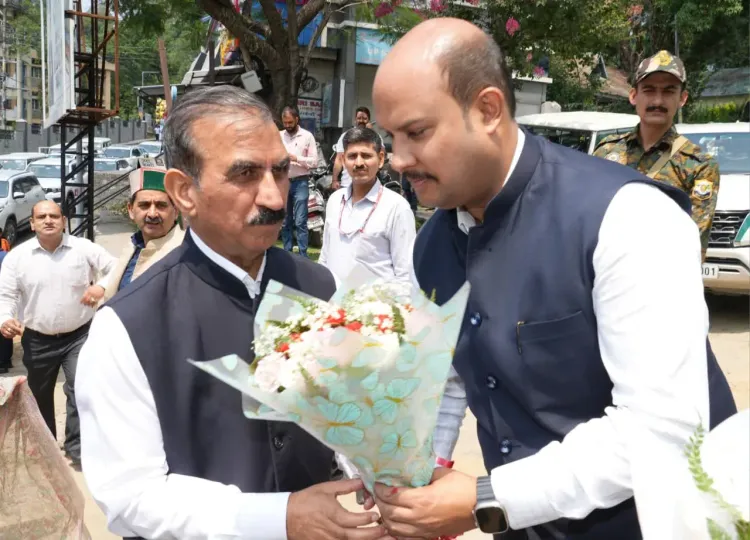
The Chief Minister's Office of Himachal Pradesh laid the foundation stone of a 50-bed integrated AYUSH hospital in Dharamshala on 18 June 2026, advancing the state's goal of merging traditional medicine systems with modern healthcare under the National AYUSH Mission framework.
Key Takeaways
The foundation stone of a 50-bed integrated AYUSH hospital was laid in Dharamshala, Himachal Pradesh on 18 June 2026 .
The facility will integrate Ayurveda, Yoga, Naturopathy, Unani, Siddha, and Homoeopathy with modern health services under one roof.
The project aligns with the National AYUSH Mission , launched in 2014 , which funds state-level AYUSH hospital construction and upgrades.
Dharamshala is the administrative headquarters of Kangra district and a major wellness and tourism destination, making it a strategic site for the facility.
The hospital is expected to serve local residents as well as domestic and international visitors seeking integrative care in the region.
Future milestones include the construction timeline, state budget allocations for AYUSH, and potential linkage with Ayushman Bharat health insurance coverage.
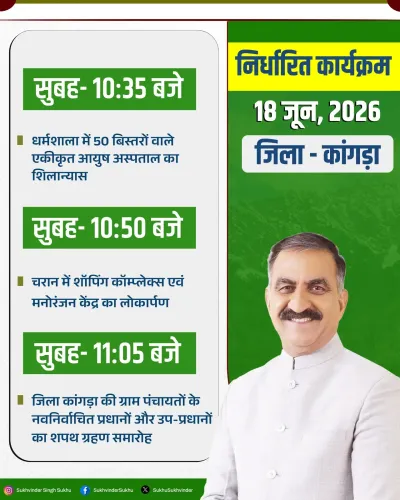
The Chief Minister's Office of Himachal Pradesh announced on Thursday, 18 June 2026 that the foundation stone of an integrated AYUSH hospital with a 50-bed capacity was laid in Dharamshala, marking a significant step in the state's push to blend traditional medicine systems with modern healthcare infrastructure.
The official post stated: 'Aaj Dharamshala mein 50 bistar ki kshamata wale ekikrit AYUSH aspatal ki aadharshila rakhi' — ('Today, the foundation stone of an integrated AYUSH hospital with a capacity of 50 beds was laid in Dharamshala'). The announcement also noted that a 'continuous effort is being made to advance a holistic and coordinated medical system by integrating AYUSH practices with the modernisation of health services.'
Context
Dharamshala, the administrative headquarters of Kangra district, is already a prominent destination for wellness and alternative therapies, making it a fitting location for an integrated AYUSH facility. The new hospital is designed to operate as a convergent centre — bringing Ayurveda, Yoga and Naturopathy, Unani, Siddha, and Homoeopathy under one roof alongside modern medical services. Such integration aims to give patients access to complementary treatment pathways without having to visit multiple facilities.
Policy Backdrop
The foundation stone aligns with the National AYUSH Mission, launched in 2014, which empowers states to establish and upgrade AYUSH hospitals and co-locate AYUSH units within district-level public health facilities. Himachal Pradesh has progressively expanded its AYUSH footprint under this framework, channelling support through the National Health Mission (NHM) and related central schemes. The broader national trajectory since the early 2010s has been to mainstream traditional medicine into the public health delivery system, with integrated hospitals representing the most ambitious expression of that policy.
The Ayushman Bharat framework has further reinforced this direction by encouraging states to link AYUSH services with health insurance coverage, potentially extending the reach of traditional therapies to economically weaker sections. The Himachal Pradesh Health Department oversees implementation of these programmes across the state's challenging hill terrain, where access to specialised care has historically been limited.
Stakeholders and Impact
The 50-bed integrated facility is expected to benefit residents of Kangra district and surrounding areas, as well as the large number of domestic and international visitors who travel to Dharamshala for wellness-related purposes. AYUSH practitioners — including Ayurvedic doctors, homoeopaths, and yoga therapists — stand to gain formalised institutional roles within the public health system. Patients seeking integrative or preventive care will have a dedicated government facility rather than relying solely on private wellness centres.
The project also carries economic implications for the region: a government AYUSH hospital can act as a credibility anchor for Dharamshala's growing wellness tourism sector, potentially attracting further investment in allied services.
What's Next
Attention will now turn to the construction and commissioning timeline for the hospital, as well as the state budget allocations earmarked for AYUSH infrastructure in the current and upcoming fiscal years. Stakeholders will also watch whether the facility is formally linked with central health insurance schemes such as Ayushman Bharat – Pradhan Mantri Jan Arogya Yojana (AB-PMJAY), which would determine how broadly accessible its services become. The rollout of this hospital could serve as a model for similar integrated facilities in other district headquarters across Himachal Pradesh.
Point of View
A race that carries real policy stakes around staffing, accreditation, and insurance linkage. Whether this hospital becomes a functional model or a ceremonial milestone will depend almost entirely on budget follow-through and the speed of central-scheme disbursements.
NationPress
19 Sept 2026
Frequently Asked Questions
Where is the new integrated AYUSH hospital in Himachal Pradesh being built?
The hospital is being built in Dharamshala , the administrative headquarters of Kangra district in Himachal Pradesh.
What is the capacity of the new AYUSH hospital in Dharamshala?
The newly announced integrated AYUSH hospital in Dharamshala will have a capacity of 50 beds .
What is the National AYUSH Mission and how does it relate to this hospital?
The National AYUSH Mission , launched in 2014 , is a central government scheme that provides funding to states for establishing and upgrading AYUSH hospitals. The Dharamshala facility is part of this broader national push to integrate traditional medicine into public healthcare.
What medical systems will the Dharamshala AYUSH hospital offer?
The integrated hospital is designed to offer Ayurveda, Yoga and Naturopathy, Unani, Siddha, and Homoeopathy alongside modern medical services under one roof.
Will the new AYUSH hospital in Dharamshala be covered under Ayushman Bharat?
Linkage with Ayushman Bharat health insurance has not been confirmed yet; it is among the key developments to watch as the project progresses.