CM Mohan Yadav Reviews AYUSH Dept, Orders College Upgrades
Synopsis
MP Chief Minister Dr. Mohan Yadav reviewed the AYUSH Department on 22 May 2026 and directed that all 9 state AYUSH colleges be developed as First Referral Units with hostels and 100-seat capacity, pharmacy departments be added to 7 colleges, and the Balaghat AYUSH Research Centre begin operations.
Key Takeaways
Mohan Yadav conducted a departmental review of the AYUSH Department on 22 May 2026 and issued fresh directives to senior officials.
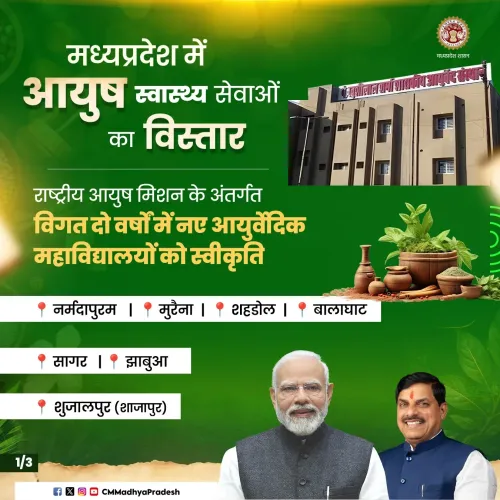
All 9 AYUSH colleges in Madhya Pradesh are to be developed as First Referral Units with hostel facilities and seat capacity raised to 100 .
Pharmacy departments are to be established in 7 AYUSH colleges across the state.
The Unani curriculum is to be made available in Hindi to widen student access.
The Balaghat AYUSH Research Centre has been directed to begin operations, decentralising research activity in the state.
Citizens using Ayurvedic treatment are to be linked with state incentive programmes.
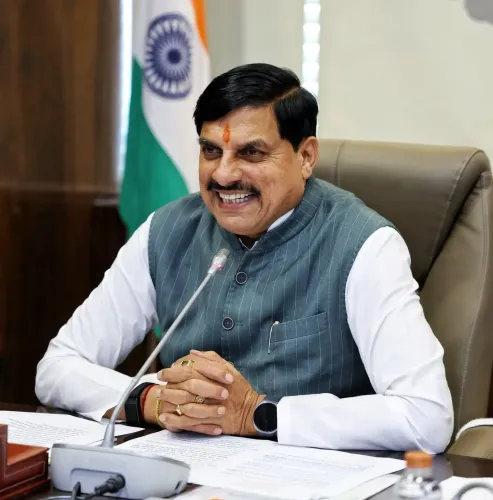
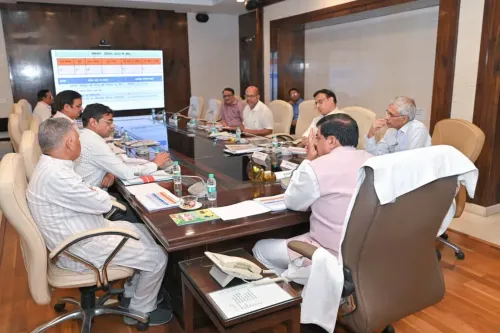
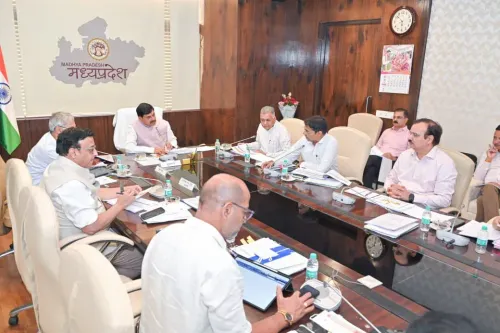
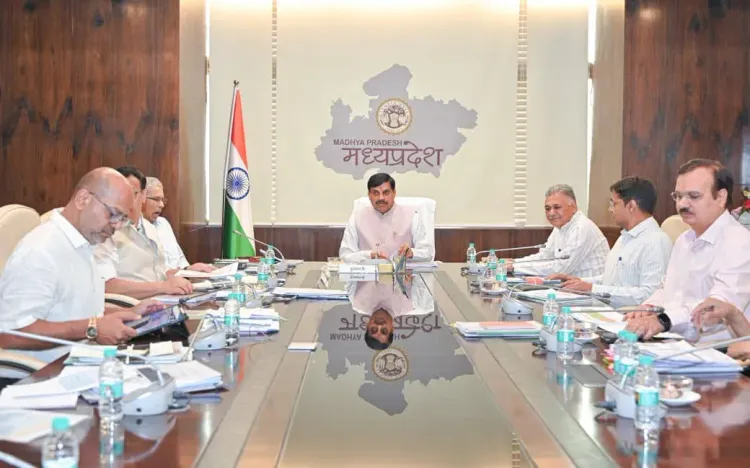
Madhya Pradesh Chief Minister Dr. Mohan Yadav on Friday, 22 May 2026, conducted a departmental review of the state's AYUSH Department, discussing its activities and progress with senior officials and issuing a series of directives to expand traditional medicine infrastructure across the state.
Context
Posting on X, Dr. Yadav stated: 'Aaj vibhagiya samiksha ke kram mein Ayush vibhag ki gatividhiyon va pragati par charcha kar jankari li' ['Today, in the course of the departmental review, I gathered information by discussing the activities and progress of the AYUSH Department']. He emphasised that 'promotion of medical systems rooted in Indian tradition is essential' and directed officials to link citizens benefiting from Ayurvedic treatment with incentive programmes.
The review is part of routine departmental monitoring under the state's implementation of the National AYUSH Mission, the centrally sponsored scheme launched in 2014 to mainstream traditional medicine systems through infrastructure and manpower development.
Policy Backdrop
The National AYUSH Mission has driven consistent expansion of Ayurveda, Yoga, Unani, Siddha and Homoeopathy education and service delivery since its launch, with states including Madhya Pradesh upgrading colleges and creating research facilities in alignment with the Union Ministry of AYUSH's priorities. Successive BJP governments in the state have maintained this orientation, integrating traditional medicine more closely with public health delivery.
Dr. Yadav directed that all 9 AYUSH colleges in the state be developed as First Referral Units, that hostels be constructed on their campuses, and that seat capacity at each be raised to 100. He further ordered the establishment of pharmacy departments in 7 AYUSH colleges and directed that the Unani curriculum be made available in Hindi — a move aimed at widening access for students whose primary language is not English or Urdu.
Stakeholders and Impact
The directives directly affect AYUSH students across Madhya Pradesh, traditional medicine practitioners, and rural patients who rely on government AYUSH facilities. Raising seat capacity to 100 per college and adding hostel infrastructure is expected to improve enrolment and retention, particularly for students from districts with limited access to urban centres.
Citizens already using Ayurvedic treatment under state programmes are to be brought into incentive schemes, potentially broadening the patient base for government AYUSH services. The Balaghat AYUSH Research Centre — located in the eastern Balaghat district — was specifically directed to begin operations, signalling an intent to decentralise research activity beyond the state capital.
What's Next
Observers will track the physical progress of hostel construction, pharmacy department establishment, and seat-capacity increases across the 9 AYUSH colleges during the 2026-27 financial year. The allocation of sanctioned staff and budget to the Balaghat AYUSH Research Centre in the upcoming state assembly session will be a key indicator of how quickly these directives translate into on-ground change.
If implemented fully, the upgrades would position Madhya Pradesh as one of the more comprehensively equipped states for AYUSH education and research under the national mission framework, with broader implications for how traditional medicine is integrated into the state's public health architecture.
Point of View
Using departmental reviews to convert national mission objectives into state-level targets. The directive to translate the Unani curriculum into Hindi is politically notable — it broadens access while simultaneously asserting a linguistic identity consistent with the ruling party's cultural positioning. Raising seat capacity and adding pharmacy departments signals an intent to treat AYUSH colleges as substantive health infrastructure rather than ceremonial additions to the public system. The Balaghat research centre directive, if followed through with budget and staffing, could mark a meaningful step toward decentralised AYUSH research in a state that has historically concentrated such activity in urban centres.
NationPress
12 Oct 2026
Frequently Asked Questions
What did CM Mohan Yadav announce for AYUSH colleges in Madhya Pradesh?
CM Dr. Mohan Yadav directed that all 9 AYUSH colleges in Madhya Pradesh be developed as First Referral Units, with hostels built and seat capacity raised to 100 per college, pharmacy departments added to 7 colleges, and research activity increased across all campuses.
What is the Balaghat AYUSH Research Centre?
The Balaghat AYUSH Research Centre is a new research facility directed to begin operations in Balaghat district, eastern Madhya Pradesh, as part of the state's push to decentralise traditional medicine research beyond the state capital.
Why is the Unani curriculum being made available in Hindi in MP?
CM Yadav directed that the Unani curriculum be provided in Hindi to widen access for students who are more comfortable in Hindi than in English or Urdu, in line with the state's broader push to promote Indian traditional medicine systems.
What is the National AYUSH Mission?
The National AYUSH Mission is a centrally sponsored scheme launched in 2014 by the Union Ministry of AYUSH to mainstream Ayurveda, Yoga, Unani, Siddha and Homoeopathy through infrastructure development, manpower training, and integration with public health delivery across states.
How will Ayurvedic patients benefit from the new MP AYUSH directives?
Citizens already using Ayurvedic treatment under state programmes are to be linked with incentive schemes, potentially broadening access and encouraging more patients to use government AYUSH facilities.