CM Mohan Yadav Pushes AYUSH Integration in MP Hospitals
Synopsis
Madhya Pradesh CM Dr. Mohan Yadav has directed the establishment of AYUSH wings with Panchakarma centres in district hospitals, cashless AYUSH coverage for 13 lakh ESI-registered workers, and Ayurvedic medicine distribution in tribal sickle cell-affected districts, aligning with National Health Policy 2017 and Vision 2047.
Key Takeaways
Mohan Yadav directed the establishment of dedicated AYUSH wings in all district hospitals, each with a Panchakarma centre .
The state is directed to initiate an AYUSH University and a Natural Medicine and Yoga College .
Cashless AYUSH treatment to be extended to approximately 13 lakh ESI-registered worker families via coordination with the Labour Department.
Ayurvedic medicines to be distributed in tribal-majority and sickle cell anaemia-affected districts of Madhya Pradesh.
Directives are anchored in National Health Policy 2017 and the Vision 2047 national development framework.
AYUSH innovations and wellness centre information to be disseminated to the general public across the state.
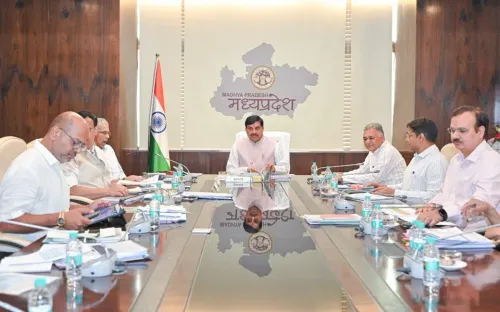
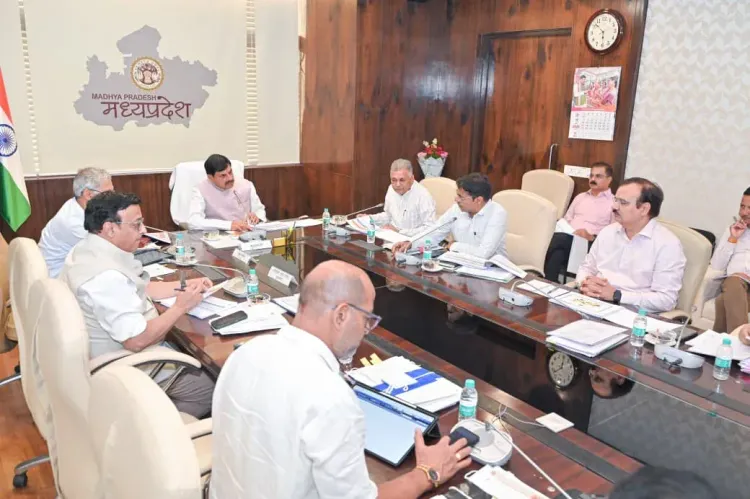
Madhya Pradesh Chief Minister Dr. Mohan Yadav on Friday, 22 May 2026 directed state health officials to accelerate the integration of AYUSH medicine into district hospitals, establish dedicated AYUSH wings with Panchakarma centres, and extend cashless AYUSH treatment to approximately 13 lakh ESI-registered worker families through coordination with the Labour Department.
Context
In a post on X, the Chief Minister outlined a multi-pronged directive covering institutional expansion, targeted outreach, and insurance coverage. He instructed officials to initiate an AYUSH University and also set up a Natural Medicine and Yoga College. He further directed that Ayurvedic medicines be distributed in tribal-majority districts and those affected by sickle cell anaemia — a condition disproportionately prevalent among tribal communities in Madhya Pradesh.
Calling for wider public awareness, the Chief Minister said information about AYUSH innovations, successful experiments, and wellness centres must reach 'jan-jan tak' [every citizen]. He also directed that separate AYUSH wings be established in district hospitals as an alternative treatment option within allopathic facilities.
Policy Backdrop
The directives are explicitly framed within National Health Policy 2017 and Vision 2047 — the long-term national development framework targeting comprehensive health infrastructure by India's centenary of independence. The National Health Policy 2017 had specifically called for mainstreaming AYUSH systems alongside allopathic care in public health delivery, and Madhya Pradesh is now moving to operationalise that mandate at the district level.
The Employee State Insurance (ESI) scheme, administered by the Union Labour Ministry, provides social security and medical benefits to formal-sector workers. Extending cashless AYUSH coverage to ESI beneficiaries would mark a significant expansion of the scheme's scope within the state, requiring active coordination between the state health and labour departments.
Stakeholders and Impact
The most immediate beneficiaries are tribal communities in high sickle cell burden districts, where access to allopathic care has historically been limited and Ayurvedic interventions are being positioned as a complementary pathway. The directive to distribute Ayurvedic medicines in these districts signals a targeted public health response to a chronic genetic disorder.
For the state's approximately 13 lakh ESI-registered worker families, cashless AYUSH access would remove out-of-pocket costs for traditional medicine consultations and treatments. AYUSH practitioners across Madhya Pradesh stand to see expanded institutional roles as dedicated wings — each equipped with a Panchakarma centre — are established in district hospitals.
What's Next
The key milestones to watch are the formal establishment of AYUSH wings in district hospitals, the rollout of the proposed AYUSH University and Yoga College, and the finalisation of cashless treatment tie-ups between the state health department and the Labour Department for ESI beneficiaries. Progress on Ayurvedic medicine distribution in sickle cell-affected tribal districts will also be a measure of implementation speed.
If the cashless ESI-AYUSH linkage is operationalised, Madhya Pradesh could serve as a template for other states seeking to embed traditional medicine into formal social security frameworks — advancing a model that aligns with the central government's broader AYUSH mainstreaming agenda ahead of 2047.
Point of View
Which is a harder, more durable form of integration than standalone wellness programmes. Targeting sickle cell-affected tribal districts with Ayurvedic distribution also allows the state to address a chronic disease burden in underserved populations while reinforcing the political salience of tribal welfare. The Vision 2047 framing positions these moves as part of a long arc rather than ad hoc directives, giving the initiative institutional legitimacy and a measurable timeline.
NationPress
7 Oct 2026
Frequently Asked Questions
What is the AYUSH wing directive by MP CM Mohan Yadav?
CM Dr. Mohan Yadav has directed that separate AYUSH wings with Panchakarma centres be established in all district hospitals in Madhya Pradesh as an alternative treatment option alongside allopathic care.
Will ESI workers in Madhya Pradesh get free AYUSH treatment?
Yes, the CM has directed officials to coordinate with the Labour Department to provide cashless AYUSH treatment to approximately 13 lakh ESI-registered worker families in Madhya Pradesh.
Why are Ayurvedic medicines being distributed in tribal districts of MP?
Tribal-majority districts in Madhya Pradesh have a high prevalence of sickle cell anaemia. The CM has directed targeted Ayurvedic medicine distribution in these areas as a complementary health intervention.
What is the AYUSH University proposed for Madhya Pradesh?
CM Mohan Yadav has directed officials to initiate the establishment of an AYUSH University in Madhya Pradesh, along with a Natural Medicine and Yoga College, to strengthen traditional medicine education in the state.
How does this relate to National Health Policy 2017?
National Health Policy 2017 called for mainstreaming AYUSH systems within public health delivery. The MP government's directives on AYUSH wings and cashless coverage are explicitly framed as implementation of that policy alongside the Vision 2047 framework.