HP CM Office calls for population balance on World Population Day
Synopsis
The Chief Minister's Office of Himachal Pradesh marked World Population Day on 11 July 2026 by urging citizens to pledge commitment to population balance, citing pressure on limited resources and social, economic, and environmental challenges posed by unchecked population growth.
Key Takeaways
The Himachal Pradesh CMO issued a public message on World Population Day, 11 July 2026 , calling for population balance.
The statement links population growth to pressure on limited resources and social, economic, and environmental challenges.
World Population Day was established by the United Nations in 1989 to promote voluntary family planning awareness globally.
India's National Population Policy (2000) targets population stabilisation by 2045 consistent with sustainable development.
In Himachal Pradesh , demographic pressures intersect with the state's fragile Himalayan ecology , making resource management a key governance concern.
The approach promoted remains voluntary , aligned with existing health and education programmes rather than coercive measures.
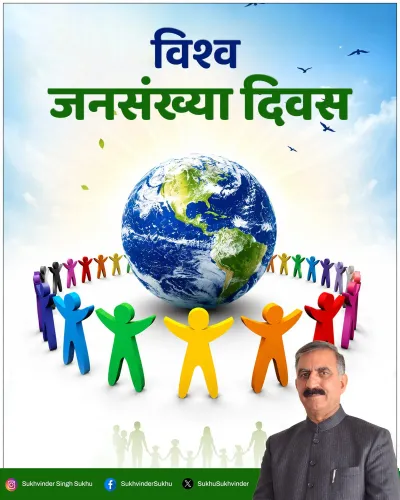
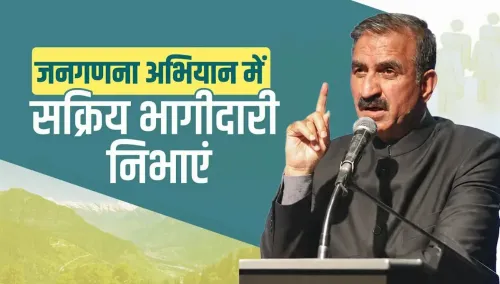
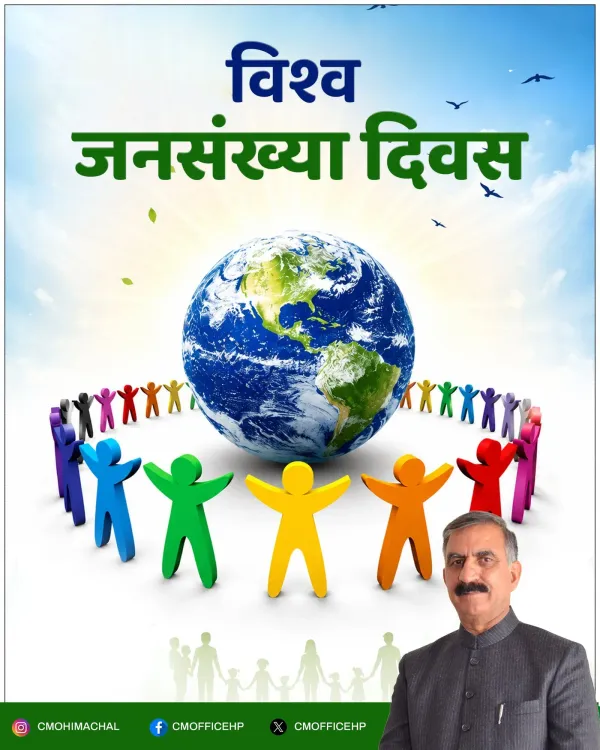
The Chief Minister's Office of Himachal Pradesh on Saturday, 11 July 2026, issued a public message on the occasion of World Population Day, calling on citizens to pledge commitment to population balance as a foundation for family welfare, social strength, and national progress.
The post, shared on the official CMO Himachal Pradesh social media handle, stated in Hindi: 'परिवार की खुशहाली, समाज की मजबूती और राष्ट्र की प्रगति के लिए जनसंख्या का संतुलन बेहद आवश्यक है' — meaning, 'Population balance is absolutely essential for family happiness, social strength, and national progress.' It further noted that rising population exerts pressure on limited resources and gives rise to numerous social, economic, and environmental challenges.
Context
World Population Day is observed every year on 11 July, a date established by the United Nations in 1989 to focus global attention on population issues and promote voluntary family planning. Indian state governments routinely issue public statements on this occasion to align with national demographic goals and resource-management priorities. The Himachal Pradesh CMO's message follows this established pattern, framing population stabilisation as a voluntary civic responsibility rather than a coercive mandate.
Policy Backdrop
India adopted its National Population Policy in 2000, setting a long-term goal of population stabilisation by 2045 at a level consistent with sustainable development. The country's National Family Welfare Programme, launched as far back as 1952, remains the primary mechanism through which contraceptive services and maternal-health support are delivered across states, including Himachal Pradesh. Several Indian states introduced two-child norm incentives for local-body elections during the 2000s, though the dominant policy approach has remained voluntary and education-driven.
In Himalayan states such as Himachal Pradesh, population-related messaging carries particular weight because limited arable land, fragile water systems, and climate vulnerability make demographic pressures acutely felt. The state's terrain constrains infrastructure expansion, making resource optimisation a recurring governance concern.
Stakeholders and Impact
The message is directed at Himachal Pradesh's families and hill-state residents who live at the intersection of demographic growth and ecological fragility. Pressure on forests, water bodies, and public infrastructure — schools, hospitals, roads — intensifies when population growth outpaces resource availability. Voluntary family planning awareness, as promoted through this message, is seen as a low-cost intervention that can yield long-term dividends in health outcomes and resource conservation.
Women and adolescent girls stand as primary stakeholders, since access to reproductive health services and education directly shapes fertility trends. Programmes under the National Family Welfare Programme target these groups through Anganwadi centres and primary health centres spread across Himachal Pradesh's remote districts.
What's Next
The next significant marker in India's demographic policy landscape will be the release of decennial census data, which will provide updated state-level population figures to guide planning. Any state-specific population-stabilisation action plans that Himachal Pradesh may announce in its annual budget will be closely watched by administrators and civil society alike. The CMO's World Population Day message signals that demographic awareness remains on the state government's governance agenda as it balances development aspirations with ecological limits.
Point of View
Social cohesion, and national progress, the message draws on a well-worn policy narrative that avoids the political minefield of coercive norms. For a hill state where ecological carrying capacity is a genuine constraint, such messaging also serves a practical governance purpose — building public acceptance for resource-rationing decisions. The timing ahead of expected census data release suggests the state government may be laying rhetorical groundwork for more specific demographic action plans.
NationPress
11 Jul 2026
Frequently Asked Questions
Why is World Population Day observed on 11 July?
World Population Day is observed on 11 July each year because the United Nations established the date in 1989 to mark the approximate day the world's population reached five billion, using the occasion to raise awareness about population issues and voluntary family planning.
What did the Himachal Pradesh CMO say on World Population Day 2026?
The Himachal Pradesh CMO posted a message on 11 July 2026 stating that population balance is essential for family welfare, social strength, and national progress, and called on citizens to pledge commitment to population stabilisation on the occasion of World Population Day .
What is India's National Population Policy?
India's National Population Policy was adopted in 2000 with a long-term goal of achieving population stabilisation by 2045 at a level consistent with sustainable development, relying on voluntary family planning, education, and health services rather than coercive measures.
How does population growth affect Himachal Pradesh specifically?
Himachal Pradesh is a hill state with limited arable land, fragile water systems, and climate vulnerability, meaning population growth places acute pressure on forests, water bodies, and public infrastructure such as schools, hospitals, and roads in ways that are more severe than in plains states.
What is the National Family Welfare Programme?
The National Family Welfare Programme is India's centrally sponsored scheme launched in 1952 that provides contraceptive services and maternal-health support across states, including Himachal Pradesh , through Anganwadi centres and primary health centres in remote areas.