HP CM Office Launches Census Drive, Seeks Public Participation
Synopsis
The Chief Minister's Office of Himachal Pradesh announced the launch of the state's census campaign on 1 June 2026, calling it the foundation of future development planning and urging all residents to cooperate actively with enumerators.
Key Takeaways
The Chief Minister's Office of Himachal Pradesh announced on 1 June 2026 that the state's census campaign has formally commenced.
The CMO described the census as 'the strong foundation of the state's future development plans', not merely a data-collection exercise.
The last completed Census of India was in 2011 , when Himachal Pradesh recorded a population of approximately 6.86 million .
The 2021 Census was deferred due to the COVID-19 pandemic , making this the first comprehensive count in over fifteen years.
Population data from the census determines central fund allocations, welfare scheme targeting, and administrative boundary delimitation for the state.
The National Population Register (NPR) is expected to be updated alongside the census exercise.
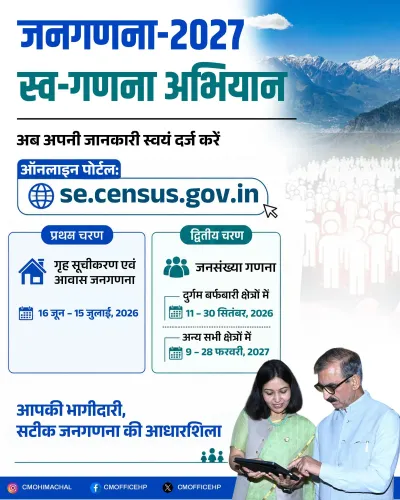
The Chief Minister's Office of Himachal Pradesh announced on Monday, 1 June 2026 that a census campaign has commenced in the state, calling on all residents to participate fully and actively in what it described as the foundation for future development planning.
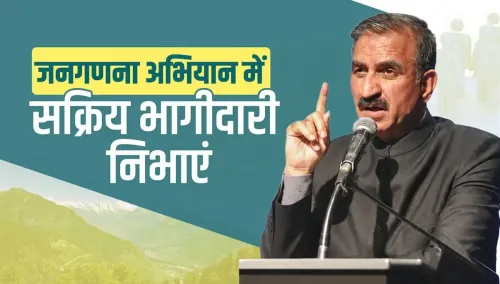
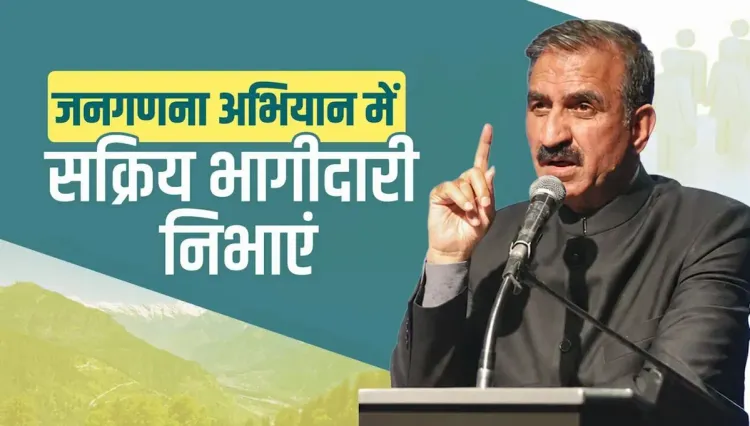
Posting in Hindi, the Chief Minister's Office stated: 'हिमाचल प्रदेश में जनगणना अभियान प्रारंभ हो चुका है' ('The census campaign has commenced in Himachal Pradesh'), adding that this is 'not merely the task of collecting data, but the strong foundation of the state's future development plans.' The post urged every resident of the state to ensure 'complete cooperation and active participation' in the campaign.
Context
Himachal Pradesh, a northern hill state with a population of approximately 6.86 million as recorded in the 2011 Census, is now participating in the long-delayed national census exercise. The Census of India is administered under the Census Act, 1948 by the Registrar General of India, and the decennial count is the primary instrument through which states and the central government establish baseline demographic data. The 2021 Census, which was to have followed the standard ten-year cycle, was deferred following disruptions caused by the COVID-19 pandemic. Preparatory and pilot work had been announced before the rollout stalled, making the current enumeration the first comprehensive count since 2011 — a gap of over a decade.Policy Backdrop
Population data collected through the census directly determines how central funds are allocated to states, how welfare schemes are targeted, and how administrative boundaries are drawn during delimitation exercises. For a terrain-diverse, migration-affected state like Himachal Pradesh, accurate and updated figures carry particular weight: dispersed mountain settlements and seasonal migration patterns have historically complicated service delivery and resource planning. India's successive census rounds have also moved progressively toward digital data capture, reducing reliance on paper-based enumeration to improve coverage and cost efficiency. The National Population Register (NPR), a database of usual residents created alongside the census, is expected to be updated in parallel, supporting identity verification and demographic records at the household level.Stakeholders and Impact
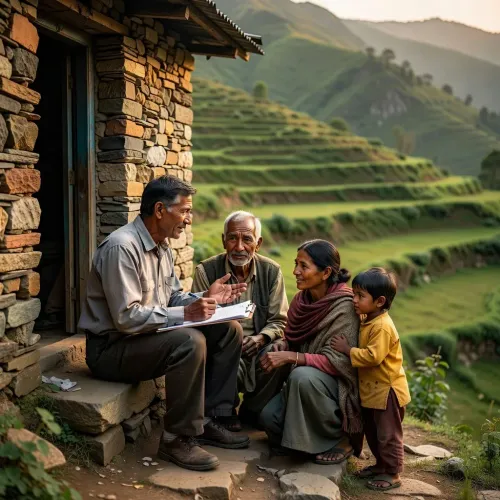
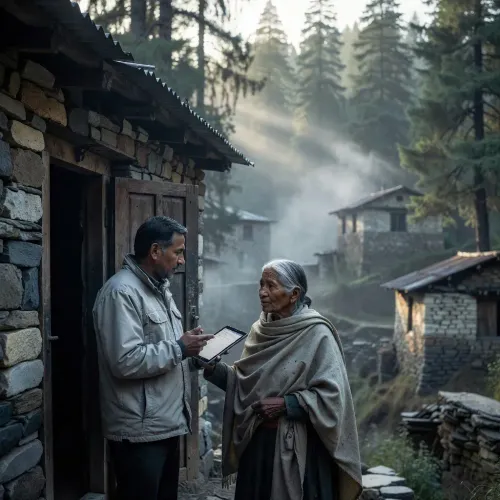
The primary stakeholders in this exercise are Himachal Pradesh's residents, local administrators, and development planners at both the state and district levels. For ordinary citizens, participation in the census is both a civic obligation under the Census Act and a direct determinant of the quality and quantum of government services they receive — from healthcare infrastructure to school placements and road connectivity in remote areas. Local administrative machinery, including district collectors and panchayat-level officials, will coordinate the enumeration schedules. The Chief Minister's Office appeal signals that the state government is treating public cooperation as a priority, recognising that undercounts in difficult terrain can skew planning for years.What's Next
Attention will now turn to district-level enumeration timelines across Himachal Pradesh's 12 districts and any subsequent government orders that link fresh census data to state budget revisions or scheme eligibility criteria. If the updated population figures diverge significantly from 2011 baselines — as is expected after more than fifteen years — they could trigger revisions in fund-transfer formulas and alter the targeting of centrally sponsored welfare programmes in the state. The Chief Minister's Office's public appeal underscores that the success of the exercise depends as much on citizen cooperation as on administrative machinery.Point of View
A framing designed to overcome citizen hesitancy in remote and hard-to-reach hill districts. Coming after a fifteen-year data gap, the results of this enumeration will likely reshape fiscal federalism calculations for the state well into the next decade. The CMO's visible ownership of the campaign also signals that state governments are no longer treating the census as purely a central government responsibility.
NationPress
21 Oct 2026
Frequently Asked Questions
Has the census started in Himachal Pradesh in 2026?
Yes. The Chief Minister's Office of Himachal Pradesh confirmed on 1 June 2026 that the census campaign has commenced in the state, urging residents to cooperate with enumerators.
When was the last census conducted in Himachal Pradesh?
The last completed Census of India was in 2011, when Himachal Pradesh recorded a population of approximately 6.86 million. The 2021 Census was deferred due to the COVID-19 pandemic.
Why is the census important for Himachal Pradesh?
Census data determines how central government funds are allocated to states, how welfare schemes are targeted, and how administrative boundaries are drawn. For Himachal Pradesh, accurate data is especially critical given its dispersed mountain settlements and migration patterns.
What is the National Population Register and is it linked to the census?
The National Population Register (NPR) is a database of usual residents of India, updated alongside the census. It supports identity verification and demographic record-keeping at the household level.
Is it mandatory to participate in the Indian census?
Yes. Under the Census Act, 1948, participation in the census is a legal obligation for all residents of India. The Chief Minister's Office of Himachal Pradesh has also made a public appeal for active cooperation.