HP CM Office: Govt Stood Firm in Disaster Relief, Compensation
Synopsis
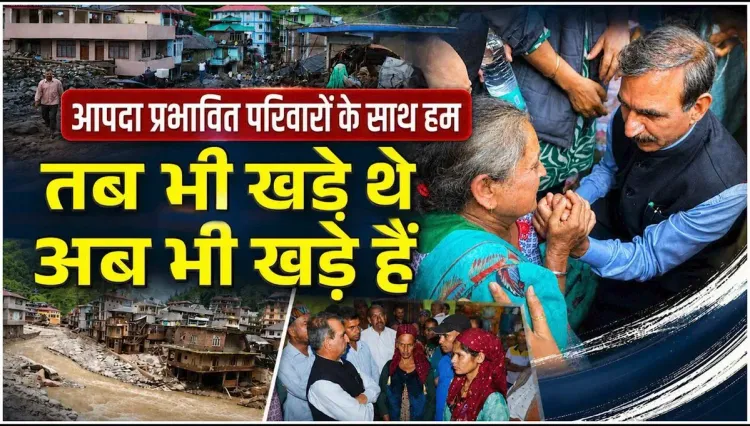
The Chief Minister's Office of Himachal Pradesh on 3 July 2026 declared that the Sukhu government stood firmly with disaster-hit residents, ensuring compensation for homes, livestock, goods, and livelihoods with 'complete dedication and sensitivity' under the state's disaster management framework.
Key Takeaways
The CMO of Himachal Pradesh posted on 3 July 2026 affirming the state's disaster relief and compensation record.
The government claims to have covered losses across four heads: houses, household goods, livestock, and livelihoods .
Relief is channelled through the Himachal Pradesh Disaster Management Authority using SDRF and NDRF frameworks under the Disaster Management Act, 2005.
CM Sukhvinder Singh Sukhu has overseen multiple monsoon relief operations since taking office in December 2022 .
Himachal Pradesh's Himalayan geography makes it one of India's most flood- and landslide-prone states every monsoon season.
Disbursement progress of pending claims and new climate-resilient housing norms remain the key metrics to watch.
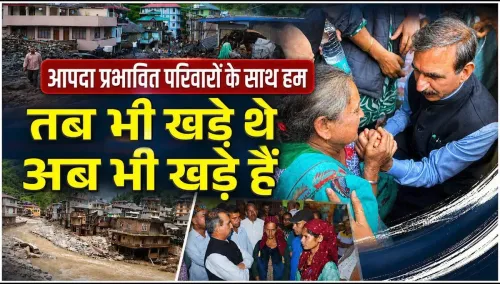
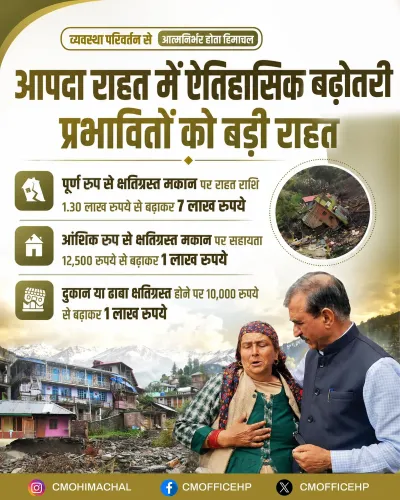
The Chief Minister's Office of Himachal Pradesh on Friday, 3 July 2026 reaffirmed that the state government provided swift relief and full compensation to disaster-affected residents, covering losses to homes, household goods, livestock, and livelihoods. The post, shared on the official CMO account, signals the Sukhu administration's intent to highlight its disaster-response record ahead of the ongoing monsoon season.
The CMO's post, written in Hindi, stated: 'Aapda jab hamare bhai-behno ke jeevan par kahar bankar tooti, tab hum unke saath mazbooti se khade rahe' ('When disaster struck our brothers and sisters like a calamity, we stood firmly by their side'). It added that the government ensured compensation for losses to houses, belongings, livestock, and livelihoods 'with complete dedication and sensitivity.'
Context
Himachal Pradesh sits in the western Himalayas and is among India's most disaster-prone states during the monsoon months of June through September. Cloudbursts, flash floods, and landslides regularly devastate villages across districts such as Mandi, Kullu, Shimla, Kangra, and Kinnaur. The state government is constitutionally and legally obligated to respond through the Himachal Pradesh Disaster Management Authority, which coordinates relief operations and disburses compensation.
Policy Backdrop
Relief and rehabilitation in Himachal Pradesh are governed by the Disaster Management Act, 2005, which established both the National Disaster Response Fund (NDRF) and State Disaster Response Fund (SDRF) as the primary financing mechanisms. The state has drawn on SDRF allocations for ex-gratia payments, house-rebuilding assistance, and livestock compensation every monsoon season since the early 2010s, with the quantum of assistance revised periodically by the central government's guidelines.
Chief Minister Sukhvinder Singh Sukhu, who took office in December 2022 heading a Congress-led government, has faced consecutive challenging monsoon seasons. His administration has repeatedly cited timely SDRF disbursements and on-ground relief camps as evidence of responsive governance in the hills.
Stakeholders and Impact
The primary beneficiaries of state disaster compensation are flood-affected households who lose shelter, livestock owners — many of whom depend on cattle and sheep for subsistence — and small farmers whose crops and tools are washed away. In a largely agrarian and pastoral hill economy, the loss of a single draught animal or a season's crop can push a family into debt, making timely ex-gratia payments critical to livelihood recovery.
The CMO's emphasis on covering 'houses, goods, livestock and livelihoods' maps directly onto the four standard heads under which SDRF compensation is calculated, suggesting the government is invoking the formal relief framework rather than ad hoc measures.
What's Next
Attention will now turn to the actual disbursement progress of pending compensation claims and whether the state issues updated guidelines for climate-resilient housing construction in vulnerable zones before the peak of the 2026 monsoon season. With Himalayan states facing increasingly erratic precipitation patterns, the adequacy of SDRF allocations and the speed of claim settlement will remain key benchmarks for the Sukhu government's disaster-management credibility.
Point of View
Timed to the active monsoon window, positioning the Sukhu administration as empathetic and action-oriented on disaster response — a politically sensitive issue in a state where annual flood damage shapes voter sentiment in rural constituencies. By invoking the four standard SDRF compensation heads explicitly, the messaging is calibrated to signal institutional process rather than mere sympathy. This fits a broader pattern of Congress-ruled hill states using disaster-relief performance as a counter-narrative to opposition criticism of governance deficits. The real test, however, lies in verifiable disbursement data and claim-settlement timelines, which the post does not provide.
NationPress
3 Jul 2026
Frequently Asked Questions
What relief did the Himachal Pradesh government provide to disaster victims?
The Himachal Pradesh government stated it provided swift relief and compensation covering losses to houses, household goods, livestock, and livelihoods for residents affected by disasters, as announced by the CMO on 3 July 2026.
Who is the Chief Minister of Himachal Pradesh in 2026?
Sukhvinder Singh Sukhu is the Chief Minister of Himachal Pradesh, heading a Congress-led government since December 2022.
How does Himachal Pradesh fund disaster compensation?
Himachal Pradesh uses the State Disaster Response Fund (SDRF) and central National Disaster Response Fund (NDRF) allocations under the Disaster Management Act, 2005 to finance ex-gratia payments, house rebuilding, and livestock compensation.
Why is Himachal Pradesh so vulnerable to floods and landslides?
Himachal Pradesh's Himalayan terrain makes it highly susceptible to cloudbursts, flash floods, and landslides during the June-to-September monsoon season, affecting districts such as Mandi, Kullu, Shimla, Kangra, and Kinnaur every year.
What should disaster victims in Himachal Pradesh watch for next?
Affected residents should monitor the progress of pending compensation claim disbursements and any new state guidelines for climate-resilient housing construction expected ahead of the peak 2026 monsoon period.