HP CM Office Hails Student's Fluent English at PM SHRI School
Synopsis
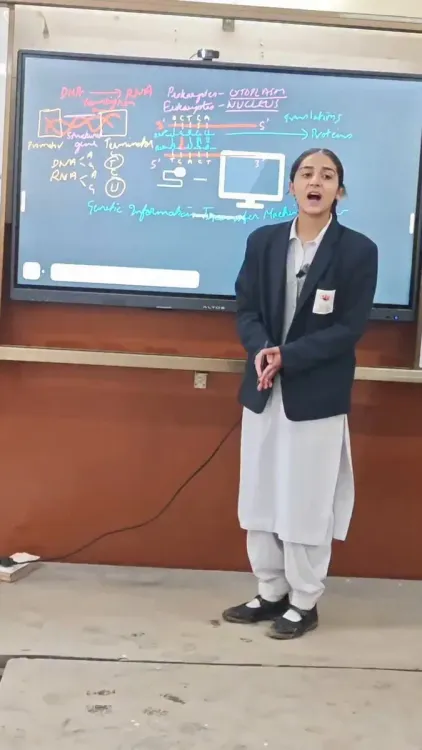
The Chief Minister's Office of Himachal Pradesh spotlighted student Shreyasi Bhota from the PM SHRI Government Utkrisht Senior Secondary School in Chaupal, Shimla, praising her fluent English as proof that equal resources in government schools can deliver equal outcomes — a showcase moment for the Union's PM SHRI scheme under NEP 2020.
Key Takeaways
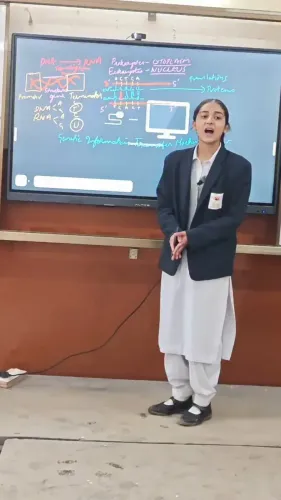
The HP CMO on 3 July 2026 publicly praised Shreyasi Bhota , a student at the PM SHRI Government Utkrisht Senior Secondary School, Chaupal , for speaking fluent English with confidence.
The post frames her achievement as evidence that equal opportunity and resources in government schools can produce outcomes matching private institutions.
The PM SHRI scheme , launched in 2022 , aims to upgrade 14,500 government schools across India as model institutions under the National Education Policy 2020 .
Chaupal is a rural tehsil in Shimla district, Himachal Pradesh , where access to quality English-medium instruction has traditionally been limited.
Himachal Pradesh has been implementing centrally sponsored school modernisation programmes since the Rashtriya Madhyamik Shiksha Abhiyan in 2009 .
Spoken English proficiency is a key employability and higher-education access metric for students from non-urban government schools.
The Chief Minister's Office of Himachal Pradesh on Friday, 3 July 2026 expressed delight at a student from the PM SHRI Government Utkrisht Senior Secondary School in Chaupal, Shimla district, speaking fluent English with confidence — holding it up as proof that equal opportunity can unlock equal outcomes in government schools.
Context
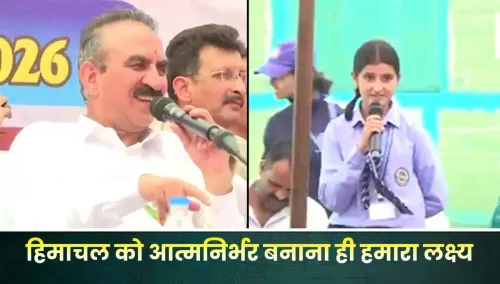
The post, shared from the official CMO Himachal Pradesh account, highlights Shreyasi Bhota, a student from the Chaupal school, delivering fluent English — a skill often associated with private or urban institutions. The original Hindi post reads: 'aatmavishwas ke saath dharapravah angrezi bolte hue dekhkar atyant prasannata hui' ('it was a matter of immense joy to see her speak fluent English with confidence'). The CMO added that this is 'a strong proof that if opportunity and resources are equal' — implying the rest: outcomes will be equal too.
Chaupal is a tehsil in Shimla district, a predominantly rural and hilly area where access to quality English-medium instruction has historically been limited. The school's inclusion under the PM SHRI scheme has evidently begun to change that equation.
Policy Backdrop
The Pradhan Mantri Schools for Rising India (PM SHRI) scheme was approved by the Union Cabinet in 2022 under the Ministry of Education to develop 14,500 existing government schools across India into model institutions. The scheme is anchored in the National Education Policy 2020, which emphasises multilingual proficiency, experiential learning, and equitable access — particularly for students in non-urban settings.
Himachal Pradesh, which has historically maintained high literacy rates, has been an active implementer of centrally sponsored school modernisation programmes. The state had earlier integrated the Rashtriya Madhyamik Shiksha Abhiyan from 2009 to strengthen secondary education infrastructure, laying the groundwork for schemes like PM SHRI.
Stakeholders and Impact
The primary beneficiaries of PM SHRI schools are students from rural and semi-urban government school systems — demographics that have long faced a quality gap compared with private institutions. Spoken English proficiency is directly linked to employability and access to higher education, making it a critical metric for gauging scheme outcomes.
The CMO's decision to spotlight Shreyasi Bhota by name signals an intent to use individual success stories as public evidence of the scheme's early impact. Other states implementing PM SHRI have similarly shared student-level outcomes to build momentum for the programme.
What's Next
The Himachal Pradesh education department is expected to publish performance metrics for PM SHRI schools in the state as the scheme matures. Further expansion of the programme — and the number of schools brought under its umbrella — will be a key indicator of the state government's commitment to closing the public-private school quality divide. Instances like Shreyasi Bhota's are likely to feature in state-level reviews of NEP 2020 implementation progress.
Point of View
Translating a Union-level policy into a human-interest moment that resonates locally. By naming the student and the school, the state government anchors an abstract scheme in a tangible, shareable outcome — a communication strategy that serves both Centre and state interests ahead of future budget cycles. The emphasis on spoken English from a rural government school is pointed: it directly challenges the entrenched perception that quality English-medium education is the preserve of private institutions. If replicated at scale, such outcomes could become the benchmark by which Himachal Pradesh — and other high-literacy states — are judged on NEP 2020 delivery.
NationPress
3 Jul 2026
Frequently Asked Questions
What is the PM SHRI scheme and which schools are covered?
PM SHRI stands for Pradhan Mantri Schools for Rising India, a central government scheme launched in 2022 to upgrade 14,500 existing government schools across India as model institutions aligned with the National Education Policy 2020.
Where is the PM SHRI Government Utkrisht Senior Secondary School in Chaupal?
The school is located in Chaupal tehsil, Shimla district, Himachal Pradesh — a predominantly rural and hilly area in the state.
Who is Shreyasi Bhota?
Shreyasi Bhota is a student at the PM SHRI Government Utkrisht Senior Secondary School in Chaupal, Shimla, who was praised by the Himachal Pradesh CMO for speaking fluent English with confidence.
How is Himachal Pradesh implementing the PM SHRI scheme?
Himachal Pradesh, which has high literacy rates and a history of integrating central education schemes since the Rashtriya Madhyamik Shiksha Abhiyan in 2009, has included schools like the one in Chaupal under the PM SHRI programme for infrastructure and pedagogy upgrades.
What does NEP 2020 say about English and language learning in schools?
The National Education Policy 2020 emphasises multilingual proficiency and experiential learning, supporting English instruction alongside mother-tongue-based education to improve employability and higher education access for students from all backgrounds.