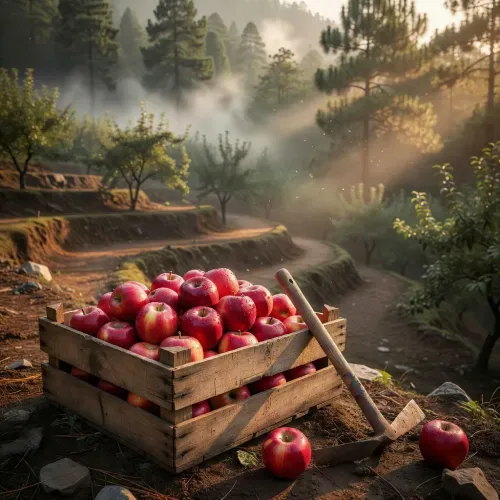
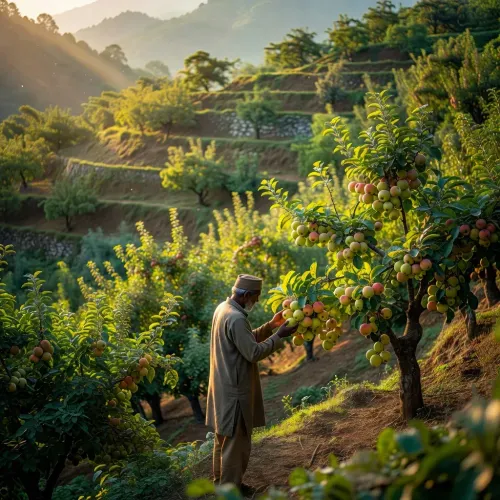
HP CM Office: Himachal Grows 22% of India's Apples
Synopsis
The Chief Minister's Office of Himachal Pradesh shared data on 24 September 2026 confirming the state contributes 22% of India's apple production and 37% of apple-growing area, with Shimla district alone accounting for 55% of the state's output.
Key Takeaways
Himachal Pradesh is India's second-largest apple-producing state , contributing approximately 22 percent of national apple output.
The state accounts for 37 percent of India's total apple-growing area, reflecting its agro-climatic suitability for temperate fruit cultivation.
Shimla district alone produces about 55 percent of Himachal Pradesh's total apple crop.
Kullu, Kinnaur, and Mandi are the other principal apple-producing districts in the state.
Apple horticulture is a critical driver of rural income and employment across Himachal's mountain communities.
Geographic concentration of output in a few districts makes the sector sensitive to localised weather or pest events.
One in every five apples eaten across India most likely grew on a Himachal hillside — and the Chief Minister's Office of Himachal Pradesh put that weight in numbers on Thursday, 24 September 2026, sharing a crisp breakdown of where the state stands in the national apple economy.
The office cited official figures showing that Himachal Pradesh accounts for roughly 22 percent of India's total apple production and commands 37 percent of the country's apple-growing area, making it the second-largest apple-producing state in the nation. Only Jammu and Kashmir outpaces it.
Shimla's outsized slice of the crop
The numbers inside the numbers are even more striking. Shimla district alone contributes approximately 55 percent of the state's total apple output — more than half the harvest from a single district. That concentration reflects the Shimla belt's elevation, rainfall pattern, and decades of orchard development that have made its apple identity almost synonymous with the fruit itself.
After Shimla, the post names Kullu, Kinnaur, and Mandi as the next three major producing districts. Together, these four districts sketch the spine of Himachal's apple belt, a high-altitude arc where temperate conditions allow the kind of cultivation impossible in most of peninsular India.
Why these figures matter beyond bragging rights
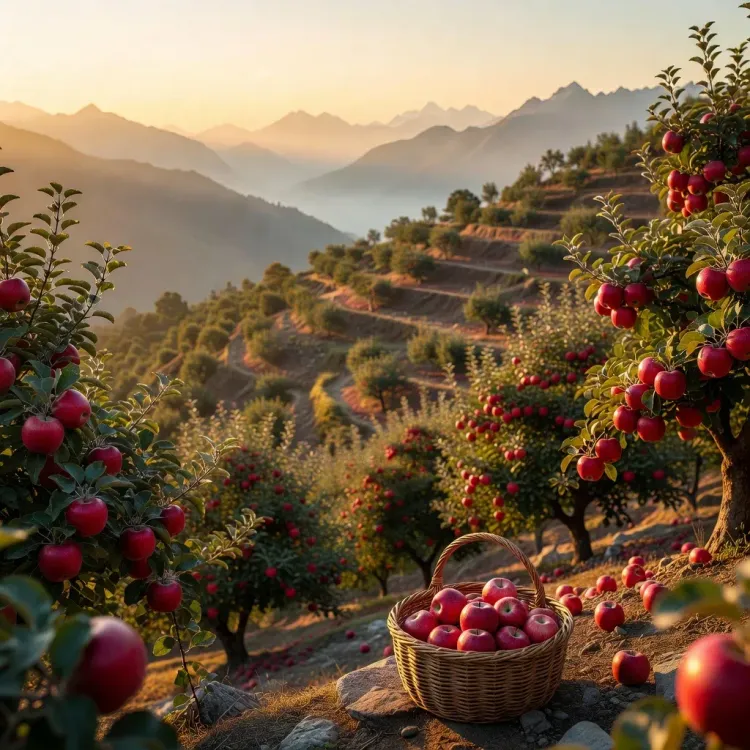
Apple horticulture is not a niche cottage sector for Himachal — it is a primary driver of rural income and employment across the state's mountain communities. Orchards line the slopes of districts where alternate livelihoods are scarce, and the apple economy touches hundreds of thousands of farming families, seasonal labour contractors, cold-chain operators, and road-side market vendors.
Official statements that anchor these production shares serve a policy purpose too: they build the statistical case for targeted investment in cold storage infrastructure, climate-resilient rootstock programmes, and better road connectivity to bring the fruit from orchard gate to national market before post-harvest losses mount.
What the data also signals is a degree of geographic vulnerability. With more than half the state's output concentrated in a single district, any season of drought, hailstorm, or pest outbreak centred on Shimla carries outsized consequences for Himachal's horticulture revenue — a risk that planners and farmers alike track every spring when the blossoms open.
As the state awaits the next round of annual horticulture statistics from the Ministry of Agriculture, these headline figures set the baseline against which any shift in output — upward or downward — will be measured.
Point of View
The Himachal Pradesh government is building a quantified narrative around horticulture as an economic pillar — a framing that typically precedes budget asks for rural infrastructure or central scheme funding. The heavy concentration of output in Shimla district is a double-edged data point: it underlines the district's productivity legacy but also exposes the state's apple economy to climate and supply-chain risk in a single geography. Nationally, the figures reinforce Himachal's position in the India-wide conversation about mountain agriculture and the need to invest in climate-resilient horticulture as warming trends threaten traditional apple belts.
NationPress
24 Sept 2026
Frequently Asked Questions
Which state is the largest apple producer in India?
Jammu and Kashmir is India's largest apple-producing state. Himachal Pradesh ranks second, contributing approximately 22 percent of national apple output.
How much of India's apple area is in Himachal Pradesh?
Himachal Pradesh accounts for around 37 percent of India's total apple-growing area, according to figures shared by the Chief Minister's Office.
Which district produces the most apples in Himachal Pradesh?
Shimla district is the largest apple-producing region in Himachal Pradesh, contributing roughly 55 percent of the state's total apple output.
Which are the top apple-growing districts in Himachal Pradesh?
The top apple-growing districts are Shimla, followed by Kullu, Kinnaur, and Mandi, as cited by the HP Chief Minister's Office.
Why is apple farming important for Himachal Pradesh's economy?
Apple horticulture is a primary source of rural income and employment in Himachal Pradesh, supporting hundreds of thousands of farming families across high-altitude districts where alternate livelihoods are limited.