Anurag Thakur: HP industries fleeing Congress govt neglect
Synopsis
Speaking from Solan, BJP MP Anurag Thakur accused Himachal Pradesh's Congress government of failing industries through inadequate incentives and rising power tariffs, contrasting the current situation with the large-scale industrialisation triggered by the Vajpayee-era special industrial package.
Key Takeaways
BJP MP Anurag Thakur alleged that existing industries are migrating out of Himachal Pradesh due to the current Congress government's failure to provide adequate facilities.
Rising electricity tariffs under the present state government are placing extra financial burden on industrial units, Thakur claimed.
The special industrial package granted to Himachal Pradesh during former PM Atal Bihari Vajpayee's tenure is credited with kick-starting large-scale industrialisation in the state.
Former BJP Chief Ministers Prem Kumar Dhumal and Jai Ram Thakur continued pro-industry policies, including competitive power tariff efforts for manufacturers.
Thakur delivered the statement from Solan , one of Himachal Pradesh's most industrially active districts, on September 24, 2026 .
No fresh investment of the scale 'expected' is arriving in the state under the current administration, according to the BJP MP.
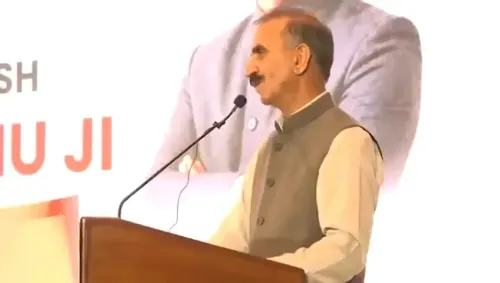
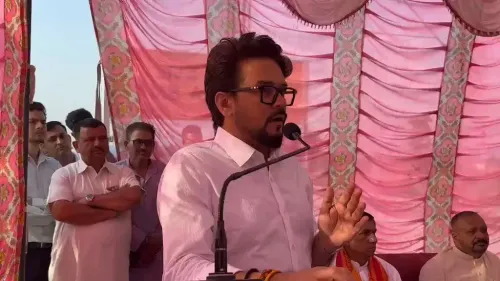
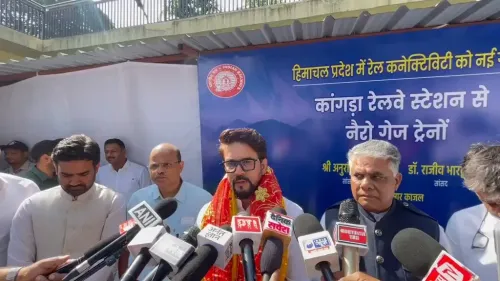
From Solan, Himachal Pradesh — the state's industrial heartland — BJP MP Anurag Thakur fired a pointed broadside at the current Congress government in Himachal Pradesh on Thursday, September 24, 2026, warning that existing industries are migrating out of the state rather than new ones coming in.
Posting from Solan, Thakur stated that the Congress administration has failed to provide 'adequate facilities and an industry-friendly environment,' forcing older industrial units to consider relocation even as fresh investment stays away. He placed particular blame on rising electricity tariffs, arguing they have imposed an additional financial burden on manufacturers already operating on thin margins in a hill economy.
The Vajpayee package that built HP's industrial base
Thakur's critique is anchored in a specific historical milestone. During the tenure of former Prime Minister Atal Bihari Vajpayee, the central government extended a special industrial package to Himachal Pradesh — a set of tax concessions and fiscal incentives that triggered large-scale industrialisation across districts including Solan, Baddi, and Nalagarh. That package is widely credited with transforming what had been a predominantly agrarian hill state into a significant pharmaceutical and manufacturing hub.
Thakur noted that successive BJP chief ministers — former Professor Prem Kumar Dhumal and former Chief Minister Jai Ram Thakur — built on that foundation with state-level policies to attract and retain investment, including efforts to supply power to industrial units at competitive tariffs.
Power tariffs, migration, and the investment gap
The electricity-tariff argument sits at the centre of Thakur's attack. Industries in hill states depend heavily on reliable, affordable power; when tariffs rise, operational costs spike disproportionately compared to plains-based rivals. Thakur contends the current state government has allowed rates to climb without compensatory relief, undercutting the competitiveness of Himachal's industrial zones.
He also flagged the absence of 'expected new investment' — pointing to a gap between the state government's investment promises and on-ground reality in districts like Solan, which has historically been one of the most industrially active corridors in the state.
BJP's opposition playbook — and what the Congress must answer
The Hamirpur MP's statement follows a well-established BJP opposition pattern: contrasting the developmental record of Vajpayee-era central incentives and state BJP governments with what the party frames as Congress inertia on economic management. The argument is especially pointed in a state where industrial employment is a visible, measurable metric — factory closures or relocations generate local headlines in ways that abstract investment figures do not.
The Congress government in Shimla has not publicly responded to the specific claims made at Solan. Any credible rebuttal will need to address industrial output data, actual tariff revision orders, and the current pipeline of investment commitments — numbers that investors in Baddi-Barotiwala-Nalagarh corridors watch closely.
With Himachal Pradesh's industrial zones sitting at a competitive crossroads and neighbouring states aggressively courting the same investors, the question Thakur is raising will not stay political for long — it will show up in jobs data.
Point of View
He frames economic decline not as circumstantial but as a direct consequence of Congress governance — a narrative useful ahead of any state election cycle. The electricity-tariff angle is particularly sharp because it is verifiable and felt at the ground level by factory workers and owners alike. For the Congress government, the challenge is less about rebutting BJP nostalgia and more about presenting credible, current investment numbers. If the industrial corridor data is weak, the political damage compounds quickly.
NationPress
24 Sept 2026
Frequently Asked Questions
Why is Anurag Thakur criticising the Himachal Pradesh government over industries?
Thakur alleges the current Congress government is not providing adequate facilities, competitive power tariffs, or an industry-friendly environment, causing existing industries to migrate out and new investment to stay away.
What was the Vajpayee special industrial package for Himachal Pradesh?
During former Prime Minister Atal Bihari Vajpayee's tenure, the central government offered a special package of tax concessions and fiscal incentives to Himachal Pradesh that triggered large-scale industrialisation in districts like Solan, Baddi, and Nalagarh.
How did BJP governments in Himachal Pradesh support industries?
Former Chief Ministers Prem Kumar Dhumal and Jai Ram Thakur introduced state-level policies to promote industrial growth and made efforts to supply power to industries at competitive tariff rates.
Why are electricity tariffs important for industries in Himachal Pradesh?
Industries in hill states depend heavily on affordable power; higher tariffs raise operational costs disproportionately compared to plains-based competitors, making Himachal Pradesh's industrial zones less attractive to investors.
Where is Solan, and why is it significant to this statement?
Solan is an industrial district in Himachal Pradesh and part of the Baddi-Barotiwala-Nalagarh corridor, one of the state's most important manufacturing zones — making it a pointed location for a statement about industrial decline.