Tejashwi calls statewide effigy burns against Election Commission
Synopsis
RJD leader Tejashwi Yadav has called for statewide effigy burnings across Bihar on September 25, 2026, accusing the Election Commission of India of 'dishonesty and dictatorship' in a sharp escalation of opposition pressure on the constitutional polls body.
Key Takeaways
Tejashwi Yadav announced a statewide protest for September 25, 2026 , targeting the Election Commission of India .
The protest involves effigy burnings scheduled simultaneously across all districts of Bihar — described as sampurna Bihar .
Tejashwi accused the ECI of 'beimani' (dishonesty) and 'tanashahi' (dictatorship) in his post.
The Rashtriya Janata Dal , Bihar's principal opposition party, is the organising force behind the protest.
Opposition parties across India have a history of staging symbolic protests against the Election Commission ahead of state and national elections.
The specific trigger for the protest has not been independently confirmed; the ECI's response remains to be seen.
A sharp political salvo landed on Thursday, September 24, 2026, when RJD leader and Leader of the Opposition in the Bihar Legislative Assembly, Tejashwi Yadav, announced a statewide protest against the Election Commission of India — calling for effigy burnings across every district of Bihar the very next day.
In his post, Tejashwi declared: 'Chunav Aayog ki beimani aur tanashahi ke khilaf kal sampurna Bihar mein putla dahan!' — translated: 'Tomorrow, effigies will be burned across all of Bihar against the dishonesty and dictatorship of the Election Commission!' The language was unambiguous — and the mobilisation, statewide.
Why Bihar's opposition is targeting the Election Commission
Protests against the Election Commission of India (ECI) by opposition parties are not without precedent. Across several Indian states, parties have periodically staged symbolic demonstrations — effigy burnings, dharnas, marches — alleging procedural bias in electoral rolls, polling arrangements, or the conduct of elections. Bihar, with its deeply competitive political landscape and a history of fierce contest between the Rashtriya Janata Dal and the ruling coalition, has always been a flashpoint for such disputes.
The RJD, founded by Lalu Prasad Yadav and currently steered in Bihar by Tejashwi, has positioned itself as the primary challenger to the state's National Democratic Alliance government. When the opposition labels the election authority 'dishonest' and 'dictatorial,' the words carry political weight far beyond rhetoric — they signal a coordinated effort to frame upcoming electoral contests around questions of institutional fairness.
Statewide mobilisation: what a 'sampurna Bihar' protest means
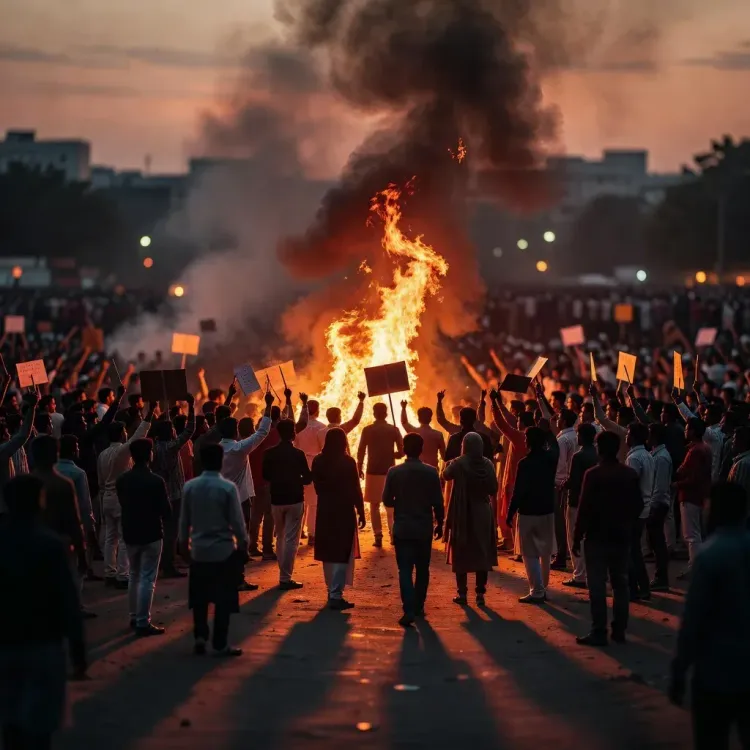
The phrase 'sampurna Bihar' — all of Bihar — is deliberate. It signals that the RJD intends this not as a Patna press-conference moment but as a grassroots demonstration of reach and organisation, stretching from the Seemanchal belt to the Bhojpur heartland. Effigy burning as a protest form carries a visceral, visual message: it is designed to generate district-level attention simultaneously, creating a single-day political news cycle that is difficult to ignore.
For the Election Commission, the pressure is reputational. The constitutional body has faced similar opposition broadsides in multiple states ahead of polls, and its response — or silence — will itself be watched. Bihar's ruling coalition will also face questions about whether the protest reflects a broader voter anxiety about electoral fairness, or is a calibrated pre-election positioning move by the RJD.
The specific trigger for Tejashwi's announcement has not been independently confirmed, but the timing — and the statewide scale — suggests the RJD is treating this as a high-priority mobilisation moment ahead of whatever electoral cycle Bihar is approaching next. One effigy, multiplied across dozens of districts, is a political statement that demands an answer.
Point of View
Statewide spectacle that tests the party's ground-level reach. The use of 'tanashahi' (dictatorship) to describe the Election Commission is a deliberate escalation — framing institutional contests in the language of democratic threat resonates with RJD's core voter base. For the ECI, repeated targeting by opposition parties across states poses a long-term reputational challenge that the body has thus far managed through studied restraint. The real stakes here are less about the protest itself and more about whether RJD can sustain this mobilisation energy into the next electoral cycle in Bihar.
NationPress
24 Sept 2026
Frequently Asked Questions
Why is Tejashwi Yadav protesting against the Election Commission?
Tejashwi Yadav has accused the Election Commission of India of 'dishonesty and dictatorship' and called for effigy burnings across Bihar on September 25, 2026. The specific trigger has not been independently confirmed, but it aligns with a pattern of opposition parties raising concerns about electoral fairness ahead of polls.
What is a 'putla dahan' protest in Indian politics?
A 'putla dahan' — or effigy burning — is a common form of symbolic protest in India where demonstrators burn a symbolic figure representing an individual or institution to express strong opposition or condemnation. It is designed to generate visible, grassroots-level political pressure simultaneously across multiple locations.
What is Tejashwi Yadav's political position in Bihar?
Tejashwi Yadav is the Leader of the Opposition in the Bihar Legislative Assembly and a senior leader of the Rashtriya Janata Dal (RJD). He previously served as Deputy Chief Minister of Bihar.
Has the Election Commission faced protests from opposition parties before?
Yes. Opposition parties across several Indian states have periodically staged protests, dharnas, and effigy burnings against the Election Commission, alleging bias in electoral rolls, EVM usage, or procedural fairness — particularly ahead of assembly and Lok Sabha elections.
What does 'sampurna Bihar putla dahan' mean?
'Sampurna Bihar putla dahan' translates to 'effigy burning across all of Bihar.' By calling for simultaneous protests in every part of the state, the RJD is signalling statewide organisational reach rather than a localised demonstration.