HP CM Office Pays Tribute to HRTC's Role in Mountain Life
Synopsis
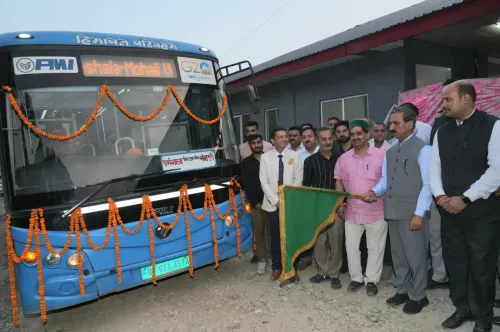
The Chief Minister's Office of Himachal Pradesh paid tribute to HRTC on 30 July 2026, honouring the state bus corporation's fifty-year role connecting remote families, students, patients, and youth across the state's difficult mountain terrain.
Key Takeaways
The Chief Minister's Office of Himachal Pradesh posted a tribute to HRTC on 30 July 2026 , calling the buses 'companions to life in Himachal.' HRTC was founded on 2 October 1974 by merging earlier regional transport services into a unified state corporation.
The post specifically named four beneficiary groups: families, students, patients, and youth — underscoring HRTC's social role beyond mere transport.
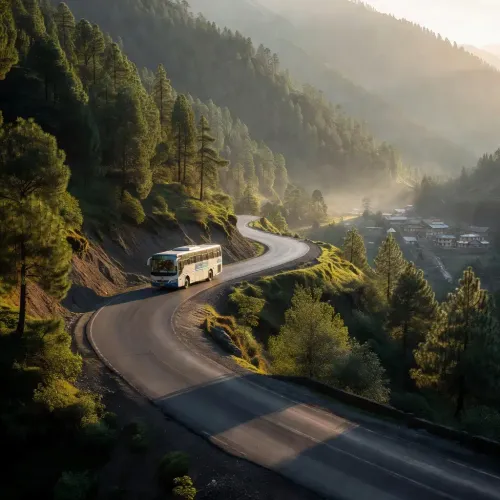
Himachal Pradesh's mountainous terrain makes state-run buses the primary affordable link between remote villages and towns with schools, hospitals, and markets.
Private operators largely avoid difficult high-altitude routes, making HRTC's continued operation essential for rural connectivity in the state.
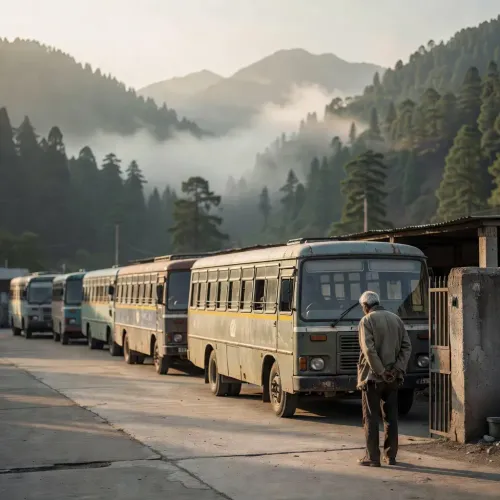
For the millions who live among Himachal Pradesh's high passes and narrow valley roads, a bus is not a convenience — it is a lifeline. On Thursday, 30 July 2026, the Chief Minister's Office of Himachal Pradesh posted a heartfelt tribute to the Himachal Road Transport Corporation (HRTC), acknowledging decades of service across some of India's most punishing terrain.
The post, shared in Hindi, captured the emotional weight of what public transport means in a mountain state: 'वर्षों से HRTC बसें हिमाचल के जनजीवन की साथी रही हैं' — 'For years, HRTC buses have been companions to life in Himachal.' It went on to note how these buses have connected 'lakhs of families to their loved ones, students to education, patients to treatment, and youth to new opportunities.'
Fifty Years on the Mountain Road
HRTC was established on 2 October 1974, born from the merger of earlier regional transport services into a single state-owned corporation. Its mandate was straightforward but formidable: stitch together a state where geography itself is the obstacle. Himachal Pradesh's terrain — steep gradients, seasonal snowfall, hairpin bends at altitude — has made road connectivity not just a policy goal but a matter of survival for remote communities.
Over five decades, the corporation has become the primary affordable transport link between villages and the towns that hold schools, hospitals, and government offices. For a student in a remote valley, an HRTC bus is often the only route to a classroom. For a patient in a highland hamlet, it may be the difference between reaching a hospital in time and not reaching one at all.
Why This Tribute Lands Beyond Ceremony
State-run bus services across Himalayan states have faced persistent pressure — ageing fleets, difficult routes that private operators will not touch, and the financial strain of subsidised fares. The CMO's tribute, framed around human connection rather than statistics, signals that the government views HRTC not merely as a transport utility but as a social institution.
The four groups named in the post — families, students, patients, and youth — are not incidental. They map precisely onto the constituencies that depend most on affordable, reliable public transport and who have the least ability to substitute it with private alternatives. In a state where private vehicle penetration remains limited in rural areas, HRTC's routes are the grid that holds communities together.
Himachal Pradesh's next test for the corporation will be in its budget allocations and fleet renewal decisions — whether the sentiment expressed today translates into the capital investment HRTC needs to keep running those hard mountain roads for another fifty years.
Point of View
Fleet-renewal tenders, or fare-revision decisions. By framing HRTC in human terms — families, students, patients, youth — the government pre-empts criticism of subsidies with a moral argument: some routes exist not for profit but for equity. Whether this signals an imminent policy announcement, such as fleet augmentation or route expansion, remains to be watched in upcoming state budget deliberations.
NationPress
30 Jul 2026
Frequently Asked Questions
What is HRTC and what does it do?
HRTC, the Himachal Road Transport Corporation, is the state government-owned bus operator of Himachal Pradesh. It provides affordable public bus services across the state's mountainous terrain, connecting remote villages to towns, schools, hospitals, and markets.
When was HRTC established?
HRTC was established on 2 October 1974 , formed by merging earlier regional transport services into a single unified corporation to serve the entire state of Himachal Pradesh.
Why is public bus transport so important in Himachal Pradesh?
Himachal Pradesh's difficult mountainous terrain — steep gradients, hairpin bends, and seasonal snowfall — makes private vehicle access limited in many areas. HRTC buses are often the only affordable link for rural residents to reach schools, hospitals, and family in towns.
What did the Himachal Pradesh CMO say about HRTC?
The Chief Minister's Office posted on 30 July 2026 that HRTC buses have for years been 'companions to life in Himachal,' connecting families, students, patients, and youth to opportunities across the state's challenging mountain roads.
Does HRTC operate on routes private buses avoid?
Yes. Private operators typically avoid high-altitude and low-traffic mountain routes due to difficult terrain and limited commercial viability. HRTC operates these routes as a public service, making it the primary transport option for many remote communities in Himachal Pradesh.