HP CM Office Pays Tribute to Tulsidas on His Legacy
Synopsis
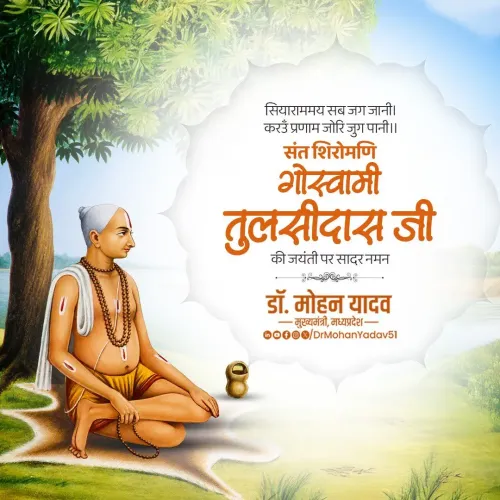
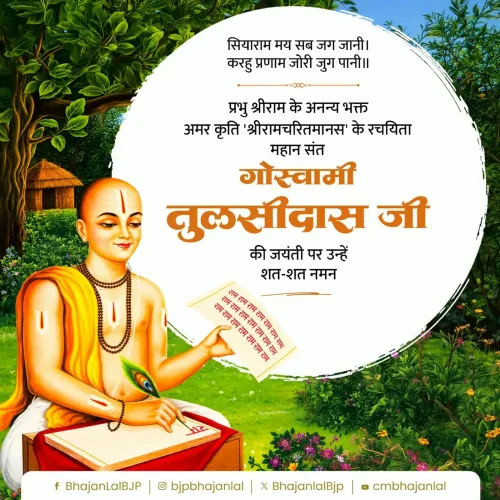
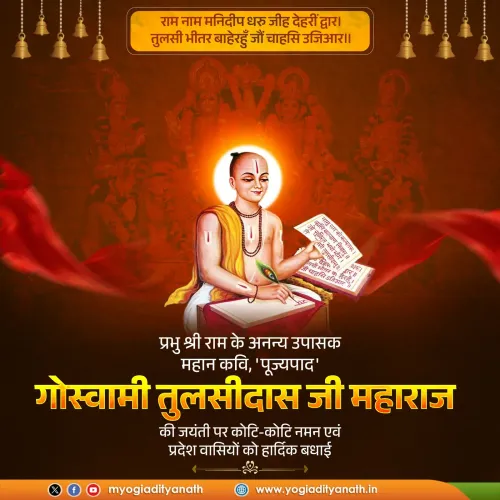
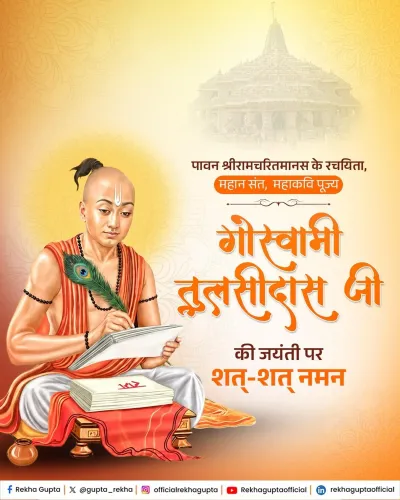
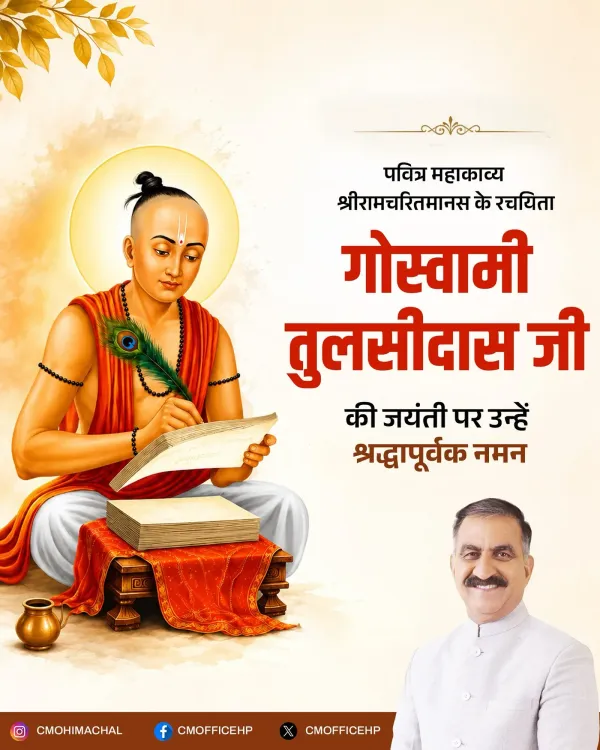
The Chief Minister's Office of Himachal Pradesh quoted a celebrated Ramcharitmanas doha on 19 August 2026, paying tribute to Goswami Tulsidas and his message of lokmangal — the welfare of all people — drawn from Lord Rama's ideals.
Key Takeaways
The Chief Minister's Office of Himachal Pradesh posted a tribute to Goswami Tulsidas on 19 August 2026 .
The post quoted the Ramcharitmanas doha: 'There is no dharma greater than service to others; there is no sin greater than causing pain to another.' Tulsidas was a 16th-century Awadhi poet-saint who composed the Ramcharitmanas to make Rama's ideals accessible to common people.
The post highlighted lokmangal — public welfare — as the core value transmitted through Tulsidas's work.
The tribute reflects a broader pattern of Indian state governments affirming cultural and devotional heritage through official communications.
A couplet etched into the conscience of millions opened a message from the Chief Minister's Office of Himachal Pradesh on Wednesday, 19 August 2026 — and it carried the full weight of a tradition that has shaped India's moral imagination for five centuries.
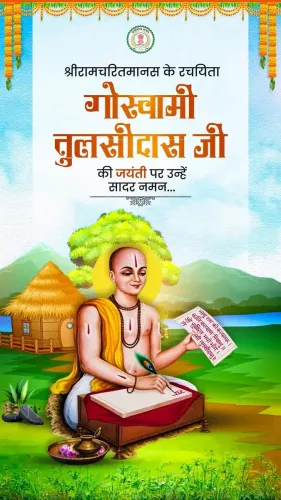
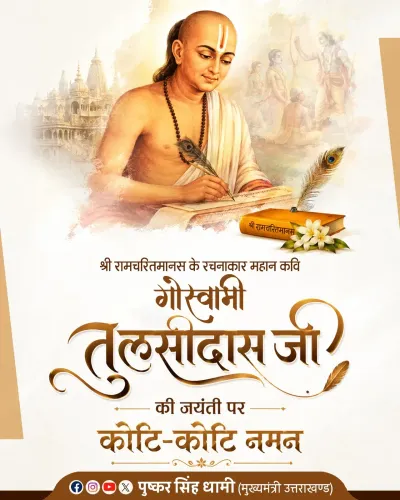
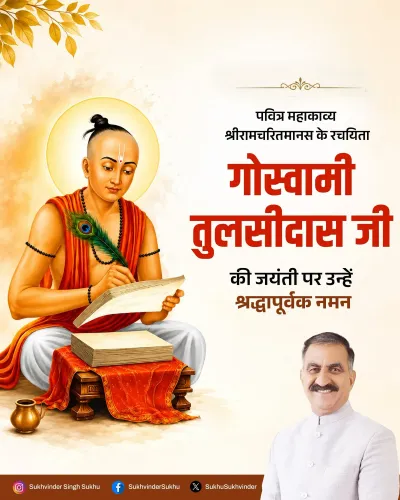
The office quoted the celebrated doha from the Ramcharitmanas: 'Parahit saris dharam nahin bhai, par peeda sam nahin adhamai' — 'There is no dharma greater than service to others; there is no sin greater than causing pain to another.' In invoking these lines, the post paid tribute to Goswami Tulsidas, the 16th-century poet-saint whose Awadhi retelling of the Ramayana transformed devotion to Lord Rama into a living, breathing public ethic.
The Poet Who Brought Rama to Every Doorstep
Tulsidas composed the Ramcharitmanas at a time when Sanskrit scripture remained inaccessible to ordinary people. By writing in Awadhi — the language of the streets and fields — he democratised an entire spiritual tradition. The text's central portrait of Rama as maryada purushottam, the ideal upholder of righteous conduct, gave millions a moral compass they could quote, sing, and live by. The CM Office's post noted that his 'immortal compositions even today illuminate the path of bhakti, dignity, and humanity.'
Lokmangal: The Idea That Still Travels
The word the post chose — lokmangal, the welfare of all people — is not incidental. It is the philosophical spine of the Ramcharitmanas, the argument that individual righteousness is inseparable from collective well-being. That a state government's official account chose this particular verse, with its blunt moral symmetry between service and sin, signals an alignment with a value system that cuts across caste, region, and era. Political offices across India regularly draw from classical devotional texts to affirm cultural continuity; this post sits squarely in that tradition.
Five hundred years on, the doha needs no translation for most Indians — it arrives already memorised. That is Tulsidas's enduring achievement: he made scripture unforgettable.
Point of View
Which frames public service as the highest dharma, subtly aligns governance rhetoric with Tulsidas's ethical framework. In a state with a significant rural and religiously observant population, such messaging reinforces a sense of civilisational continuity. Whether followed by concrete cultural programming will determine if this is a standalone gesture or the opening of a broader literary commemoration.
NationPress
19 Aug 2026
Frequently Asked Questions
Who was Goswami Tulsidas?
Goswami Tulsidas was a 16th-century Awadhi poet-saint best known for composing the Ramcharitmanas, a retelling of the Ramayana that popularised devotion to Lord Rama and ethical ideals among ordinary people across India.
What does 'Parahit saris dharam nahin bhai' mean?
The doha translates as: 'There is no dharma greater than service to others; there is no sin greater than causing pain to another.' It is one of the most widely quoted verses from the Ramcharitmanas.
What is the Ramcharitmanas?
The Ramcharitmanas is an epic devotional poem written by Tulsidas in the Awadhi language. It retells the story of Lord Rama and presents him as the ideal upholder of righteous conduct, or maryada purushottam.
What is lokmangal in the context of Tulsidas?
Lokmangal means the welfare of all people. It is a central theme of the Ramcharitmanas, expressing the idea that true dharma is inseparable from concern for collective well-being.
Why did the Himachal Pradesh CM Office post about Tulsidas?
The Chief Minister's Office posted a tribute to Goswami Tulsidas on 19 August 2026, quoting his verse on service and compassion. The specific occasion for the post has not been officially stated.