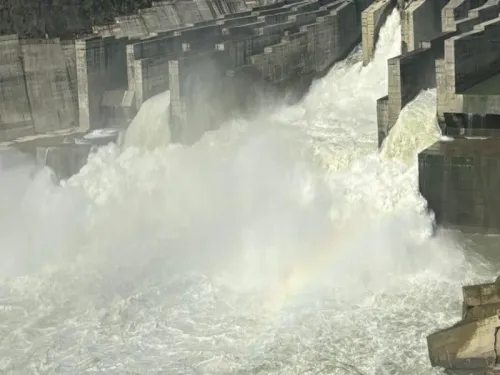
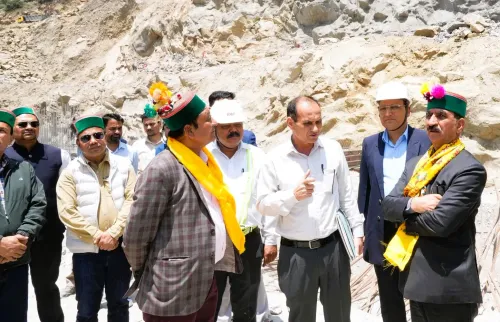
HP CM Office Orders Faster Work on 450 MW Shongtong-Karcham Project

Synopsis
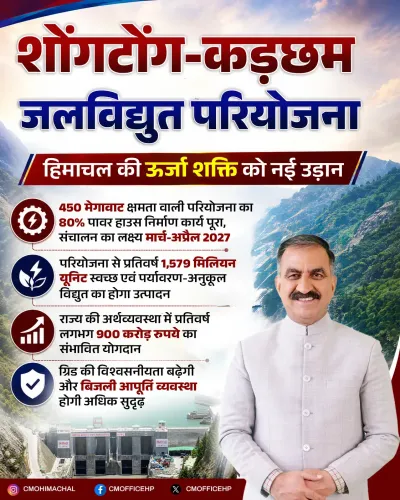
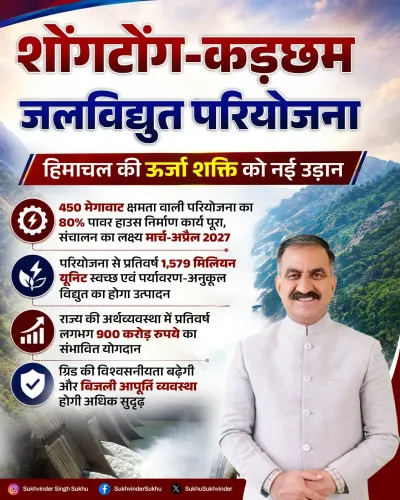
The Chief Minister's Office of Himachal Pradesh chaired a high-level Energy Department review on 13 July 2026, directing officials to accelerate construction of the 450 MW Shongtong-Karcham Hydroelectric Project on the Satluj River in Kinnaur so it can be commissioned by March–April 2027.
Key Takeaways
The Chief Minister's Office of Himachal Pradesh chaired a high-level Energy Department review meeting on 13 July 2026 .
Officials were directed to accelerate construction of the 450 MW Shongtong-Karcham Hydroelectric Project in Kinnaur district .
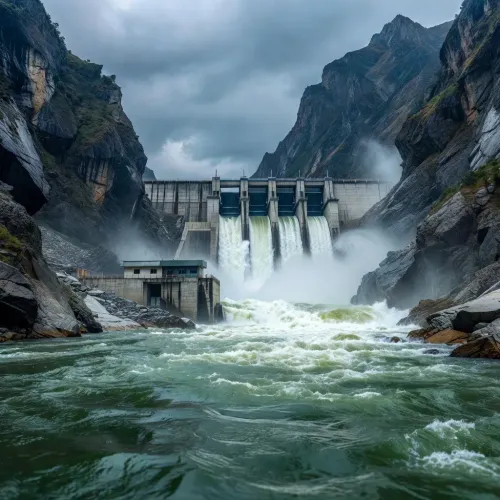
The project is a run-of-river scheme located on the Satluj River in the remote Himalayan district of Kinnaur.
The government has set a commissioning deadline of March–April 2027 for the project.
Successful commissioning would add significant capacity to Himachal Pradesh's hydroelectric generation portfolio and support the state's clean energy goals.
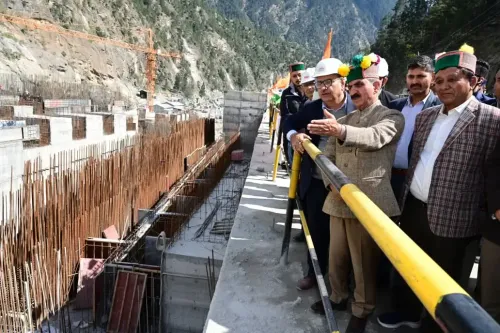
The Chief Minister's Office of Himachal Pradesh on Monday, 13 July 2026, announced that a high-level review meeting of the Energy Department was chaired, during which officials were directed to accelerate construction of the 450 MW Shongtong-Karcham Hydroelectric Project on the Satluj River in Kinnaur district, with a commissioning deadline of March–April 2027.
Context
The official post, written in Hindi, states: 'आज ऊर्जा विभाग की उच्च स्तरीय समीक्षा बैठक की अध्यक्षता की' ('Chaired a high-level review meeting of the Energy Department today'). Officials were instructed to hasten construction of the 450 megawatt run-of-river project so that it can be made operational by March–April 2027. The directive underscores the state government's intent to hold project timelines firm despite the well-documented construction challenges of the Himalayan terrain.
Policy Backdrop
The Shongtong-Karcham Hydroelectric Project is a run-of-river scheme on the Satluj River, one of the principal hydropower corridors in Himachal Pradesh. The state has pursued accelerated capacity addition on the Satluj basin under successive hydro policies since the early 2000s, positioning the river system as a cornerstone of its renewable energy strategy. Kinnaur district, a remote Himalayan region that already hosts multiple hydroelectric installations, presents persistent geological and logistical hurdles that have historically pushed project timelines beyond initial estimates.
The Himachal Pradesh Energy Department is the nodal agency responsible for monitoring such projects, coordinating with state power utilities and ensuring alignment with broader clean-energy targets. High-level review meetings of this nature are a standard instrument used by the state government to inject urgency into stalled or slow-moving infrastructure work.
Stakeholders and Impact
Residents of Kinnaur and the wider state stand to benefit from the additional power capacity once the project is commissioned. A fully operational 450 MW plant would meaningfully augment Himachal Pradesh's generation portfolio, reducing dependence on power purchases during peak demand seasons. State power utilities, which manage distribution and trading of surplus electricity, are also key stakeholders watching the March–April 2027 deadline closely.
Local communities in the Satluj valley, however, have historically raised concerns about the ecological and displacement footprint of large hydroelectric works in the region. Any renewed push to accelerate construction will likely require careful coordination with environmental and forest clearance authorities.
What's Next
The immediate focus will be on whether construction agencies can translate the government's directive into measurable on-ground progress in the months ahead. Observers will watch for the next round of progress reports, any updates to environmental or forest clearances, and official statements on construction milestones. If the March–April 2027 commissioning target is met, it would represent a significant addition to Himachal Pradesh's hydroelectric capacity and strengthen the state's position as a net power exporter — a role central to its fiscal and energy planning for the coming decade.
Point of View
Environmental litigation, and supply-chain constraints — making this directive as much a political signal as an administrative one. The move fits a broader pattern of Indian hill states using executive pressure to compress timelines on stalled renewable energy assets, particularly as national clean-energy commitments intensify. Whether the deadline holds will test the state's capacity to resolve on-ground bottlenecks that high-level meetings alone cannot fix.
NationPress
12 Oct 2026
Frequently Asked Questions
What is the Shongtong-Karcham Hydroelectric Project?
The Shongtong-Karcham Hydroelectric Project is a 450 MW run-of-river hydroelectric scheme under construction on the Satluj River in Kinnaur district, Himachal Pradesh.
When is the Shongtong-Karcham project expected to be commissioned?
The Himachal Pradesh government has set a commissioning target of March–April 2027 for the Shongtong-Karcham project, as directed at a high-level Energy Department review on 13 July 2026.
Where is the Shongtong-Karcham project located?
The project is located on the Satluj River in Kinnaur district, a remote Himalayan district in Himachal Pradesh known for hosting multiple hydroelectric installations.
Why is Himachal Pradesh focusing on hydropower projects?
Himachal Pradesh has pursued accelerated hydroelectric capacity addition on major rivers like the Satluj since the early 2000s to meet renewable energy targets, reduce power purchase costs, and generate surplus electricity for trading.
What challenges does the Shongtong-Karcham project face?
Like most Himalayan hydropower projects, it faces geological complexity, logistical difficulties, and potential environmental and forest clearance requirements, all of which have historically caused delays in the region.