CM Nitish Kumar Flags Tourism, Jobs Push via PPP in Bihar
Synopsis
Chief Minister Nitish Kumar's office says a new Bihar tourism initiative will promote rural tourism, boost homestays and handicrafts, create local youth employment, and attract private investment through a PPP model — extending the state's long-running tourism-led diversification strategy.
Key Takeaways
The Chief Minister's Office of Bihar shared remarks by CM Nitish Kumar on a new tourism initiative on 13 July 2026 .
The initiative targets growth in homestays, local handicrafts, and rural tourism across Bihar.
Local youth employment is cited as a primary expected outcome of the initiative.
Private investment will be channelled through a PPP (public-private partnership) model .
Bihar's tourism policy lineage dates to 2007 , with central support via the Swadesh Darshan scheme from 2014-15.
The Bihar State Tourism Development Corporation is the state's nodal agency for implementing such frameworks.
The Chief Minister's Office of Bihar, posting on Monday, 13 July 2026, shared remarks by Chief Minister Nitish Kumar on a new tourism initiative aimed at boosting employment and private investment across the state.
In the post, CM Nitish Kumar stated that the initiative will promote tourism, create new employment opportunities for local youth, and give fresh momentum to homestays, local handicrafts, and rural tourism. He also noted that the move will encourage private investment in the tourism sector through a public-private partnership (PPP) model.
Translated from Hindi, the Chief Minister's words read: 'is pahal se paryatan ko badhawa milega, sthaniya yuvaon ke liye rojgar ke naye avsar srujit honge' ('this initiative will promote tourism and create new employment opportunities for local youth').
Context
Bihar is home to some of India's most significant Buddhist, Jain, and Hindu heritage sites, including Bodh Gaya, Nalanda, and Rajgir. Despite this heritage wealth, the state has historically relied on agriculture and faced high rates of out-migration among its working-age population. Tourism-led economic diversification has therefore been a recurring policy priority for the Nitish Kumar government across its multiple terms since 2005.
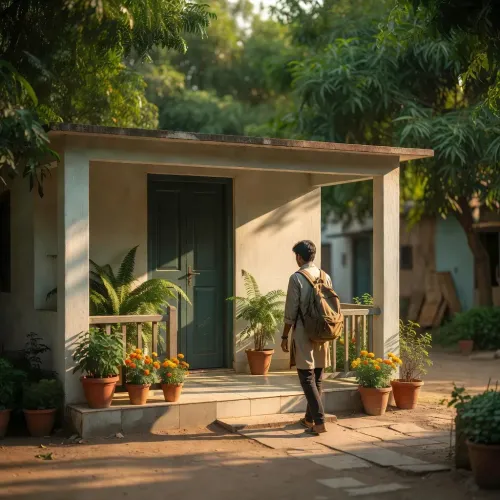
The emphasis on homestays and rural tourism aligns with a broader national push in the post-pandemic period to connect local economies directly to visitor spending, reducing dependence on large hotel chains and bringing income closer to communities.
Policy Backdrop
Bihar first formalised private participation in tourism through its state tourism policy of 2007, which opened hotel and resort development to private players. The Central government's Swadesh Darshan scheme, launched in 2014-15, subsequently provided dedicated funding for thematic tourist circuits in the state, including Buddhist heritage and rural segments.
The Bihar State Tourism Development Corporation (BSTDC) has served as the nodal agency for implementing these frameworks, including structuring PPP arrangements that limit the state's direct fiscal burden while attracting private capital into tourism assets — a model widely replicated across Indian states since the mid-2000s.
Stakeholders and Impact
The groups most directly addressed by the Chief Minister's statement are local youth seeking employment, rural artisans whose handicrafts gain a market through visitor footfall, and homestay operators who stand to benefit from formalised tourism circuits. Private investors are positioned as the capital source that makes scaled infrastructure development viable without full state expenditure.
Rural tourism, in particular, offers a dual dividend: it generates income for village-level entrepreneurs while also preserving and monetising intangible cultural heritage. For a state like Bihar, where migration to other states for work is structurally embedded, even modest job creation in home districts carries significant social weight.
What's Next
The concrete impact of the initiative will depend on rollout timelines, the pace at which PPP bids are invited and awarded, and subsequent allocations in the Bihar state budget for tourism infrastructure. Employment data from the Bihar State Tourism Development Corporation and occupancy figures from registered homestays will serve as early indicators of on-ground traction.
If the PPP pipeline translates into operational projects, Bihar could meaningfully expand its share of domestic tourist arrivals — a metric that state governments increasingly treat as a proxy for rural economic health.
Point of View
Suggesting the state is positioning itself for central co-funding. The PPP framing is also politically strategic: it signals fiscal discipline to investors while promising grassroots job creation to voters. Whether this initiative produces measurable employment gains will depend entirely on execution speed and the quality of private bids attracted.
NationPress
12 Oct 2026
Frequently Asked Questions
What did Bihar CM Nitish Kumar say about the new tourism initiative?
CM Nitish Kumar said the initiative will promote tourism, create new employment opportunities for local youth, and give fresh momentum to homestays, local handicrafts, and rural tourism, while also encouraging private investment through a PPP model.
What is the PPP model in Bihar tourism?
The PPP, or public-private partnership, model in Bihar tourism involves the state providing policy and infrastructure support while private investors fund and operate tourism assets such as hotels, resorts, and experience centres, reducing the direct fiscal burden on the government.
How has Bihar promoted tourism in the past?
Bihar adopted a state tourism policy in 2007 to encourage private participation in hotel and resort development, and later benefited from the Central government's Swadesh Darshan scheme from 2014-15, which funded thematic tourist circuits including Buddhist heritage and rural segments.
Which agency manages tourism development in Bihar?
The Bihar State Tourism Development Corporation (BSTDC) is the state's nodal agency responsible for developing tourism infrastructure, circuits, and public-private partnerships.
How will the Bihar tourism initiative help local youth?
The initiative is expected to create new employment opportunities for local youth directly in the tourism sector, including through homestay operations, handicraft sales, and rural tourism services, reducing dependence on out-migration for work.