HP CM Sukhu bets on natural wheat at Rs 80/kg to lift farmers
Synopsis
Chief Minister Sukhvinder Singh Sukhu says Himachal Pradesh is buying naturally grown wheat at Rs 80 per kg — a premium over central MSP rates — to raise farmer incomes, reward chemical-free cultivation, and deepen the state's push toward natural farming that began in 2022-23.
Key Takeaways
Himachal Pradesh is procuring naturally grown wheat at Rs 80 per kilogram , announced by CM Thakur Sukhvinder Singh Sukhu on 14 August 2026 .
The stated goals are providing consumers 'pure food,' raising farmer income, and strengthening the rural economy.
The state has promoted natural farming using the Subhash Palekar zero-budget method since 2022-23 .
The initiative fits a broader national pattern of state-level premium procurement supplementing the central Paramparagat Krishi Vikas Yojana .
Key unknowns include the total volume procured, farmer enrollment figures, and whether the scheme will expand to other crops or districts.
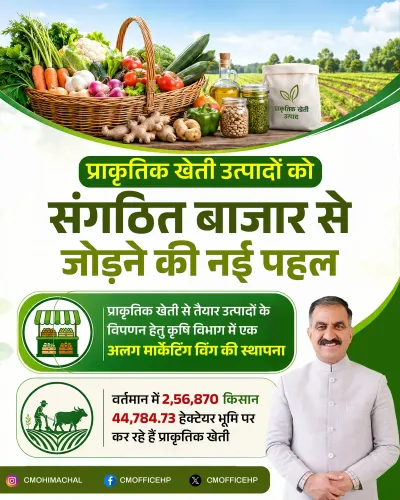
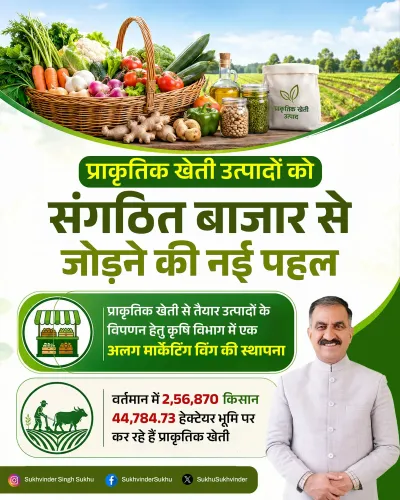
A mountain state is putting money where its values are. On 14 August 2026, the Chief Minister's Office of Himachal Pradesh shared a direct statement from Chief Minister Thakur Sukhvinder Singh Sukhu, announcing that his government is procuring naturally grown wheat from farmers at Rs 80 per kilogram — a rate designed to reward chemical-free cultivation and strengthen rural incomes across the state.
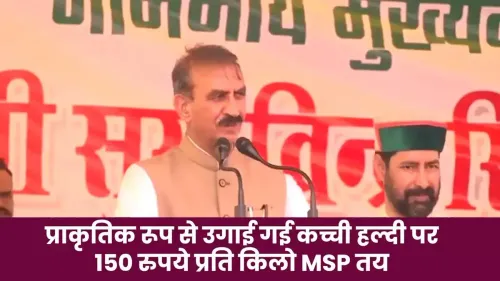
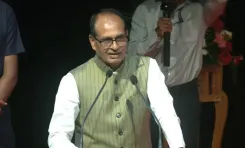
In his own words, CM Sukhu said: 'हमारी सरकार का प्रयास है कि लोगों को अच्छा और शुद्ध भोजन मिले' — 'Our government's effort is to ensure that people get good, pure food.' The procurement price of Rs 80 per kg for naturally farmed wheat, he said, is aimed at giving farmers better returns so that 'their income grows and the rural economy strengthens.'
Why Rs 80 per kg changes the calculus for hill farmers
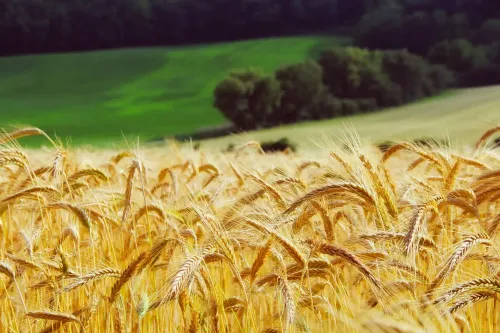
The minimum support price for common wheat under central government norms sits well below this figure, making the state's announced rate a meaningful premium for farmers willing to adopt natural farming methods. For smallholder cultivators in Himachal Pradesh's lower valleys — where wheat is a staple crop and margins are thin — the difference between a market rate and a premium procurement price can determine whether a family stays on the land or abandons it.
Himachal Pradesh has been building toward this moment since 2022-23, when the Sukhu government began actively promoting natural farming practices drawing on the Subhash Palekar Natural Farming model — a zero-budget method that eliminates synthetic fertilisers and pesticides. The pitch to farmers has always been twofold: healthier soil over the long run, and a cleaner product that commands a better price. The Rs 80/kg procurement announcement is the state putting that second promise in writing.
Himachal's move inside a national shift toward organic procurement
This is not Himachal acting alone. Across India, several states have introduced premium procurement windows for organically or naturally grown crops, partly to meet rising urban consumer demand for chemical-free food and partly to give farmers a tangible financial incentive to transition away from input-heavy agriculture. The central government's Paramparagat Krishi Vikas Yojana (PKVY) provides a policy scaffold, but implementation and price support have largely been left to state governments to design.
Himachal's geography gives it a natural edge in this space — cooler temperatures, lower pest pressure, and a brand identity already associated with clean produce. The question now is scale: how many farmers enroll, how many districts are covered, and whether the programme expands to crops beyond wheat in coming seasons.
If the procurement pipeline holds and volumes grow, Himachal Pradesh could emerge as a replicable model for other hill states looking to monetise the natural farming transition — not just as an environmental choice, but as a rural income strategy that urban consumers are increasingly willing to pay for.
Point of View
Differentiating it from the previous BJP administration. Premium procurement is a smart mechanism because it converts an abstract environmental goal into a concrete income argument that smallholder farmers can act on immediately. The durability of the initiative, however, will hinge on procurement volumes and budget headroom; states that have announced similar premiums have sometimes struggled to sustain them at scale. If Himachal can demonstrate consistent offtake, it hands the Congress a tangible rural economy story ahead of the next assembly cycle.
NationPress
14 Aug 2026
Frequently Asked Questions
What is the natural wheat procurement price announced by Himachal Pradesh?
The Himachal Pradesh government, under CM Sukhvinder Singh Sukhu, has announced procurement of naturally grown wheat at Rs 80 per kilogram to give farmers better returns than conventional market rates.
What is natural farming and why is Himachal Pradesh promoting it?
Natural farming, particularly the Subhash Palekar zero-budget method, eliminates synthetic fertilisers and pesticides. Himachal Pradesh has promoted it since 2022-23 to improve soil health, reduce input costs for farmers, and produce chemical-free food for consumers.
How does Himachal Pradesh's wheat price compare to the central MSP?
The central government's minimum support price for common wheat is significantly lower than Rs 80 per kg, making the state's announced rate a notable premium for farmers who adopt natural cultivation methods.
What is the Paramparagat Krishi Vikas Yojana and how does it relate to this?
Paramparagat Krishi Vikas Yojana (PKVY) is a central government scheme supporting organic farming clusters across India. Himachal Pradesh's natural wheat procurement builds on this national framework with state-specific pricing incentives.
Which farmers in Himachal Pradesh benefit from this wheat procurement scheme?
Wheat farmers practising natural farming methods in Himachal Pradesh — particularly in the lower valleys where wheat cultivation is common — are the primary beneficiaries of the Rs 80/kg procurement price.