Natural Farming is Future: HP CM Sukhu Launches Rs 34.31 Cr Projects
Synopsis
Himachal Pradesh CM Sukhvinder Singh Sukhu declared natural farming the state's future while virtually launching Rs 34.31 crore projects at Dr Y.S. Parmar University. With 1.98 lakh farmers already certified and the country's highest MSP for natural crops offered, Himachal is positioning itself as India's natural farming model — even as fiscal pressures from RDG withdrawal mount.
Key Takeaways
CM Sukhvinder Singh Sukhu virtually inaugurated development projects worth Rs 34.31 crore under Dr Y.S.
Parmar University of Horticulture and Forestry on April 26, 2025 .
A 107-student hostel at the College of Horticulture and Forestry, Neri, Hamirpur , built at Rs 3.63 crore , was inaugurated.
Foundation stones were laid for working women's hostels in Neri (Rs 8.57 crore) , Khaggal (Rs 8.68 crore) , and the main university campus (Rs 11.95 crore) .
Over 2 lakh farmers are registered under Himachal's natural farming programme, with 1.98 lakh certificates already issued.
The state claims to offer the highest MSP in India for naturally grown crops to support farmers transitioning away from chemical farming.
Despite the Central government's withdrawal of the Revenue Deficit Grant (RDG) , the state is maintaining investment in education, healthcare, and rural economy.
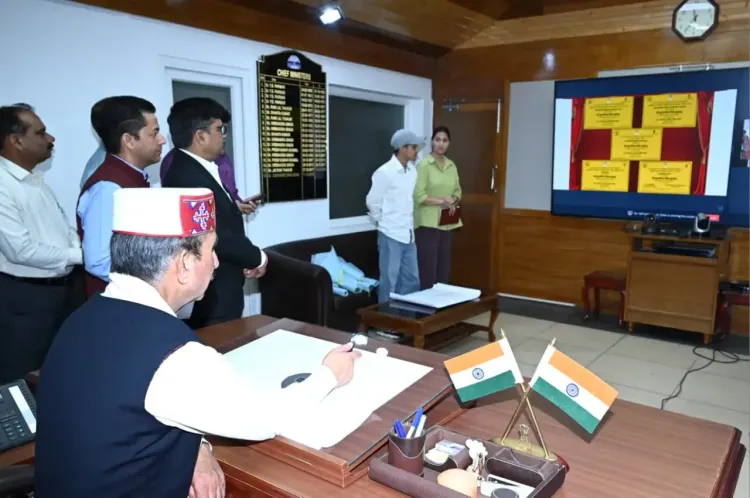
Himachal Pradesh Chief Minister Sukhvinder Singh Sukhu declared on Sunday, April 26 that natural farming is the future of the state, as he virtually inaugurated and laid foundation stones for development projects worth Rs 34.31 crore under Dr Y.S. Parmar University of Horticulture and Forestry in Nauni, Solan district. The event marked a significant push by the state government to modernise agricultural education infrastructure while simultaneously championing a shift away from chemical-intensive farming.
Key Projects Inaugurated and Foundation Stones Laid
CM Sukhu inaugurated a 107-student capacity hostel at the College of Horticulture and Forestry in Neri, Hamirpur, constructed at a cost of Rs 3.63 crore. He also inaugurated the administrative building of the Krishi Vigyan Kendra in Tabo, located in Lahaul-Spiti district, built at a cost of Rs 1.48 crore.
Additionally, the Chief Minister laid foundation stones for working women's hostels with a capacity of 50 each at the College of Horticulture and Forestry in Neri and at the College of Horticulture and Forestry in Khaggal, at costs of Rs 8.57 crore and Rs 8.68 crore respectively, both in Hamirpur district.
A 100-capacity working women's hostel was also announced for the main campus of Dr Y.S. Parmar University, to be constructed at a cost of Rs 11.95 crore. The focus on women's hostel infrastructure signals a deliberate effort to improve access to agricultural higher education for women in rural Himachal Pradesh.
CM Sukhu's Push for Natural Farming
Chief Minister Sukhu emphasised that natural farming is not merely a policy preference but a long-term economic vision for Himachal Pradesh. He stated that the state government is actively promoting natural farming practices and expects Dr Y.S. Parmar University to play a central role in encouraging farmers to adopt these methods.
He revealed that more than 2 lakh farmers associated with natural farming have been registered across the state, of which approximately 1.98 lakh have already been issued certificates. This certification drive is part of a broader effort to formalise and incentivise the transition to chemical-free agriculture.
Himachal Pradesh has also been providing the highest Minimum Support Price (MSP) in the country for naturally grown crops, according to the Chief Minister, ensuring that farmers who make the switch receive fair and competitive returns.
Agriculture as the Backbone of Himachal's Economy
CM Sukhu underscored the centrality of agriculture to the state's socio-economic fabric. He noted that nearly 90 per cent of the population in Himachal Pradesh resides in rural areas, with approximately 53.95 per cent directly dependent on agriculture for their livelihoods.
Given this demographic reality, the government has committed to implementing progressive agricultural policies and farmer-friendly initiatives aimed at strengthening the rural economy. The Chief Minister framed these infrastructure investments as part of that broader commitment.
Fiscal Pressures and State's Response
CM Sukhu acknowledged the financial strain caused by the Central government's discontinuation of the Revenue Deficit Grant (RDG), which has significantly impacted Himachal Pradesh's fiscal position. Despite this, he asserted that the state is making sustained efforts to ensure adequate funding for education, healthcare, and the rural economy.
This comes amid broader concerns about Himachal Pradesh's debt burden and fiscal deficit, which critics have flagged as a structural challenge for the state. The RDG withdrawal has forced the Sukhu government to prioritise spending carefully, making these infrastructure announcements a notable signal of intent.
Broader Implications and What Comes Next
The natural farming push in Himachal Pradesh aligns with a national trend, as several states including Andhra Pradesh and Uttarakhand have piloted large-scale natural farming programmes with mixed results. Himachal's certification of nearly 1.98 lakh farmers and its claim of offering the country's highest MSP for natural produce positions it as a potential model — though independent verification of these outcomes remains important for long-term credibility.
With the state's agricultural university now receiving fresh infrastructure investment, and women's hostel capacity being expanded across multiple campuses, the government appears to be building an institutional foundation to sustain this shift. Stakeholders will watch closely whether these commitments translate into measurable improvements in farmer incomes and soil health in the coming agricultural seasons.
Point of View
But the real test lies in outcomes, not announcements. Certifying 1.98 lakh farmers and claiming the nation's highest MSP for natural produce are significant steps — but without independent verification of farmer income data and soil health metrics, these remain political talking points. More critically, the state is pursuing this green transition while grappling with the loss of the Central Revenue Deficit Grant, raising legitimate questions about fiscal sustainability. If Himachal can genuinely demonstrate improved rural incomes through natural farming, it could set a replicable model for hill states — but the burden of proof is now on delivery.
NationPress
20 Sept 2026
Frequently Asked Questions
What projects did Himachal Pradesh CM Sukhu inaugurate on April 26, 2025?
CM Sukhvinder Singh Sukhu virtually inaugurated and laid foundation stones for development projects worth Rs 34.31 crore under Dr Y.S. Parmar University of Horticulture and Forestry. These included a 107-student hostel in Neri, an administrative building in Tabo, and working women's hostels in Hamirpur and Solan.
What is Himachal Pradesh's natural farming programme?
Himachal Pradesh's natural farming programme promotes chemical-free agriculture and has registered over 2 lakh farmers, with approximately 1.98 lakh already issued official certificates. The state also offers the highest MSP in the country for naturally grown crops to incentivise farmers.
How dependent is Himachal Pradesh on agriculture?
Nearly 90 per cent of Himachal Pradesh's population lives in rural areas, and about 53.95 per cent is directly dependent on agriculture for their livelihood. This makes agricultural policy a central pillar of the state government's economic strategy.
What is the Revenue Deficit Grant and why does it matter for Himachal Pradesh?
The Revenue Deficit Grant (RDG) was a Central government transfer that helped bridge the fiscal gap for states with limited revenue. The Central government's discontinuation of this grant has put significant financial pressure on Himachal Pradesh, forcing the state to carefully prioritise spending on education, healthcare, and rural development.
Which colleges received new infrastructure under the Dr Y.S. Parmar University projects?
The College of Horticulture and Forestry in Neri (Hamirpur), the College of Horticulture and Forestry in Khaggal (Hamirpur), the Krishi Vigyan Kendra in Tabo (Lahaul-Spiti), and the main campus of Dr Y.S. Parmar University in Nauni (Solan) all received new infrastructure investments.