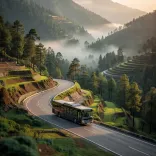
HP CMO: 297 e-buses added to HRTC, 1,000 more
Synopsis
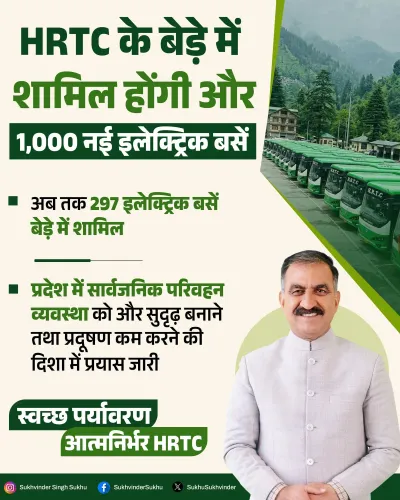
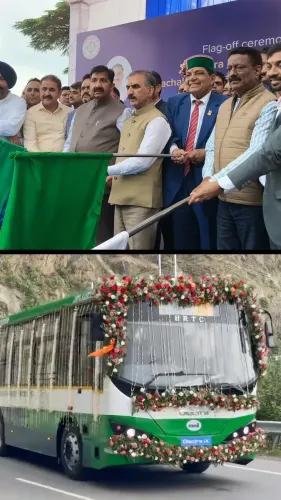
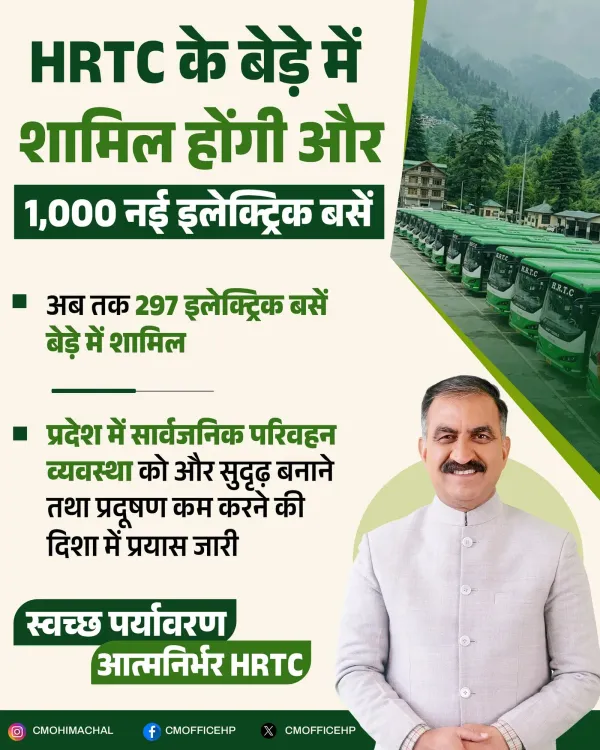
The Chief Minister's Office of Himachal Pradesh said the state has added 297 electric buses to the HRTC fleet and pointed to 1,000 more. The post framed the coaches as a daily link for remote hill communities that depend on public buses.
Key Takeaways
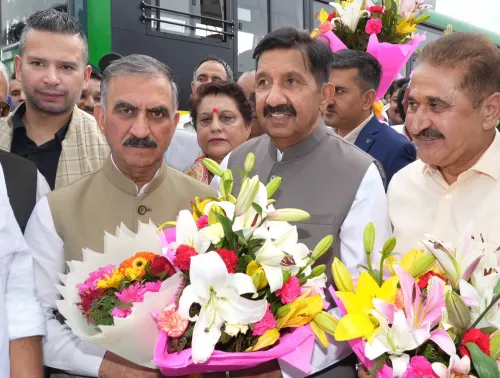
The Chief Minister's Office of Himachal Pradesh said on 28 November 2026 that 297 new electric buses have been added to the HRTC fleet.
The same post indicated 1,000 more buses after that induction, without a timeline.
HRTC is the state-owned operator linking remote hill settlements across Himachal Pradesh.
The CMO described mountain public transport as a daily necessity for thousands of people.
Routes, depots, and charging plans for the additional coaches were not specified in the post.
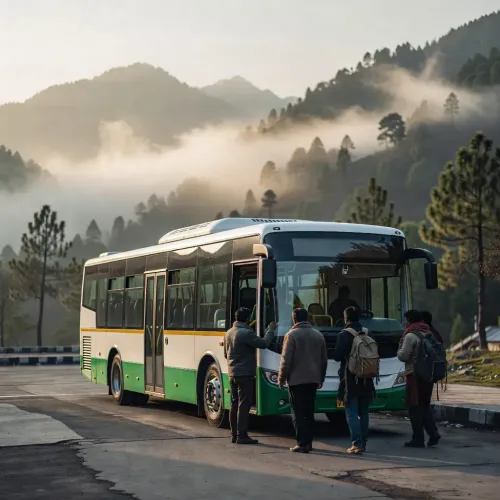
The Chief Minister's Office of Himachal Pradesh on 28 November 2026 put a hard number on hill mobility: 297 new electric buses added to the HRTC fleet, and 1,000 more on the horizon. In a state of scattered ridges and isolated valleys, those coaches are meant to keep remote stands on the daily map.
The official post said public transport in the mountains is a vital part of everyday life for thousands of people, and that HRTC electric buses play an important role in linking far-flung areas of the state. It added, in translation, that in recent days 'our government has included 297 new electric buses in HRTC's fleet. Now 1,000 more..'
297 new electric coaches in the HRTC fleet
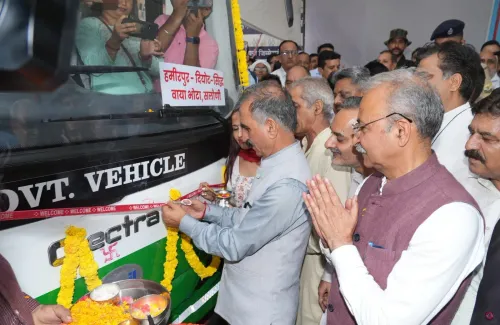
The figure is the government's own account of a recent induction into the Himachal Road Transport Corporation, the state-owned operator that runs scheduled services across steep, winding roads. Himachal Pradesh has long treated that fleet as the backbone of last-mile access where private options thin out after the district town.
Indian states have, since the mid-2010s, put electric buses into public fleets under national EV promotion frameworks. For a hill state the pitch is operational as well as ecological: lower running costs on long routes, and fewer tailpipe emissions in valleys that trap smoke.
HRTC's role on Himachal's remote hill routes
Settlements here sit on ridges and river gorges, not on a tight urban grid. For daily commuters, students, and residents of isolated valleys, the state bus is often the only affordable, timed link to mandis, colleges, and hospitals. The CMO post framed electric coaches as already doing that connective work in distant regions.
One extra service on a high-altitude spur can restore a morning and evening run that workers actually use. That is why fleet size in the hills is not a vanity count. It is frequency, or the lack of it, at a remote stand.
1,000 more buses, no route map yet
The post trails off on the next step: 1,000 more buses. It does not name timelines, depots, charging sites, or which valleys would gain new routes. Those deployment details, and any budget or central-scheme linkage behind a larger order, will decide whether the number becomes last-mile frequency or parked capacity.
Other states have chased the same electrification path for transport corporations. Himachal's terrain makes the test sharper: range, gradient, winter charging, and depot power in cold districts will shape whether the new coaches stay on the road.
The next map that matters is not the headline count. It is which remote stands get a daily electric service — and whether those 1,000 buses actually reach them.
Point of View
But the terrain makes execution harder than in a metro depot. What will count is not the induction headline so much as charging reliability on high gradients and whether remote valleys actually gain frequency. Watch route maps and depot power, not just the fleet total.
NationPress
28 Nov 2026
Frequently Asked Questions
How many electric buses did Himachal add to HRTC recently?
The Chief Minister's Office of Himachal Pradesh said the government has included 297 new electric buses in the HRTC fleet in recent days.
What is HRTC in Himachal Pradesh?
HRTC is the Himachal Road Transport Corporation, the state-owned public bus operator that runs services across Himachal Pradesh's hilly terrain.
Are more electric buses planned for Himachal Pradesh?
The CMO post indicated 1,000 more buses after the 297 already added, without giving a timeline, depot list, or route map.
Why are electric buses important in Himachal's hills?
Public buses are a daily lifeline in remote hill areas. The CMO said HRTC electric coaches help connect far-flung regions of the state.
When was the HRTC electric bus update posted?
The Chief Minister's Office of Himachal Pradesh posted the update on 28 November 2026.