CM Sukhu: Himachal to buy 1,000 more HRTC electric buses
Synopsis
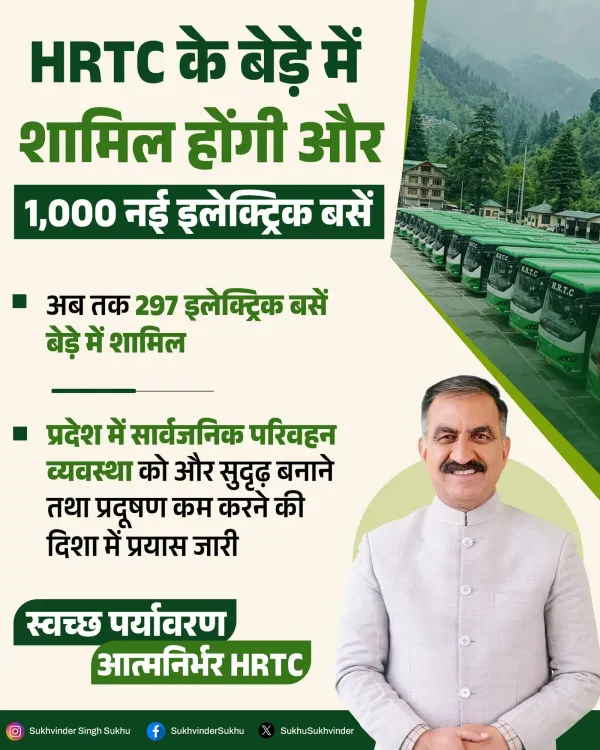
Himachal Pradesh Chief Minister Sukhvinder Singh Sukhu said the state recently added 297 electric buses to the HRTC fleet and will buy 1,000 more. He argued that mountain public transport is a daily lifeline and that the expansion should make travel safer while supporting environmental conservation.
Key Takeaways
CM Sukhvinder Singh Sukhu said on 28 November 2026 that Himachal had recently added 297 new electric buses to the HRTC fleet.
He said the state is now going to buy 1,000 more buses, without spelling out a tender date in the post.
The post did not confirm that every one of the extra 1,000 buses would be electric, though it focused on HRTC's electric fleet.
Sukhu tied the expansion to safer, more convenient mountain travel and to environmental conservation.
HRTC is Himachal's state-owned bus operator serving remote Himalayan routes; fleet electrification nationally gathered pace after FAME-II in 2019.
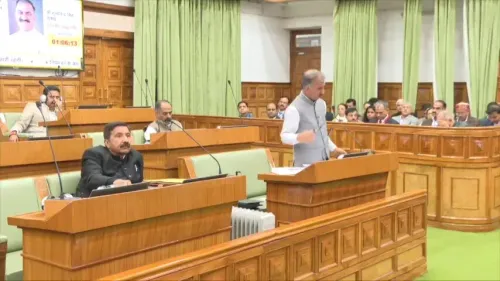
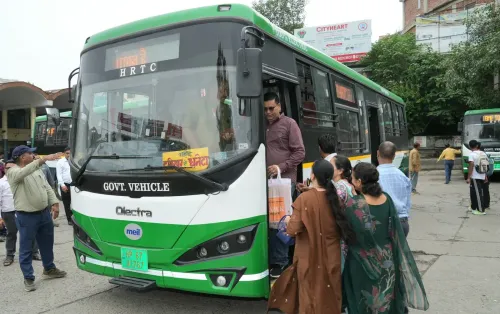
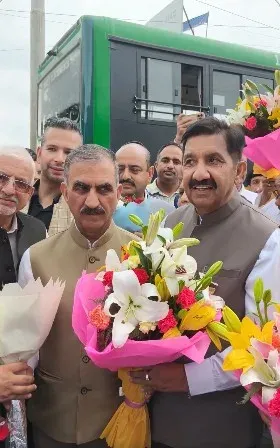
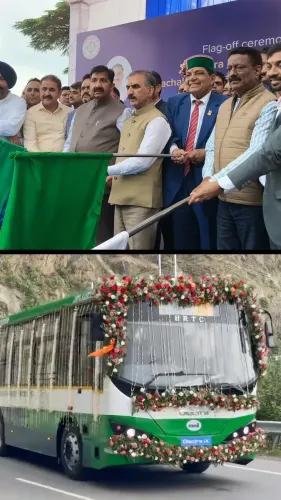
Himachal Pradesh Chief Minister Sukhvinder Singh Sukhu on Saturday, 28 November 2026 said the hill state had recently added 297 new electric buses to the Himachal Road Transport Corporation (HRTC) fleet and would now purchase 1,000 more. He cast public transport as a daily lifeline in the mountains and tied the expansion to safer journeys and environmental protection.
Writing in Hindi on X, he said public transport in the hills is a vital part of everyday life for thousands of people, and that HRTC electric buses play an important role in linking the state's remote areas. In recent days, he said, the government had included 297 new electric buses in the HRTC fleet. Now, he added, it is going to buy 1,000 more. The effort, he wrote, is that travel should be safe and convenient and that environmental conservation should also be promoted.
297 electric buses already added to HRTC
HRTC is the state-owned operator that keeps buses moving across Himachal Pradesh's steep, winding roads. For residents of remote valleys, a scheduled service is often the only affordable link to markets, schools and hospitals. Sukhu, who took office in December 2022 as an Indian National Congress leader, presented the 297 new electric vehicles as a recent government step, not a distant pledge.
He did not name routes, depots or a delivery calendar for those 297 buses in the post. What he stressed was purpose: connecting far-flung regions of Himachal Pradesh, not merely parking new vehicles in a depot.
1,000 more buses and the post-2019 green bet
The second figure is larger. The Chief Minister said the state is now going to buy 1,000 additional buses. The post did not specify a tender date or confirm that every one of those 1,000 would be electric, though the surrounding lines focused on HRTC's electric fleet and on environmental protection.
Nationally, the drive to electrify state transport fleets gathered pace after the Centre launched the FAME-II scheme in 2019 to support procurement of electric buses by state transport undertakings. Himachal's stated expansion sits inside that wider pattern: Indian states scaling electric buses to cut emissions and keep connectivity alive in difficult terrain. Similar fleet moves have been reported in other Himalayan and hilly regions.
Remote routes will decide if the numbers matter
Daily commuters and people living off the main highways are the ones who will feel the difference, or the lack of it. In the hills, frequency and reliability matter as much as the fuel type. An electric bus that cannot climb a winter pass, or that sits idle for want of a charger, does not serve a village that depends on a single morning departure.
Tendering, rollout timelines and actual deployment on remote routes will decide whether the extra thousand vehicles become a timetable people can trust. For a state where a missed bus can mean a missed clinic visit, the next test is whether those buses reach the last ridge.
Point of View
When states began using central support to electrify STU fleets. For a hill state, the policy is not only about emissions; it is about whether public transport can still bind scattered settlements as private cars remain out of reach for many. CM Sukhu's pairing of buses already added with a much larger purchase ahead is a scale signal. The harder test is charging, gradient performance and actual frequency on remote routes, not the headline count.
NationPress
28 Nov 2026
Frequently Asked Questions
How many new electric buses has Himachal added to HRTC according to CM Sukhu?
Chief Minister Sukhvinder Singh Sukhu said the government has recently included 297 new electric buses in the HRTC fleet. He made the statement in a post on X on 28 November 2026. He also said the state is now going to buy 1,000 more buses.
Is Himachal Pradesh buying 1,000 more buses?
Yes, according to CM Sukhu, Himachal is going to buy 1,000 more buses after recently adding 297 electric buses to HRTC. The post did not spell out a tender timeline or confirm that every one of the 1,000 would be electric. He linked the plan to safer travel and environmental conservation.
What is HRTC in Himachal Pradesh?
HRTC is the Himachal Road Transport Corporation, the state-owned bus operator that runs public services across Himachal Pradesh's mountainous terrain. It is the main organised public-transport network for many remote towns and villages. CM Sukhu said its electric buses play an important role in connecting far-flung areas.
What is the FAME-II scheme for electric buses?
FAME-II is a central government scheme launched in 2019 to support the purchase of electric buses by state transport undertakings. It became a key policy backbone for fleet electrification across Indian states. Himachal's stated expansion of HRTC electric buses fits that broader national green-mobility push.
Why are electric buses important in Himachal Pradesh?
Public transport in the hills is a daily necessity for thousands of people who need to reach markets, schools and health centres. Electric buses are being presented as a way to keep those links while cutting emissions. The Chief Minister said the aim is safe, convenient travel plus environmental protection.