HP CMO Announces Geriatric Units, Recruitment Reforms at IGMC and Tanda
Synopsis
The Chief Minister's Office of Himachal Pradesh announced three medical reforms: streamlined Senior Resident hiring, new Geriatric Medicine departments at IGMC Shimla and RPGMC Tanda, and a re-examination exemption for job trainee medical officers seeking regularisation.
Key Takeaways
Geriatric Medicine departments will be set up at IGMC, Shimla and RPGMC, Tanda — the state's two premier government medical colleges.
Recruitment of Senior Residents and Tutor Specialists in Himachal Pradesh medical colleges will be streamlined to address chronic vacancies.
Job trainee medical officers will be exempted from a repeat examination as a condition for regularisation.
IGMC Shimla, established in 1966 , and RPGMC Tanda, established in 1996 , are the two main tertiary referral centres for the state.
The measures address doctor retention, specialist shortages, and Himachal Pradesh's ageing population in a single policy package.
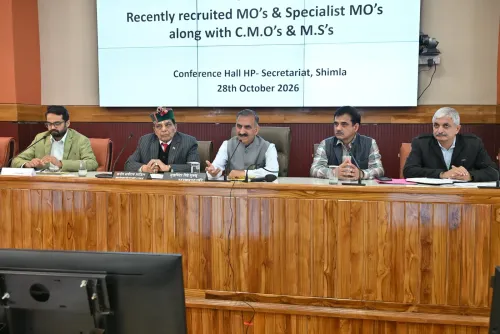
Three targeted interventions in Himachal Pradesh's public health system — streamlined specialist hiring, dedicated geriatric wards at the state's top two medical colleges, and a re-examination waiver for job trainee doctors — signal a government moving to close longstanding gaps in the hill state's medical infrastructure. The Chief Minister's Office of Himachal Pradesh posted the decisions on X on Wednesday, October 28, 2026, outlining a focused reform package for state-run medical colleges.
What the three decisions cover
The first measure targets the chronic bottleneck of specialist vacancies: the recruitment process for Senior Residents and Tutor Specialists in medical colleges will be 'streamlined' (suvavasthit karna). In hill-state health systems, prolonged vacancy cycles have historically left teaching hospitals short-staffed at precisely the specialist level that postgraduate training depends on.
The second decision goes further on the clinical side. Geriatric Medicine departments will be established at both Indira Gandhi Medical College (IGMC), Shimla — the state's oldest and largest government medical college, founded in 1966 — and at Rajendra Prasad Government Medical College (RPGMC), Tanda in Kangra district, established in 1996. Together, these two institutions anchor tertiary healthcare across Himachal's diverse geography.
The third measure offers direct relief to a specific cadre: job trainee medical officers seeking regularisation will be exempted from sitting a repeat examination. This addresses a pressure point that has simmered for years — trained doctors who have served the state but faced an additional exam hurdle as a condition of permanent employment.
Why geriatric medicine at IGMC and Tanda matters now
Himachal Pradesh's demographic profile makes this announcement sharper than a routine department launch. The state has one of India's higher proportions of elderly residents relative to its total population, a pattern driven by outmigration of working-age people and improving life expectancy in the hills. Yet dedicated geriatric medicine — the specialty that manages the complex, multi-system conditions of ageing patients — has been largely absent from the state's public teaching hospitals.
Establishing geriatric units at both IGMC Shimla and RPGMC Tanda means the specialty will now be anchored in the state's two major referral centres, which collectively serve patients from across the western and central Himalayan districts. For elderly patients currently managed by general medicine wards without specialist protocols, the difference in care quality can be significant.
The recruitment reform and its signal to resident doctors
The streamlining of Senior Resident and Tutor Specialist recruitment is the kind of administrative fix that rarely makes headlines but consistently frustrates medical college functioning. Delays in hiring at this level cascade quickly — they affect both patient load on existing staff and the quality of postgraduate medical education.
The re-examination exemption for job trainee officers is the most politically visible of the three measures. Job trainees are doctors who serve in state facilities on contractual or provisional terms; requiring them to clear a fresh examination for regularisation — after years of service — has been a recurring grievance. The waiver removes that barrier without abandoning the regularisation process entirely.
All three steps, taken together, map onto a consistent state priority: retain trained doctors in the public system rather than lose them to private practice or other states. In a terrain where geography already limits healthcare access, every vacancy and every delayed appointment compounds the problem for patients at the end of long mountain roads.
Point of View
Absent geriatric care, and contractual doctor insecurity — in one coordinated move. Setting up geriatric departments at both IGMC and RPGMC is particularly noteworthy: it acknowledges a demographic reality that hill states have been slow to act on institutionally. The re-examination waiver for job trainees is politically astute, resolving a longstanding grievance among a vocal constituency of serving government doctors. Whether these decisions translate to operational change will depend on timelines, budget allocations, and follow-through notifications — the space between a CMO post and a functional department is where reforms most often stall.
NationPress
28 Oct 2026
Frequently Asked Questions
What is the new geriatric medicine department announced for Himachal Pradesh?
The Himachal Pradesh CMO announced the establishment of Geriatric Medicine departments at IGMC Shimla and RPGMC Tanda to provide specialised care for elderly patients at the state's two main government medical colleges.
What is IGMC Shimla and when was it established?
Indira Gandhi Medical College (IGMC) in Shimla is the oldest and largest government medical college in Himachal Pradesh, established in 1966. It serves as the state's primary tertiary referral hospital.
What does the re-examination exemption for job trainee doctors in HP mean?
Job trainee medical officers in Himachal Pradesh who are seeking permanent regularisation will no longer be required to sit a repeat examination, removing a significant procedural barrier for doctors already serving in state facilities.
What is RPGMC Tanda and where is it located?
Rajendra Prasad Government Medical College (RPGMC) is located in Tanda, Kangra district, Himachal Pradesh. It was established in 1996 and is one of the state's key government medical institutions.
Why is streamlining Senior Resident recruitment important for HP medical colleges?
Senior Residents and Tutor Specialists are critical for both patient care and postgraduate medical training; prolonged vacancies at this level have historically overstretched existing staff and weakened teaching hospital quality across Himachal Pradesh.