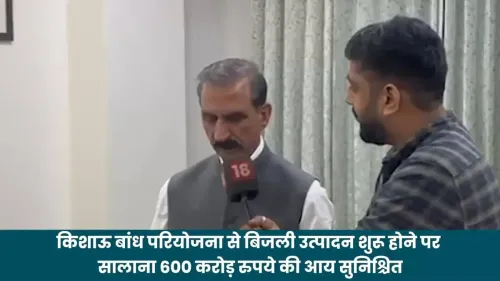
HP CM Office Hails Historic Win on Kishau Dam Project

Synopsis
The Chief Minister's Office of Himachal Pradesh announced on June 26, 2026 that the state has achieved a historic breakthrough in the long-pending Kishau Dam project on the Tons River, framing it as a result of the government's policy of protecting state resources and securing rightful inter-state allocations.
Key Takeaways
The Chief Minister's Office of Himachal Pradesh announced a historic success in the Kishau Dam project on June 26, 2026 .
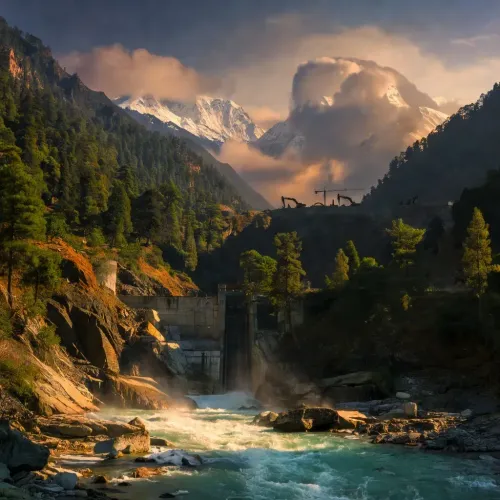
The Kishau Dam is a multipurpose project on the Tons River in the Yamuna basin , pending for several decades.
The project involves inter-state negotiations between Himachal Pradesh and Uttarakhand over cost and power-sharing.
The CMO framed the breakthrough as a result of the government's firm policy of protecting Himachal's resources and securing the state's rights.
Formal signing of revised sharing agreements and subsequent environmental or funding clearances are the critical next steps.
Hill states like Himachal Pradesh have long asserted rights over catchment contributions to cross-boundary Himalayan river projects.
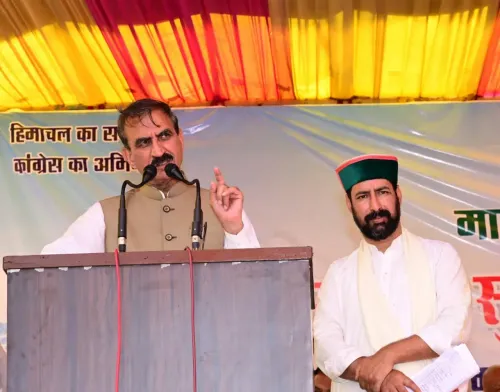
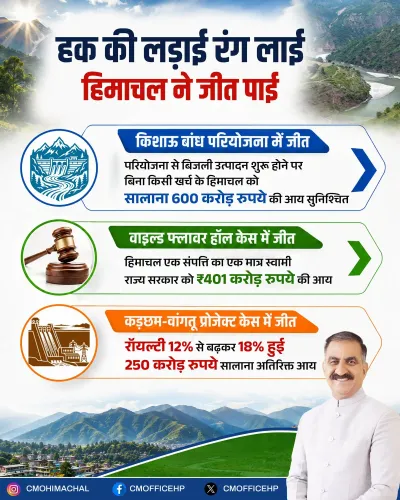
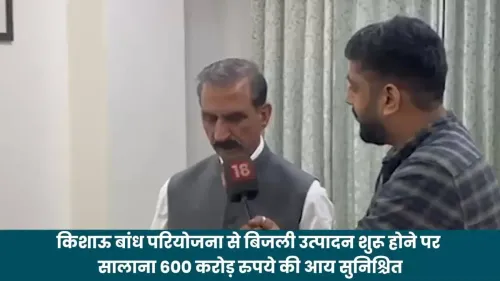
The Chief Minister's Office of Himachal Pradesh announced on Friday, June 26, 2026 that the long-pending Kishau Dam project has yielded a historic success for the state, calling it the result of the government's firm commitment to protecting Himachal's resources and securing its rightful share from inter-state river projects.
The post, shared from the official CMO account, stated in Hindi: 'हिमाचल की संपदा सुरक्षित रहे और प्रदेश को उसके अधिकार मिलें- यही हमारी सरकार की नीति है।' ('That Himachal's wealth remains protected and the state receives its rights — this is our government's policy.') It added that this firm commitment has now produced a historic breakthrough in the years-long pending Kishau Dam project.
Context
The Kishau Dam is a multipurpose project proposed on the Tons River, a tributary within the Yamuna basin, with implications for irrigation, hydropower generation, and water storage across two hill states. The project has been in discussion for decades, with Himachal Pradesh and Uttarakhand — the state hosting the primary dam site — holding competing and complementary interests in its development and the allocation of its benefits.
Inter-state deliberations over the project have featured in Upper Yamuna River Board discussions and bilateral state-level meetings since at least the early 2000s, making any forward movement a significant political and administrative milestone for both states.
Policy Backdrop
Himachal Pradesh is one of India's most hydropower-rich states, with its rivers forming the backbone of the Yamuna and Indus sub-basins. The state has consistently asserted its rights over catchment areas and power-sharing arrangements from projects that span administrative boundaries — a pattern common across Himalayan river systems where upstream contributions often go inadequately compensated.
The Kishau project, if fully developed, is expected to generate significant hydroelectric capacity and provide downstream flood moderation and irrigation benefits. The core dispute has historically centred on how costs and power allocations are divided between Himachal Pradesh and Uttarakhand, with the former arguing that its catchment contribution entitles it to a larger share of the benefits.
Stakeholders and Impact
Residents of Himachal Pradesh stand to benefit from any increased power revenue or irrigation infrastructure that flows from a finalised project agreement. Hydropower developers and central agencies involved in Yamuna basin management are also directly affected by the resolution of inter-state terms.
For the ruling government in Shimla, the announcement carries clear political weight: framing a long-stalled infrastructure negotiation as a rights-based victory reinforces the administration's narrative of assertive governance on resource equity — a theme that resonates strongly with the hill state's electorate.
What's Next
The immediate next step will be the formal signing of revised cost- and power-sharing agreements between Himachal Pradesh and Uttarakhand, followed by environmental clearances and financial closure for construction to commence. Central government coordination through the Upper Yamuna River Board and the Ministry of Jal Shakti will be critical to translating this political breakthrough into ground-level progress.
If agreements are formalised and construction timelines are set, the Kishau Dam could mark one of the more significant inter-state infrastructure resolutions in the western Himalayan region in recent years — with implications for how similar pending projects across shared river systems are approached going forward.
Point of View
And any movement on Kishau after decades of stasis is a genuine policy achievement. The timing and language — emphasising 'historic success' and 'firm commitment' — suggest the government is positioning this for maximum electoral and administrative credit ahead of further inter-state negotiations. The real test will be whether formal agreements and construction timelines follow, or whether this remains a political announcement awaiting institutional follow-through.
NationPress
25 Sept 2026
Frequently Asked Questions
What is the Kishau Dam project?
The Kishau Dam is a long-pending multipurpose project proposed on the Tons River in the Yamuna basin, designed to generate hydroelectric power, support irrigation, and provide water storage, with benefits to be shared between Himachal Pradesh and Uttarakhand.
Why has the Kishau Dam project been delayed for so long?
The project has been delayed primarily due to unresolved inter-state disputes between Himachal Pradesh and Uttarakhand over the sharing of construction costs and power generation benefits, alongside the need for environmental and financial clearances.
What did Himachal Pradesh's CMO announce about Kishau Dam in June 2026?
On June 26, 2026, the Chief Minister's Office of Himachal Pradesh announced that the state had achieved a historic breakthrough in the Kishau Dam project, attributing it to the government's firm policy of protecting Himachal's resources and securing its rightful inter-state share.
Which river is the Kishau Dam built on?
The Kishau Dam is proposed on the Tons River, a tributary within the Yamuna basin, located in a region that straddles the border of Himachal Pradesh and Uttarakhand.
What are the next steps for the Kishau Dam project?
The key next steps include formal signing of revised cost- and power-sharing agreements between Himachal Pradesh and Uttarakhand, followed by environmental clearances and financial closure to enable construction to begin.