HP CM Office urges public to pledge eye donation
Synopsis
The Chief Minister's Office of Himachal Pradesh issued a Hindi-language public appeal on 10 June 2026 calling eye donation the highest form of human service, urging citizens to pledge their eyes posthumously to help restore sight to the visually impaired.
Key Takeaways
The Chief Minister's Office of Himachal Pradesh posted a public appeal on 10 June 2026 promoting voluntary eye donation.
The post describes eye donation as 'the highest and most sacred gift of humanity' that allows a person to bring light to another's life after death.
Eye donation in India is legally governed by the Transplantation of Human Organs Act, 1994 .
The National Programme for Control of Blindness , launched in 1976 , underpins national and state-level efforts to reduce corneal blindness through increased donation pledges.
State governments across India routinely use official social media channels to promote eye donation as part of public health outreach.
Expanded eye bank capacity and district-level pledge registration remain key practical steps to translate public awareness into corneal transplant availability.
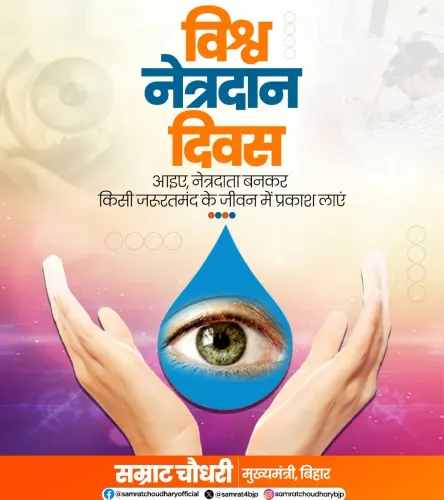
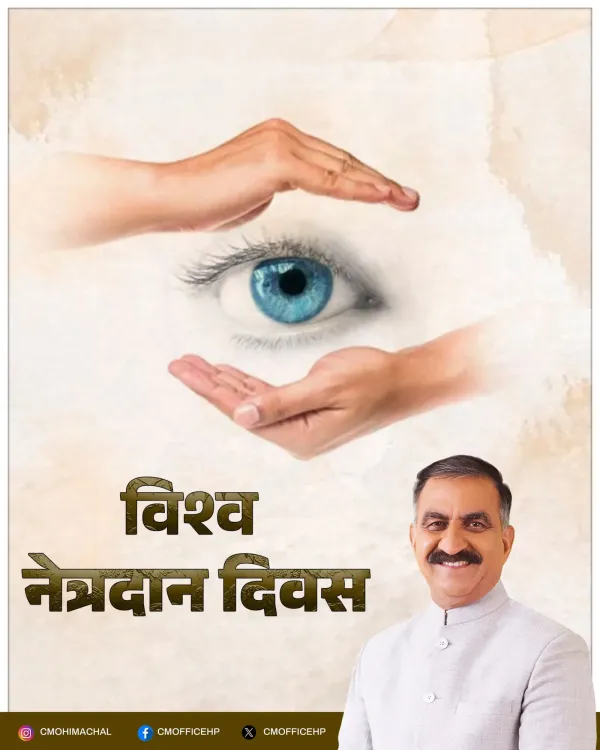
The Chief Minister's Office of Himachal Pradesh on Wednesday, 10 June 2026, issued a public appeal promoting eye donation as the highest form of human service, urging citizens to pledge their eyes so that others may see the world after their passing.
Context
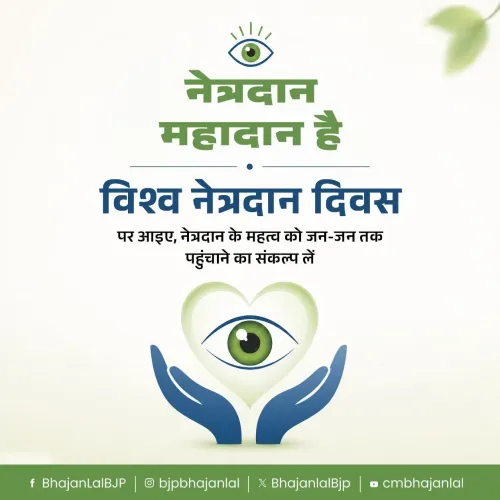
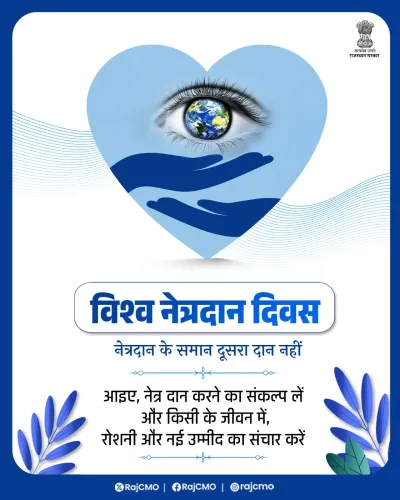
The post, shared in Hindi, reads: 'Netradaan manavta ka vah sarvoch aur pavitra daan hai, jisme vyakti apne jeevan ke baad bhi kisi anya ke jeevan mein prakash ka kaaran banta hai.' In English: 'Eye donation is the highest and most sacred gift of humanity, in which a person becomes the reason for light in another's life even after their own life ends. Without eyes, the beauty of creation is incomplete.'
The message reflects a long-standing tradition among Indian state governments of using official social media channels to drive voluntary eye donation pledges as part of broader public health outreach.
Policy Backdrop
Eye donation in India is governed by the Transplantation of Human Organs Act, 1994, which established the legal framework for the collection, storage, and transplantation of human organs and tissues, including corneas. The Act enables registered eye banks to procure donated corneas from deceased individuals with prior consent.
At the national level, the National Programme for Control of Blindness, launched in 1976, has been the primary vehicle for reducing blindness prevalence across India. The programme includes sustained awareness campaigns encouraging citizens to pledge their eyes, with Himachal Pradesh participating as part of its state health infrastructure.
Stakeholders and Impact
India has one of the largest populations of people living with corneal blindness in the world. Visually impaired citizens who are candidates for corneal transplants remain the most direct beneficiaries of any increase in eye donation pledges.
Potential donors — ordinary citizens across age groups — are the key target audience of such messaging. Awareness drives by state governments are considered a critical link in bridging the gap between the supply of donated corneas and the number of patients awaiting transplants at eye banks and government hospitals.
For Himachal Pradesh, a predominantly hilly state with dispersed populations and limited specialist medical access in rural areas, public messaging of this kind also serves to normalise conversations around posthumous donation within communities that may have limited prior exposure to the concept.
What's Next
State governments and health authorities in India typically intensify eye donation awareness during the annual National Eye Donation Fortnight, a period that sees renewed pledging drives, eye bank outreach, and coordination with hospitals. Whether this message signals the start of a formal campaign in Himachal Pradesh or forms part of routine public health communication will become clearer with subsequent announcements from the state health department.
Expanded eye bank capacity and stronger district-level pledge registration infrastructure remain the practical next steps that would convert public goodwill, generated by messaging like this, into a measurable increase in corneal availability for transplant patients across the state.
Point of View
Its resonance lies in normalising posthumous donation in a state where geographic remoteness and cultural unfamiliarity can suppress pledge rates. The post signals that the Himachal Pradesh government views social media outreach as a legitimate and low-cost tool in its public health arsenal. Over time, the cumulative effect of such messaging, if paired with institutional capacity-building at eye banks, could meaningfully improve corneal availability for transplant patients in the state.
NationPress
26 Oct 2026
Frequently Asked Questions
What is eye donation and why is it important in India?
Eye donation involves pledging one's corneas after death so they can be transplanted into visually impaired recipients. India has a significant population living with corneal blindness, and voluntary pledges are the primary source of corneas for transplant.
What law governs eye donation in India?
The Transplantation of Human Organs Act, 1994 is the central legislation that regulates the collection, storage, and use of donated human organs and tissues, including corneas, across India.
What is the National Programme for Control of Blindness?
It is a Central Government scheme launched in 1976 aimed at reducing the prevalence of blindness in India through treatment, awareness campaigns, and promotion of eye donation, with all states including Himachal Pradesh participating.
Why did the Himachal Pradesh CM Office post about eye donation?
The Chief Minister's Office of Himachal Pradesh shared the message on 10 June 2026 as part of routine public health outreach encouraging citizens to pledge their eyes, consistent with broader national efforts to increase corneal donation.
How can someone pledge their eyes in India?
Citizens can register as eye donors through government eye banks, hospitals enrolled under the National Programme for Control of Blindness, or state health department portals. Informing family members of the pledge is also considered an important step.