Rajasthan CMO Urges Eye Donation Pledge on World Eye Donation Day
Synopsis
The Chief Minister's Office of Rajasthan marked World Eye Donation Day on 10 June 2026 by urging citizens to pledge posthumous eye donation and spread awareness. The appeal aligns with India's long-standing National Programme for Control of Blindness and the Transplantation of Human Organs Act, 1994, as the country works to close a persistent gap between corneal demand and supply.
Key Takeaways
The Chief Minister's Office of Rajasthan posted a formal appeal on 10 June 2026 marking World Eye Donation Day .
The message called on citizens to both spread awareness and personally pledge posthumous eye donation.
India's eye donation framework is anchored by the National Programme for Control of Blindness (1976) and the Transplantation of Human Organs Act, 1994 .
Corneal blindness remains a leading cause of vision loss in India , with a persistent gap between donor supply and patient demand.
State governments, including Rajasthan , play a key implementation role in coordinating eye banks, hospitals, and donor registration.
Updated state-wise eye donation and eye bank performance data is expected from health ministries in upcoming quarters.
The Chief Minister's Office of Rajasthan on Wednesday, 10 June 2026 called on citizens to spread awareness about eye donation and take a personal pledge to donate their eyes posthumously, marking World Eye Donation Day.
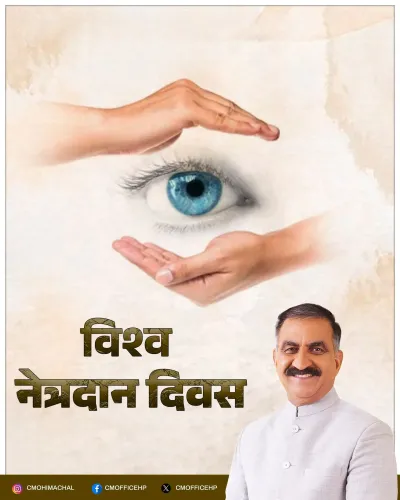
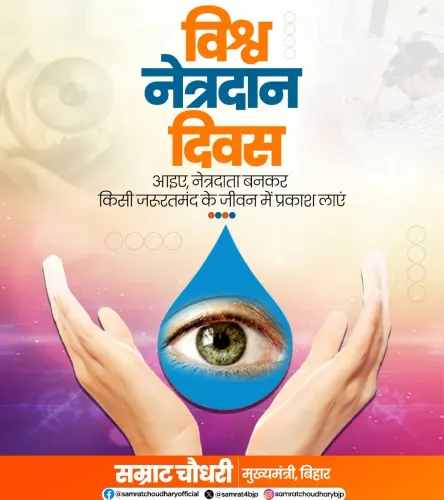
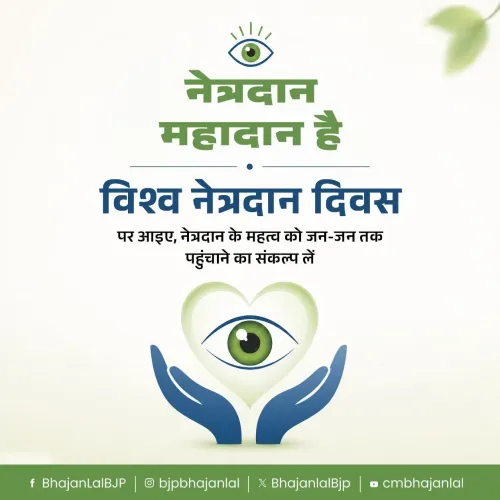
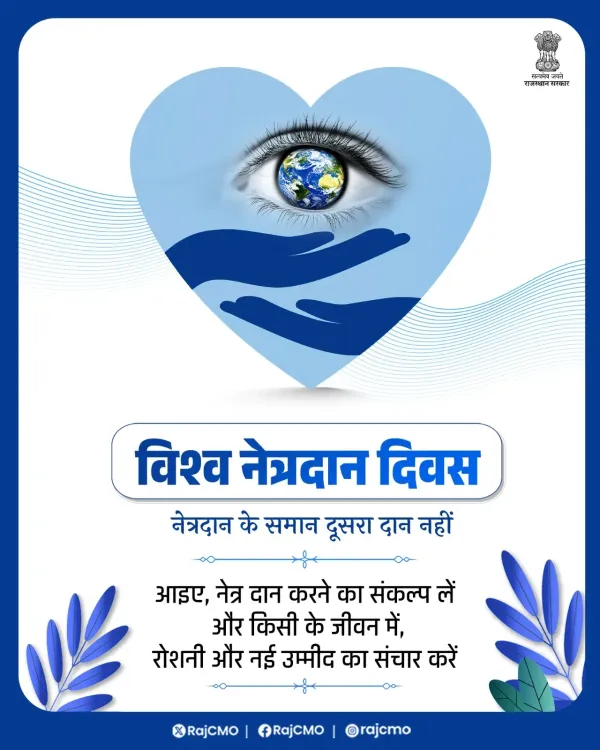
Posting on its official X account, the Rajasthan CMO shared a message in Hindi: 'नेत्रदान के समान दूसरा दान नहीं!' ('There is no donation equal to eye donation!'). The office urged people to inspire as many individuals as possible toward this 'pious act' so that, even after death, one can bring light and new hope into someone's life.
Context
World Eye Donation Day is observed annually to raise public consciousness about the critical shortage of donated corneas and the transformative impact transplantation can have on the visually impaired. The Rajasthan CMO's message reflects the state government's alignment with this global observance, using its official social media presence to amplify the call to action directly to citizens. The post emphasises two parallel responsibilities: spreading awareness among others and making a personal commitment to donate. This dual appeal — outward advocacy and inward resolve — is a recurring theme in government-led organ donation campaigns across India.Policy Backdrop
India's formal framework for eye donation rests on two pillars. The National Programme for Control of Blindness, launched in 1976 by the Government of India, has long included components for eye donation awareness, eye banking, and corneal transplantation to address avoidable blindness. Alongside it, the Transplantation of Human Organs Act, 1994 provides the legal basis for the removal, storage, and transplantation of human organs and tissues, including corneas, for therapeutic purposes. Despite this framework, India faces a persistent gap between the demand for donated corneas and the supply available through eye banks. Corneal blindness remains a leading cause of vision loss in the country, making public awareness drives — especially those amplified through official government channels — a critical lever in narrowing that gap.Stakeholders and Impact
The primary beneficiaries of increased eye donation are visually impaired patients awaiting corneal transplants, for whom a donated cornea can mean the restoration of functional sight. Equally central are potential donor families, who must consent to donation at the time of a loved one's passing — making prior awareness and personal pledges essential to the process. State governments play a key role in implementation, coordinating with eye banks, hospitals, and civil society organisations to register donors and facilitate timely retrieval. The Rajasthan CMO's public messaging on a high-visibility occasion such as World Eye Donation Day serves to normalise donation as a civic and humanitarian value, potentially encouraging families to act when the moment arises.What's Next
Health ministries at both the central and state levels are expected to release updated figures on eye donation rates and eye bank performance in coming quarters. Any fresh state-level registration drives or outreach initiatives by the Rajasthan government would build on the momentum generated by public awareness moments like this one. Sustained digital outreach, combined with ground-level registration campaigns, will determine whether awareness translates into measurable increases in corneal donations across the state.Point of View
A trend that accelerated through the 2010s and became standard practice by the mid-2020s. The appeal is strategically timed to a globally recognised observance, lending institutional weight to what might otherwise be a routine awareness message. It also signals the state's alignment with the central government's long-running push to expand the organ donation ecosystem — a policy priority that has seen repeated legislative and programmatic reinforcement since 1994. Whether such digital messaging translates into measurable upticks in donor registrations remains the key test of this mode of health communication.
NationPress
24 Oct 2026
Frequently Asked Questions
What is World Eye Donation Day and why does India observe it?
World Eye Donation Day is observed annually to raise awareness about the need for corneal donations and to encourage people to pledge their eyes posthumously. India observes it because corneal blindness is a leading cause of vision loss in the country, and the gap between available donors and patients in need remains significant.
How can I pledge eye donation in India?
You can register as an eye donor through your nearest eye bank, a government hospital with an eye donation facility, or through state health department portals. Informing your family of your wish is equally important, as their consent is required at the time of donation.
What law governs eye and organ donation in India?
The Transplantation of Human Organs Act, 1994 is the primary legislation governing the removal, storage, and transplantation of human organs and tissues, including corneas, for therapeutic purposes in India.
What is the National Programme for Control of Blindness?
Launched in 1976 by the Government of India , the National Programme for Control of Blindness aims to reduce the prevalence of blindness through preventive measures, eye care infrastructure, promotion of eye donations, and support for eye banking and corneal transplantation.
Why did the Rajasthan CMO post about eye donation?
The Chief Minister's Office of Rajasthan posted on 10 June 2026 to mark World Eye Donation Day , urging citizens to spread awareness and pledge posthumous eye donation as part of broader state and national efforts to address the shortage of donated corneas.