HP CM Office: State First to Map Drug Risk at Panchayat Level
Synopsis
Himachal Pradesh has become India's first state to assess drug prevalence at the panchayat level, classifying each village body into Red, Yellow, or Green risk categories based on identification of traffickers and addicts — a model that could reshape rural anti-drug governance nationally.
Key Takeaways
The Chief Minister's Office of Himachal Pradesh announced on June 5, 2026 that the state is India's first to conduct panchayat-level drug-situation assessments.
Each panchayat has been classified into Red, Yellow, or Green categories based on the presence of drug traffickers and addicted individuals.
The exercise builds on the Union government's Nasha Mukt Bharat Abhiyan (2020) and the state's own Drug Demand Reduction Action Plan (2021) .
The colour-coded system mirrors tools used in Swachh Bharat and Aspirational Districts programmes for targeted resource deployment.
Key stakeholders include rural panchayats, district police , and de-addiction centres , with Red-category panchayats set to receive priority intervention.
Replication of the model in other states may be considered at upcoming chief secretaries' conferences .
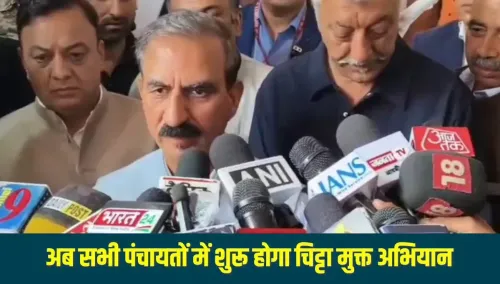
The Chief Minister's Office of Himachal Pradesh announced on Friday, June 5, 2026, that the state has become the first in India to assess the drug situation at the panchayat level — identifying both traffickers and addicts — and to classify each panchayat into colour-coded risk categories.
The post, shared from the official CMO handle, states: 'Himachal Pradesh desh ka pehla rajya hai, jahan panchayat star par nashe ki sthiti ka aaklan kar taskaron aur nashe ke aadi logon ki pehchaan ki gayi hai' — ('Himachal Pradesh is the first state in the country where the drug situation has been assessed at the panchayat level, identifying traffickers and persons addicted to drugs'). On this basis, panchayats have been classified into Red, Yellow, and Green categories.
Context
Himachal Pradesh has long grappled with illicit cannabis cultivation and a rising tide of pharmaceutical drug abuse, particularly in rural and semi-urban belts. The state's extensive Panchayati Raj network — empowered under the 73rd Constitutional Amendment — makes it a natural administrative unit for granular social-sector data collection. The new classification moves the anti-drug effort from the district level down to the village level, enabling sharper targeting of resources and enforcement.
Policy Backdrop
The exercise draws on a layered policy architecture. The Narcotic Drugs and Psychotropic Substances Act, 1985 provides the legal basis for identifying and prosecuting traffickers at the state level. The Union government's Nasha Mukt Bharat Abhiyan, launched in 2020, directed states to form village-level anti-drug committees and conduct household surveys. Himachal Pradesh's own State Action Plan on Drug Demand Reduction (2021) first proposed block-wise vulnerability mapping, setting the groundwork for the panchayat-level exercise now being highlighted.
The colour-coded zoning system — Red for high-risk, Yellow for moderate-risk, and Green for low-risk panchayats — mirrors administrative tools previously deployed in programmes such as Swachh Bharat and the Aspirational Districts Programme, where tiered classification drove differentiated resource allocation and monitoring.
Stakeholders and Impact
The classification directly affects rural panchayats, district police, and de-addiction centres across the state. Panchayats in the Red category can expect intensified law-enforcement attention and priority access to rehabilitation infrastructure, while Green-category panchayats may serve as models for preventive outreach. For elected panchayat representatives, the new framework also assigns a formal accountability role in monitoring local drug prevalence — a significant expansion of the traditional functions of gram sabhas.
At the community level, the identification of addicts is intended to fast-track their enrolment in government-run de-addiction programmes, shifting the state's approach from purely punitive to a combination of enforcement and rehabilitation.
What's Next
The broader significance of the initiative will be tested by what follows: whether baseline drug-seizure data and de-addiction enrolment figures from Red-category panchayats are released publicly, and whether the classification is updated periodically to reflect on-ground changes. Policymakers in other states are likely to watch whether Himachal Pradesh's colour-coded matrix delivers measurable outcomes — particularly as the Union government periodically convenes chief secretaries' conferences to share replicable governance models. A successful rollout could prompt other states with similar rural drug-abuse profiles to adopt comparable panchayat-level mapping frameworks.
Point of View
Translating the broad mandate of the Nasha Mukt Bharat Abhiyan into a granular, locally accountable framework. By attaching a risk colour to each panchayat, the state creates a visible performance metric that can be tracked over successive surveys — raising the political stakes for local elected bodies. The approach fits a wider pattern in Indian governance where colour-coded dashboards have become instruments of both administrative pressure and public accountability, from sanitation to nutrition. Whether the initiative produces verifiable reductions in trafficking and addiction, or remains a classification exercise, will determine its value as a replicable model.
NationPress
21 Oct 2026
Frequently Asked Questions
What is Himachal Pradesh's panchayat drug classification system?
Himachal Pradesh has assessed the drug situation in each panchayat and classified them into Red (high risk), Yellow (moderate risk), and Green (low risk) categories based on the identification of drug traffickers and addicted individuals — the first such exercise at panchayat level in India, according to the state government.
What is the Nasha Mukt Bharat Abhiyan?
Nasha Mukt Bharat Abhiyan is a Union government campaign launched in 2020 that promotes community-based drug mapping and de-addiction activities through state and district machinery, directing states to form village-level anti-drug committees and conduct household surveys.
Why is Himachal Pradesh particularly affected by drug abuse?
The state faces documented challenges of illicit cannabis cultivation and pharmaceutical drug misuse, especially in rural areas, making panchayat-level identification of traffickers and addicts a practical administrative priority.
How does the Red, Yellow, Green panchayat system work?
Panchayats placed in the Red category face the highest drug risk and are expected to receive intensified law-enforcement and rehabilitation resources; Yellow indicates moderate risk requiring monitoring; Green panchayats are considered low risk and may serve as preventive-outreach models.
Can other states replicate Himachal Pradesh's panchayat drug mapping model?
The colour-coded classification framework mirrors tools already used in Swachh Bharat and Aspirational Districts programmes, making it administratively transferable; replication in other states is likely to be discussed at chief secretaries' conferences if Himachal Pradesh releases outcome data from the exercise.