HP Govt installs 3-Tesla MRI machines in all state medical colleges
Synopsis
The Himachal Pradesh government is installing three-Tesla MRI machines in all state medical colleges and deploying digital mammography units at district hospitals in Nahan, Hamirpur, Bilaspur, Solan and Dharamshala, marking a major upgrade to public diagnostic infrastructure across the state.
Key Takeaways
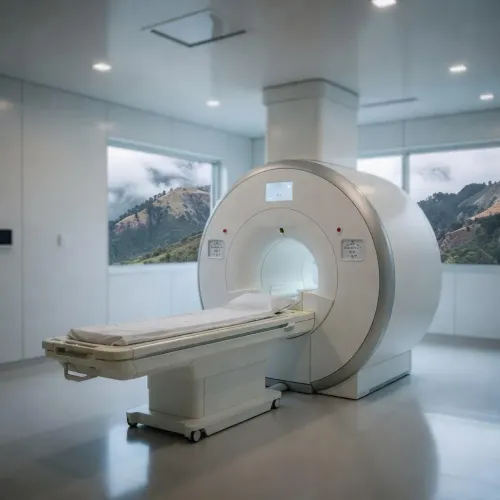
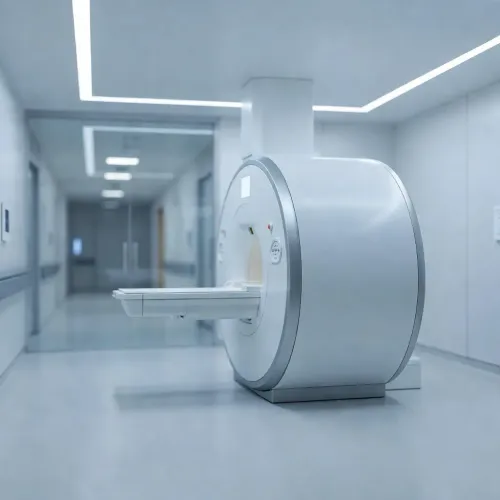
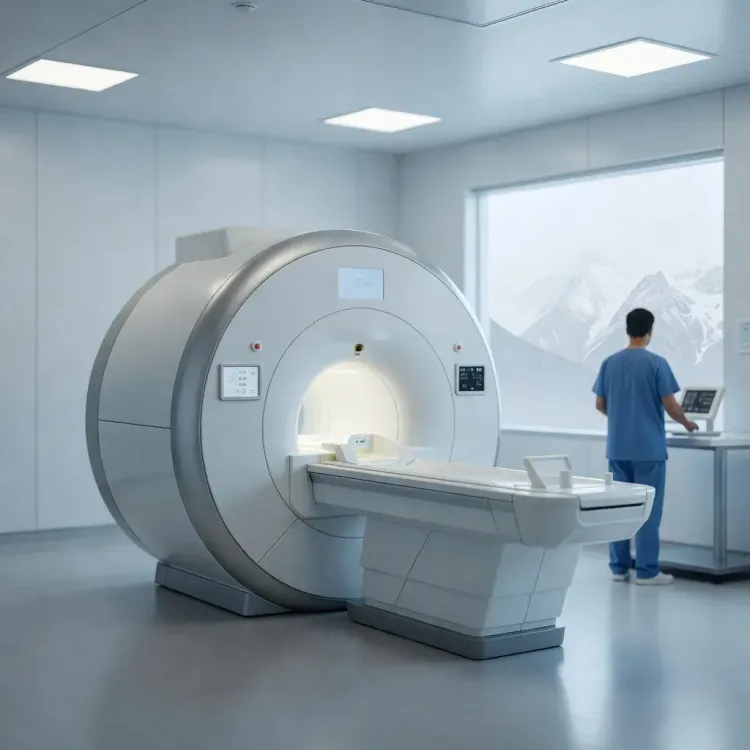
Three-Tesla MRI machines are being installed in all government medical colleges in Himachal Pradesh .
Digital mammography machines are being deployed at District Hospital Nahan , District Hospital Hamirpur , Regional Hospital Bilaspur , Regional Hospital Solan , and Regional Hospital Dharamshala .
The initiative aims to improve clinical diagnostic services and reduce out-of-pocket expenditure for patients across the state.
Women in these districts will gain access to public breast cancer screening without travelling to private facilities.
The rollout addresses geographic barriers to advanced diagnostics in Himachal Pradesh's dispersed, mountainous population.
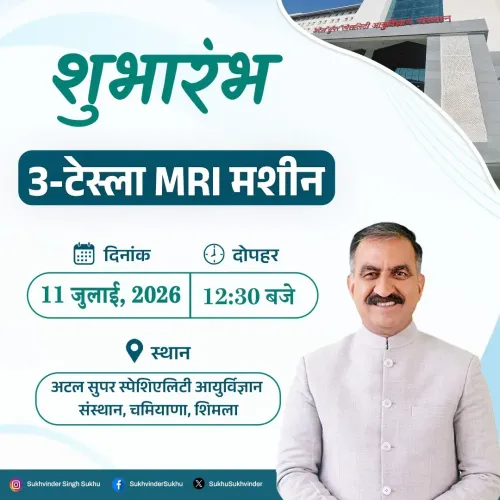
The Chief Minister's Office of Himachal Pradesh announced on Thursday, 16 July 2026 that the state government is installing advanced three-Tesla MRI machines across all government medical colleges in the state, alongside deploying digital mammography machines at five district and regional hospitals to strengthen diagnostic health services.
Context
The official post stated: 'प्रदेश के सभी सरकारी चिकित्सा महाविद्यालयों में अत्याधुनिक थ्री-टेस्ला एमआरआई मशीनें स्थापित कर रहे हैं' ('We are installing state-of-the-art three-Tesla MRI machines in all government medical colleges of the state'). It further noted that digital mammography machines are being deployed at District Hospital Nahan, District Hospital Hamirpur, Regional Hospital Bilaspur, Regional Hospital Solan, and Regional Hospital Dharamshala to improve clinical health services.
Three-Tesla MRI scanners represent the highest-field-strength systems widely used in clinical settings, offering sharper imaging of soft tissue, the brain, and the spine compared to older 1.5-Tesla units. Their deployment in public medical colleges signals a significant upgrade in the diagnostic capacity available to patients who cannot afford private facilities.
Policy Backdrop
The move fits within a broader national push, anchored partly by the Ayushman Bharat Pradhan Mantri Jan Arogya Yojana launched in 2018, which included provisions for strengthening diagnostic infrastructure at district and sub-district hospitals across states. Himachal Pradesh, with its dispersed population spread across difficult Himalayan terrain, has long faced geographic barriers to advanced diagnostics, making in-district imaging capacity especially critical.
State governments across India have increasingly procured high-end imaging equipment for public hospitals as a strategy to enable early disease detection and reduce out-of-pocket expenditure for patients. Himachal Pradesh's decision to target both tertiary medical colleges and district-level referral hospitals reflects an attempt to address gaps at multiple rungs of the public health system simultaneously.
Stakeholders and Impact
Patients in Sirmaur, Hamirpur, Bilaspur, Solan, and Kangra districts stand to benefit most directly, as the named hospitals serve as key referral centres for surrounding rural and semi-urban populations. District Hospital Nahan is the primary facility for southern Himachal's Sirmaur district, while Regional Hospital Dharamshala functions as a major referral hub for the northern parts of the state.
The digital mammography component is particularly significant for women's health, enabling early screening for breast cancer — a condition where early detection dramatically improves treatment outcomes. Expanded public mammography access reduces dependence on expensive private diagnostic centres, which remain out of reach for a large share of the state's population.
What's Next
Procurement tenders, installation schedules, and supplementary budget allocations for technician training and equipment maintenance will be key indicators of how quickly the initiative translates from announcement to operational capacity. Observers will also watch whether the state follows up with trained radiologists and technicians at each facility, since hardware deployment without skilled operators limits real-world impact.
If fully operationalised, the combined rollout of 3-Tesla MRI and digital mammography infrastructure could meaningfully reduce the diagnostic travel burden for patients currently referred to Shimla or private centres in Chandigarh.
Point of View
Which is where most patients first seek care. This approach is politically astute: it generates visible, hardware-centric deliverables that are easy to communicate ahead of any electoral cycle. The harder test, however, will be sustaining trained radiologist and technician capacity at these facilities, a chronic weak link in similar state-level equipment rollouts elsewhere in India. If staffing and maintenance are secured, the initiative could serve as a replicable model for other hill states grappling with terrain-driven diagnostic gaps.
NationPress
16 Jul 2026
Frequently Asked Questions
What is a three-Tesla MRI machine and why does it matter for patients?
A three-Tesla MRI machine uses a stronger magnetic field than the more common 1.5-Tesla units, producing sharper and more detailed images of the brain, spine and soft tissue. For patients at government hospitals in Himachal Pradesh, its installation means access to higher-quality scans without having to travel to expensive private centres.
Which hospitals in Himachal Pradesh are getting digital mammography machines?
Digital mammography machines are being installed at District Hospital Nahan, District Hospital Hamirpur, Regional Hospital Bilaspur, Regional Hospital Solan, and Regional Hospital Dharamshala, according to the Chief Minister's Office.
Which medical colleges in Himachal Pradesh will receive the new MRI machines?
The announcement covers all government medical colleges in Himachal Pradesh. The exact number and names of colleges were not specified in the official post; the state's key institutions include IGMC Shimla and other state-run medical colleges.
How does this initiative help women in Himachal Pradesh?
Digital mammography enables early screening for breast cancer. By placing these machines in district and regional hospitals, the government is making breast cancer screening accessible to women in rural and semi-urban areas who previously had to travel to private diagnostic centres or larger cities.
Is this initiative linked to Ayushman Bharat?
The broader policy context includes Ayushman Bharat Pradhan Mantri Jan Arogya Yojana, launched in 2018, which included provisions for strengthening diagnostic services at district hospitals. The Himachal Pradesh government's current rollout aligns with that national framework, though the specific funding source was not mentioned in the official post.