HP CM Office: 42 Handheld X-Ray Units for Remote TB Detection

Synopsis
The Chief Minister's Office of Himachal Pradesh has announced procurement of 42 handheld X-ray machines to enable early TB detection in remote mountain areas, with 14 units already received and recruitment of doctors and paramedical staff being fast-tracked.
Key Takeaways
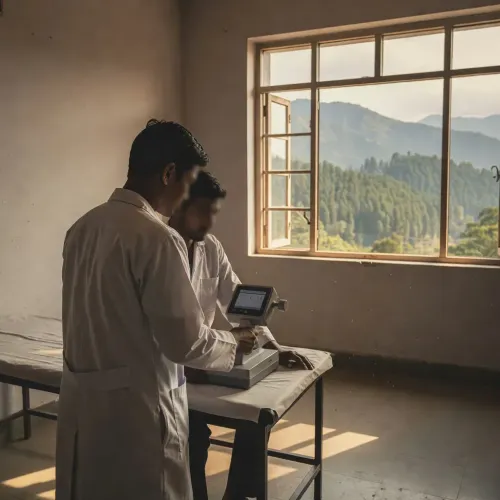
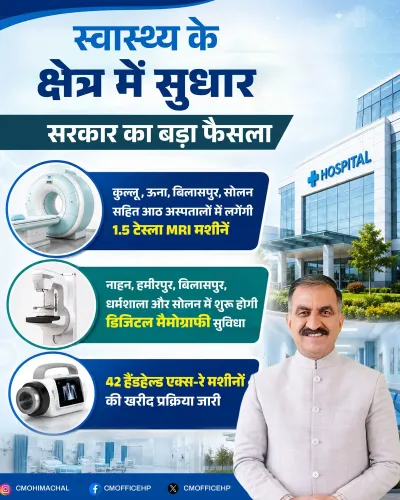
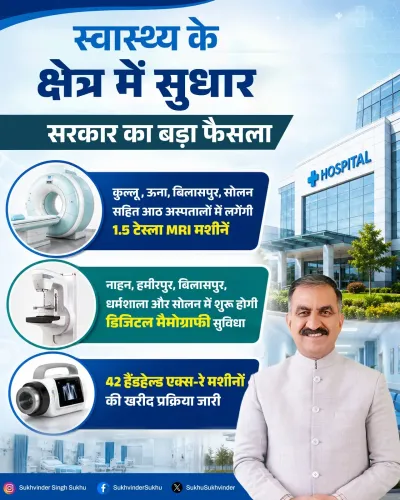
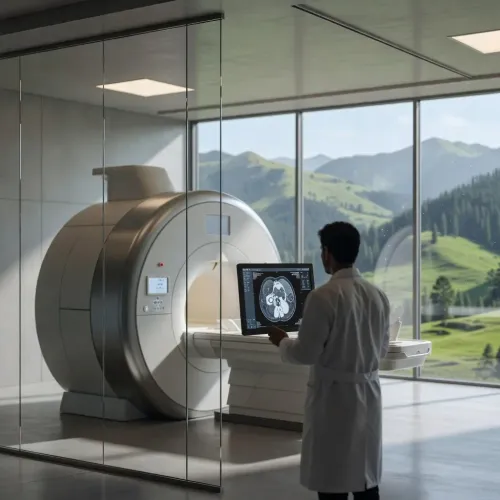
42 handheld X-ray machines are being procured to support chest screening and early TB detection in Himachal Pradesh's remote areas.
14 of the 42 machines have already been received; procurement of the remaining units is ongoing.
New health facilities are being established in difficult and inaccessible regions of the state.
Recruitment of doctors, paramedical staff, and technicians is being accelerated to operationalise the expanded infrastructure.
The initiative supports India's National TB Elimination Programme and the broader Ayushman Bharat primary care push.
Geographic isolation in Himachal Pradesh makes portable diagnostics critical for reaching dispersed rural and tribal populations.
The Chief Minister's Office of Himachal Pradesh announced on Thursday, July 16, 2026 a series of health infrastructure measures targeting tuberculosis detection and medical staffing in the state's remote and difficult terrain, with portable diagnostic equipment at the centre of the push.
Context
The CMO's post, shared in Hindi, outlines three concurrent actions: establishment of new health facilities in underserved areas, procurement of 42 handheld X-ray machines for chest screening and early TB detection in inaccessible regions, and an accelerated recruitment drive for doctors, paramedical staff, and technicians. Of the 42 machines ordered, 14 units have already been received, with the procurement process for the remainder ongoing.
'दुर्गम क्षेत्रों में छाती की जांच और टीबी की शीघ्र पहचान सुनिश्चित करने के लिए' ['to ensure chest examination and early identification of TB in remote areas'] — the post frames portability as a direct answer to the geographic barriers that define healthcare delivery across Himachal Pradesh's mountain districts.
Policy Backdrop
India set a target to eliminate tuberculosis by 2025 at the End TB Summit held in New Delhi in 2018, a deadline that has since been extended as states work to close detection gaps. The National TB Elimination Programme — successor to the Revised National Tuberculosis Control Programme relaunched in 1997 — mandates active case finding, free diagnosis, and DOTS treatment across all districts.
Himachal Pradesh's mountainous geography has historically made it difficult to run fixed diagnostic facilities that serve dispersed village populations. Handheld or portable X-ray units have emerged as a preferred tool for states with similar terrain challenges, allowing health workers to carry screening capability directly to patients rather than requiring patients to travel to district hospitals.
Stakeholders and Impact
The primary beneficiaries are rural and tribal populations in high-altitude and geographically isolated pockets of Himachal Pradesh, where TB often goes undetected until advanced stages due to limited access to radiology. Early chest X-ray screening is a proven method to identify pulmonary TB before it becomes infectious or life-threatening.
Healthcare workers — doctors, paramedics, and lab technicians — stand to benefit from the parallel recruitment acceleration, which addresses long-standing vacancies in state health services. Faster staffing also determines whether the incoming equipment can be operationalised at scale rather than sitting idle in district stores.
The move aligns with the broader Ayushman Bharat framework, which since 2018 has pushed for strengthened primary care and digital health tools at the sub-district level, giving state-level portable-diagnostics programmes a policy and funding scaffold to operate within.
What's Next
The procurement process for the remaining 28 handheld X-ray machines is still underway, making the completion timeline a key indicator of the programme's pace. District-level TB notification data following machine deployment will be the clearest measure of whether early-detection goals are being met.
Completion of the recruitment cycle for medical and paramedical staff will determine whether Himachal Pradesh can sustain active screening operations across remote blocks — and whether the state's TB elimination trajectory begins to converge with national targets in the coming reporting cycles.
Point of View
And flagging both together suggests an awareness of that risk. With India's 2025 TB elimination deadline already missed nationally, state-level operational updates like this carry outsized political weight as evidence of continued momentum. The real test will come when district notification data is published post-deployment, revealing whether early detection rates in remote blocks actually shift.
NationPress
15 Oct 2026
Frequently Asked Questions
Why is Himachal Pradesh buying handheld X-ray machines?
Himachal Pradesh is procuring 42 handheld X-ray machines to enable chest screening and early TB detection in remote, mountainous areas where patients cannot easily reach fixed diagnostic facilities.
How many handheld X-ray machines has HP received so far?
Of the 42 handheld X-ray machines ordered, 14 units have been received as of July 2026, with procurement of the remaining machines still ongoing.
What is India's target for TB elimination?
India announced a target to eliminate tuberculosis by 2025 at the End TB Summit in New Delhi in 2018, under the National TB Elimination Programme.
What other health measures did the HP CM Office announce?
Alongside the X-ray procurement, the Chief Minister's Office announced establishment of new health facilities in remote areas and an accelerated recruitment process for doctors, paramedical staff, and technicians.
How does Himachal Pradesh's geography affect TB detection?
Himachal Pradesh's mountainous and dispersed terrain makes it difficult for patients in remote villages to access district hospitals, leading to delayed TB diagnosis — a gap that portable handheld X-ray units are designed to address.