HPCL to expand biofuel, biogas footprint in Punjab: CM Mann

Synopsis
The Chief Minister's Office of Punjab announced on 5 June 2026 that HPCL has declared plans to expand into the state's biofuel and biogas sectors, attributing the development to CM Bhagwant Mann's efforts. The move aligns with India's national biofuel policy and Punjab's stubble-management and crop-diversification goals.
Key Takeaways
HPCL has announced a plan to expand its presence in Punjab through investment in biofuel and biogas sectors .
The Chief Minister's Office of Punjab credited CM Bhagwant Mann's personal efforts for facilitating the announcement.
The move aligns with India's National Policy on Biofuels (2018) and the central government's SATAT scheme for compressed biogas plants.
Farmers and rural entrepreneurs in Punjab stand to benefit through crop-residue monetisation and new employment opportunities.
Specific project locations, investment figures, and timelines are yet to be formally disclosed.
The initiative also supports Punjab's ongoing efforts to address stubble burning and agricultural diversification.
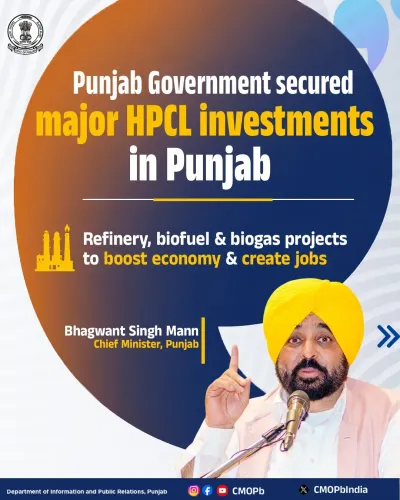
The Chief Minister's Office of Punjab announced on Friday, 5 June 2026 that Hindustan Petroleum Corporation Limited (HPCL) has declared plans to expand its presence in the state through investments in the biofuel and biogas sectors, crediting the efforts of Chief Minister Bhagwant Mann for the development.
The post, shared in Punjabi, states: 'ਮੁੱਖ ਮੰਤਰੀ ਦੇ ਯਤਨਾਂ ਸਦਕਾ ਹਿੰਦੁਸਤਾਨ ਪੈਟਰੋਲੀਅਮ ਕਾਰਪੋਰੇਸ਼ਨ ਲਿਮਟਿਡ ਨੇ ਬਾਇਓਫ਼ਿਊਲ ਅਤੇ ਬਾਇਓਗੈਸ ਖੇਤਰਾਂ ਵਿੱਚ ਨਿਵੇਸ਼ ਰਾਹੀਂ ਸੂਬੇ ਵਿੱਚ ਆਪਣਾ ਦਾਇਰਾ ਵਧਾਉਣ ਦੀ ਯੋਜਨਾ ਦਾ ਐਲਾਨ ਕੀਤਾ ਹੈ' ('Due to the efforts of Chief Minister Bhagwant Mann, Hindustan Petroleum Corporation Limited has announced a plan to expand its footprint in the state through investment in biofuel and biogas sectors').
Context
HPCL is a central public-sector oil marketing company under the Ministry of Petroleum and Natural Gas, with an established presence in refining, fuel retail, and alternative energy. The company's declared intent to expand into Punjab's biofuel and biogas segments marks a significant step for a state whose economy is heavily anchored in agriculture. Punjab's large grain surplus — particularly paddy and wheat — generates substantial agricultural residue that can serve as raw material for biogas and biofuel production.
Policy Backdrop
India's National Policy on Biofuels (2018) set binding targets for ethanol blending and biodiesel and directed oil marketing companies to invest in biofuel supply chains. The central government's SATAT scheme, launched to promote compressed biogas (CBG) plants, specifically identified grain-surplus states like Punjab as priority destinations for new plants. These frameworks have been a standing invitation for public-sector oil companies to deepen biofuel infrastructure in the state.
Punjab administrations have consistently linked biofuel projects to two pressing challenges: stubble burning — a major source of seasonal air pollution — and the need to diversify farmers away from the water-intensive paddy-wheat cycle. Investment by a company of HPCL's scale in this space would align industrial capital with both environmental and agrarian policy goals.
Stakeholders and Impact
Farmers and rural entrepreneurs stand to benefit most directly from expanded biofuel and biogas infrastructure. Crop residue that is currently burned in fields could instead be channelled as feedstock, generating additional income for agricultural households. Biogas plants in rural clusters also create local employment in collection, processing, and distribution.
For the state government, attracting a major public-sector investor in green energy strengthens CM Bhagwant Mann's broader pitch that Punjab is open for industrial and clean-energy investment. The Aam Aadmi Party administration has made industrial outreach a visible priority since taking office in 2022.
What's Next
Formal details — including any memorandum of understanding, identified project locations, investment quantum, and state incentives or land allocation — are yet to be publicly disclosed. Observers will watch for an official MoU signing ceremony and announcements on specific plant sites and timelines. The pace at which HPCL moves from declaration to ground-level project activity will be the key measure of this initiative's seriousness.
Point of View
Landing a central public-sector giant in the clean-energy space shores up its investor-friendly narrative in a state that has historically struggled to attract large industrial commitments. The announcement also threads neatly into the Centre's biofuel blending targets, suggesting this is a convergence of state ambition and national policy rather than a standalone initiative. Whether the declaration translates into ground-level projects at speed will ultimately define its political and economic value.
NationPress
21 Oct 2026
Frequently Asked Questions
What has HPCL announced for Punjab?
HPCL has announced plans to expand its presence in Punjab through investments in the biofuel and biogas sectors, as stated by the Chief Minister's Office of Punjab on 5 June 2026.
What is the SATAT scheme and how does it relate to Punjab?
SATAT is a central government scheme to promote compressed biogas plants across India. Punjab, as a grain-surplus state, is a priority destination under the scheme, and HPCL's planned investment aligns with its objectives.
How will HPCL's biofuel investment benefit Punjab farmers?
Farmers could earn additional income by supplying crop residue — currently burned as stubble — as feedstock for biofuel and biogas plants, while rural entrepreneurs may benefit from new employment in plant operations.
What is India's National Policy on Biofuels?
India's National Policy on Biofuels, introduced in 2018, set targets for ethanol blending and biodiesel use and directed oil marketing companies like HPCL to invest in biofuel supply chains across the country.
Has an MoU been signed between HPCL and the Punjab government?
As of the announcement on 5 June 2026, a formal MoU, specific project locations, and investment figures have not yet been publicly disclosed; these details are expected in the coming months.