I4C and RBIH sign MoU to deploy AI against mule accounts, cyber fraud
Synopsis
India's Home Ministry and the RBI's innovation arm have formally joined forces to hunt down mule accounts using AI — a structural shift from reactive policing to predictive financial crime prevention. By feeding I4C's Suspect Registry into MuleHunter.ai, the government is betting that real-time data sharing between law enforcement and the banking system can do what manual detection could not.
Key Takeaways
I4C and RBIH signed an MoU on 13 May 2025 in New Delhi to combat mule accounts and cyber-enabled financial fraud.
Data from I4C-MHA's Suspect Registry will feed into MuleHunter.ai , an AI fraud detection system already deployed across banks.
RBIH will use shared datasets to train and enhance AI-driven fraud-risk assessment models.
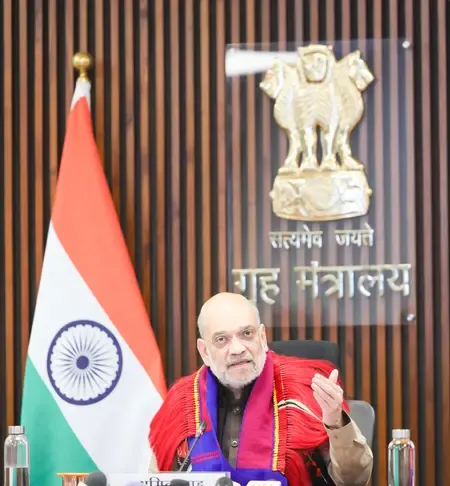
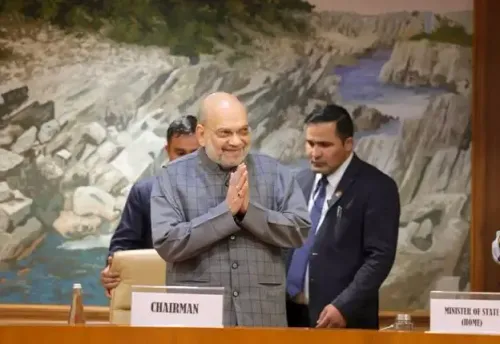
Home Minister Amit Shah described mule accounts as "big hurdles in curbing cyber crimes" and called the move a "next gen shield" for citizens.
RBIH is a wholly-owned subsidiary of the RBI , focused on technology-led financial innovation.
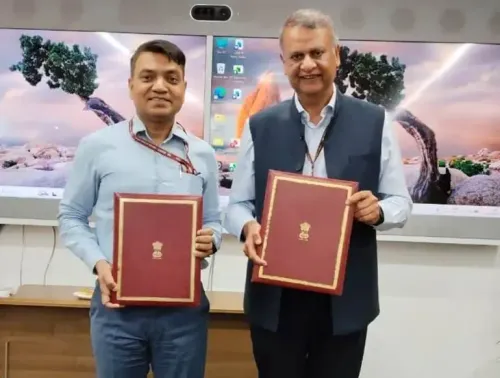
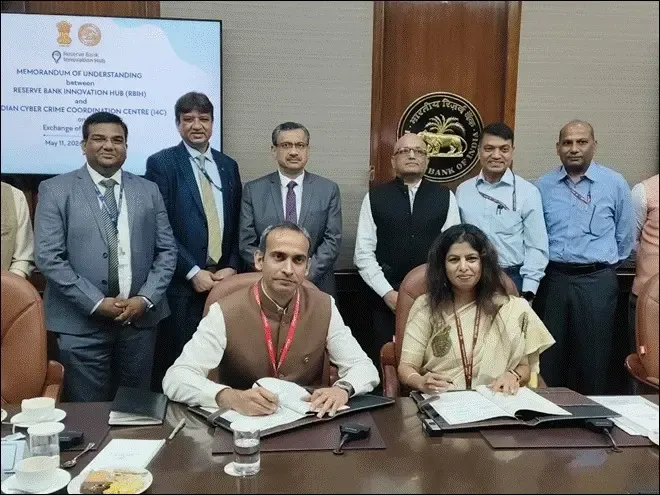
The Union Home Ministry's Indian Cyber Crime Coordination Centre (I4C) and the Reserve Bank Innovation Hub (RBIH) signed a Memorandum of Understanding (MoU) on Tuesday, 13 May 2025, in New Delhi, to jointly deploy artificial intelligence for detecting mule accounts and combating cyber-enabled financial fraud across India's banking and digital payments ecosystem. The agreement marks a significant escalation in the Centre's effort to coordinate law enforcement and financial sector intelligence under a single AI-driven framework.
What the MoU Covers
Under the agreement, I4C and RBIH will collaborate on sharing mule account-related intelligence and suspect identifiers sourced from I4C-MHA's Suspect Registry. This data will feed directly into AI-driven fraud detection systems, most notably MuleHunter.ai, which is already being implemented across banks. The MoU also covers fraud-risk intelligence sharing, analytical support, and operational coordination to strengthen proactive fraud detection and prevention mechanisms.
RBIH will utilise the datasets for training and enhancing AI-driven fraud-risk assessment models, including MuleHunter.ai, improving the system's ability to identify hidden or dormant mule accounts at scale.
Who Signed and Who Was Present
The MoU was signed by Roopa M, Inspector General (Admin), I4C, and Sahil Kinni, CEO, RBIH. The signing ceremony was attended by Rohit Jain, Deputy Governor, Reserve Bank of India (RBI); Anand Swaroop, Special Secretary (IS), Ministry of Home Affairs (MHA); Rakesh Rathi, Joint Secretary (CIS), MHA; Rajesh Kumar, CEO, I4C; and other senior officers from RBI, RBIH, and I4C.
What Home Minister Amit Shah Said
Home Minister Amit Shah, in a post on X, said:
Point of View
While banks held transaction patterns, and neither spoke to the other in real time. Feeding the Suspect Registry into MuleHunter.ai changes that architecture. The harder question is scale — India's digital payments ecosystem processes billions of transactions monthly, and AI models are only as good as the data they are trained on. If the Suspect Registry has coverage gaps or latency issues, MuleHunter.ai's detection edge narrows quickly. The government's framing of this as a citizen-facing 'next gen shield' is politically useful, but the real test will be in conviction rates and fraud recovery figures, neither of which has been publicly committed to.
NationPress
17 Sept 2026
Frequently Asked Questions
What is the I4C-RBIH MoU about?
The MoU signed on 13 May 2025 between the Indian Cyber Crime Coordination Centre (I4C) and the Reserve Bank Innovation Hub (RBIH) establishes a framework for sharing mule account intelligence and suspect data to power AI-driven fraud detection systems, including MuleHunter.ai, across Indian banks.
What are mule accounts and why do they matter?
Mule accounts are bank accounts used by fraudsters to receive and transfer stolen funds, making it harder to trace the origin of cyber fraud. They are a key enabler of cyber-enabled financial crime in India's digital payments ecosystem.
What is MuleHunter.ai?
MuleHunter.ai is an AI-driven fraud detection system developed under the RBIH framework and already being implemented across banks in India. It will now be enhanced using suspect data from I4C's Suspect Registry to improve its ability to identify hidden mule accounts.
Who are I4C and RBIH?
I4C, or the Indian Cyber Crime Coordination Centre, operates under the Union Home Ministry and coordinates India's cybercrime response, including the National Cybercrime Reporting Portal. RBIH, the Reserve Bank Innovation Hub, is a wholly-owned subsidiary of the RBI focused on technology-led financial sector innovation.
What did Home Minister Amit Shah say about the MoU?
Amit Shah posted on X that the move would 'swiftly detect and cull hidden mule accounts' by feeding I4C data into AI systems, describing it as a 'next gen shield against cyber crime' for citizens.