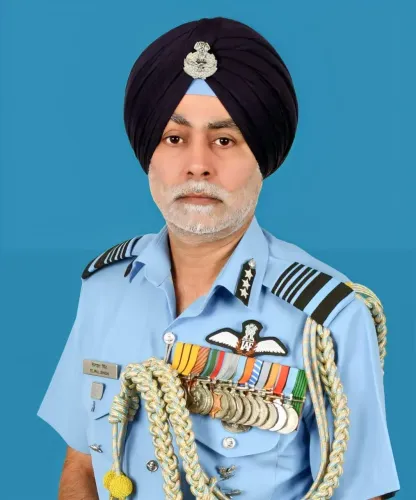
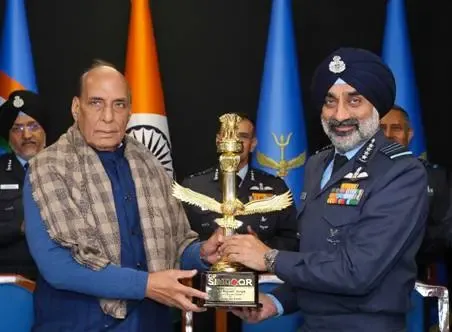
Air Chief Marshal Amar Preet Singh retires after leading IAF through Operation Sindoor
Synopsis
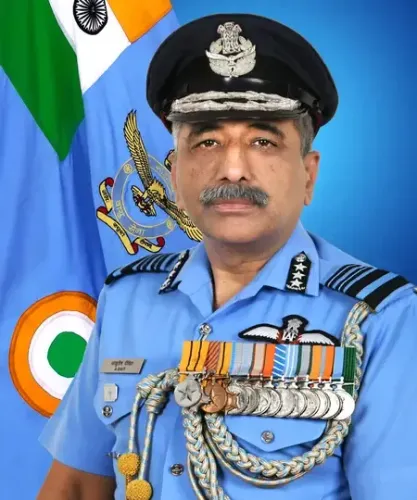
Air Chief Marshal Amar Preet Singh retires on 30 October having led the IAF through Operation Sindoor — a joint precision campaign spanning 1,200 km that, by his own account, showed the force's 'destructive power' to the world. With over 5,000 flying hours and a career built around Tejas and indigenous capability, he leaves behind an air force measurably more confident in its identity and reach.
Key Takeaways
Air Chief Marshal Amar Preet Singh retires on 30 October 2026 after more than four decades with the IAF.
He assumed office as Chief of the Air Staff on 30 September 2024 , succeeding to one of India's highest military commands.
His tenure was defined by Operation Sindoor , launched in response to the Pahalgam terror attack of April 2025 , with air strikes across a front of 1,200 km in width and 200 km in depth .
Singh accumulated over 5,000 flying hours on fixed- and rotary-wing aircraft and played a key role in testing the indigenous LCA Tejas .
He commanded 22 Squadron and led the MiG-29 Upgrade Project in Russia during his earlier career.
His three-pillar legacy: modernisation , self-reliance , and operational effectiveness .
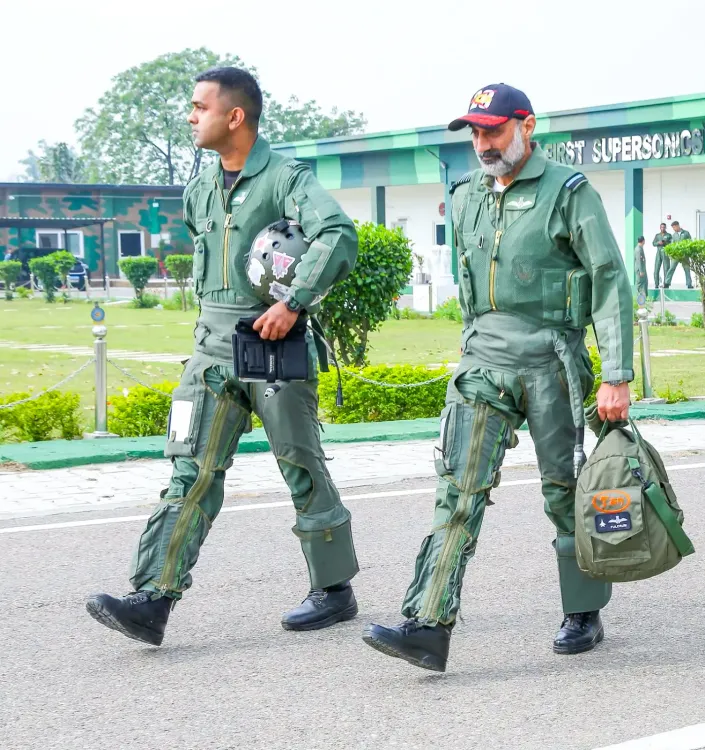
Air Chief Marshal Amar Preet Singh retires on Saturday, 30 October 2026, closing a distinguished over-four-decade career with the Indian Air Force (IAF) that will be most defined by his command during Operation Sindoor — one of India's most consequential military actions in recent decades. A qualified flying instructor and experimental test pilot with more than 5,000 flying hours across fixed- and rotary-wing aircraft, Singh leaves behind a legacy shaped by operational professionalism, technological vision, and a commitment to indigenous military capability.
A Fighter Pilot's Journey to the Top
Born in Delhi on 27 October 1964, Singh's military path began at the National Defence Academy before he moved to the Air Force Academy. He was commissioned as a fighter pilot on 21 December 1984, quickly earning a reputation as an exceptional aviator equally at home in the cockpit, the planning room, and on the training ground.
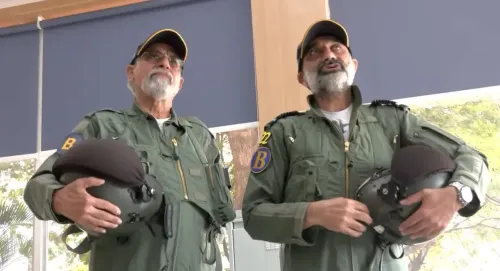
Over the decades, he commanded 22 Squadron, led the MiG-29 Upgrade Project in Russia, and played a significant role in the testing and development of India's indigenous Light Combat Aircraft (LCA) Tejas. His deep association with Tejas made him a vocal advocate of self-reliance in military aviation long before 'Atmanirbhar Bharat' became national policy. Colleagues describe him as grounded and authentic — a senior officer who, even as IAF chief, sought every opportunity to return to aircraft cockpits.
Taking Command Amid Modernisation Pressures
When Singh assumed office as Chief of the Air Staff on 30 September 2024, the IAF was navigating a complex set of challenges: procurement delays, capability gaps, and the urgent need to integrate emerging technologies into its force structure. He quickly drew attention for candid assessments of what the service lacked and for insisting that timelines promised to the armed forces must be honoured.
The 94th Air Force Day, celebrated on 8 October 2026, carried the theme 'Infallible, Impervious and Precise' — a phrase that encapsulated both the operational philosophy he championed and the standard he set for the force during his tenure.
Operation Sindoor: Defining a Legacy
Launched in response to the Pahalgam terror attack of April 2025 — attributed to Pakistan-aided terrorists — Operation Sindoor represented a major escalation in India's counter-terror posture. Under Singh's leadership, the IAF conducted precision strikes on terrorist infrastructure, coordinating closely with the Indian Army and Indian Navy in a joint campaign calibrated to deliver strategic effects while avoiding uncontrolled escalation.
According to Singh, the operation demonstrated the reach and flexibility of Indian air power across a front spanning approximately 1,200 km in width and 200 km in depth. In his own words, it showcased the force's 'destructive power' to the world. Analysts noted that Operation Sindoor underscored how far India's joint warfare capability had advanced, with air assets playing the lead offensive role while maintaining real-time coordination across services.
The Man Behind the Uniform
Beyond the operational record, Singh earned admiration for remaining accessible despite holding one of the country's highest military offices. His public interactions during and after Operation Sindoor revealed a leader capable of explaining complex military issues in plain language — a quality rare at that level of command.
Recently, he addressed young cadets with a message that, colleagues say, mirrored his own career philosophy: that great achievement does not require top examination scores, but demands perseverance, discipline, character, and a willingness to learn continuously from adversity.
What Singh Leaves Behind
His successor inherits an IAF reshaped across three broad themes that defined Singh's tenure: modernisation, self-reliance, and operational effectiveness. The push for indigenous platforms such as Tejas, the insistence on realistic procurement practices, and the operational benchmark set by Sindoor collectively represent a transformed institutional identity.
As India's strategic environment remains complex — with unresolved border tensions and an evolving regional balance of power — the standards Singh embedded in the IAF's doctrine and culture will be tested in the years ahead.
Point of View
Public proof-of-concept for joint precision warfare, but the structural questions — procurement timelines, squadron strength, and the pace of Tejas induction — remain works in progress. His candour about capability gaps was refreshing, yet the gaps themselves persist. The next chief inherits both a more confident IAF and an unfinished modernisation agenda that Singh spent two years accelerating but could not complete. Whether Sindoor becomes a repeatable template or a singular event depends less on doctrine and more on whether the indigenous platforms Singh championed actually reach the squadrons that need them.
NationPress
30 Oct 2026
Frequently Asked Questions
Who is Air Chief Marshal Amar Preet Singh?
Amar Preet Singh is the outgoing Chief of the Air Staff of the Indian Air Force, retiring on 30 October 2026 after over four decades of service. He is a qualified flying instructor and experimental test pilot with more than 5,000 flying hours, and is best known for commanding the IAF during Operation Sindoor in 2025.
What was Operation Sindoor and what role did the IAF play?
Operation Sindoor was a major Indian military action launched in response to the Pahalgam terror attack of April 2025, attributed to Pakistan-aided terrorists. Under Singh's command, the IAF conducted precision strikes on terrorist infrastructure across a front approximately 1,200 km wide and 200 km deep, coordinating with the Indian Army and Navy in a joint campaign.
When did Amar Preet Singh become IAF chief?
He assumed office as Chief of the Air Staff on 30 September 2024. He was commissioned as a fighter pilot on 21 December 1984 and served for over four decades before his retirement on 30 October 2026.
What is Singh's connection to the Tejas aircraft?
Singh played a significant role in the testing and development of India's indigenous Light Combat Aircraft, the LCA Tejas. His involvement made him a strong advocate for self-reliance in military aviation long before it became a national policy priority under 'Atmanirbhar Bharat'.
What legacy does Amar Preet Singh leave behind at the IAF?
Singh's legacy rests on three pillars: modernisation, self-reliance, and operational effectiveness. He championed indigenous platforms like Tejas, pushed for realistic procurement timelines, and guided the IAF through Operation Sindoor — setting a new benchmark for India's joint warfare capability.