PM Modi Hails India as Global Beacon of Hope and Development
Synopsis
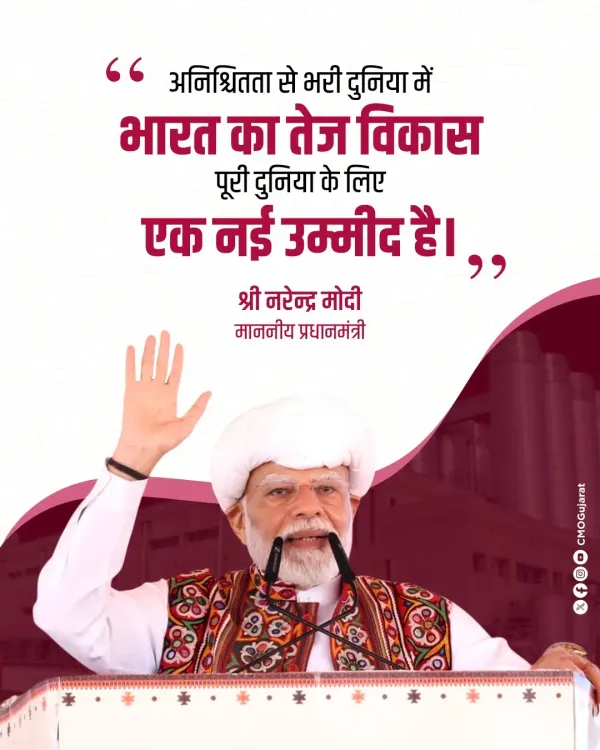
The Chief Minister's Office of Gujarat quoted PM Narendra Modi on October 30, 2026, declaring India a 'lighthouse of development and ray of hope' for the world, anchoring the claim in the #KisanKalyanSeRashtraKalyan — farmer welfare as the engine of national progress.
Key Takeaways
The Chief Minister's Office of Gujarat shared a statement on October 30, 2026 quoting PM Narendra Modi .
Modi declared India a 'lighthouse of development' and a 'ray of hope' for the entire world.
The post carried the hashtag #KisanKalyanSeRashtraKalyan , explicitly linking farmer welfare to national advancement.
The PM-KISAN direct income support scheme, launched in 2019 , is the flagship policy underpinning this narrative.
Gujarat's official account amplifying national PM messaging reflects a consistent pattern tied to the Prime Minister's home-state connection.
Upcoming central and state budget allocations for agricultural schemes will be the next concrete test of this narrative.
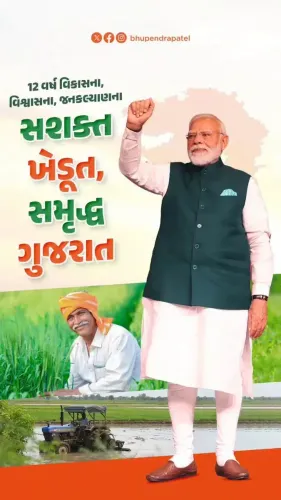
With a stride that once seemed improbable, India has crossed into a new chapter — and Prime Minister Narendra Modi is naming it out loud. The Chief Minister's Office of Gujarat shared a statement on Friday, October 30, 2026, in which the Prime Minister expressed pride that India, through its rapid strides of progress, has become a lighthouse of development and a ray of hope for the entire world. The post was tagged with the hashtag #KisanKalyanSeRashtraKalyan — 'From Farmer Welfare to National Welfare' — signalling that the framing anchors national ascent firmly in agricultural prosperity.
What the Gujarati statement says
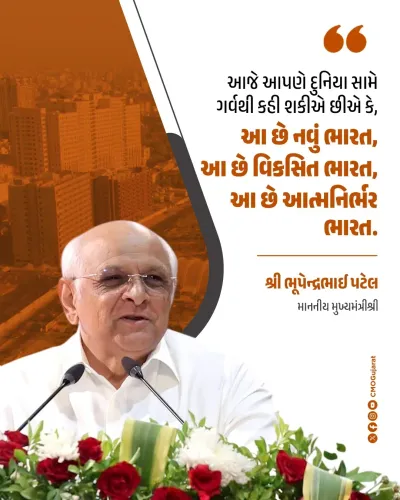
The original post, shared in Gujarati, quotes PM Modi as expressing that India, 'પ્રગતિની હરણફાળ ભરીને' ('leaping forward with the strides of progress'), has become a 'diva-dandi' — a lighthouse — of development for the world, radiating as a beacon of hope. The phrasing is deliberate: a lighthouse does not follow, it guides. The choice of imagery positions India not as an emerging economy still catching up, but as a reference point for others navigating development.
Kisan Kalyan as the foundation of Rashtra Kalyan
The hashtag #KisanKalyanSeRashtraKalyan is not incidental — it is the thesis. Since 2014, the central government has consistently linked farmer welfare to India's broader economic identity. The PM-KISAN scheme, launched in 2019, institutionalised this link by providing direct income support to farmers, framing agricultural stability as foundational to self-reliant national growth. The Gujarat CMO's amplification of a national PM statement follows a well-established pattern: as Modi's home state, Gujarat's official channels have regularly served as a resonance chamber for central government messaging, giving it regional texture and Gujarati-language reach.
India's global positioning — the bigger claim
The claim that India has become a 'ray of hope' for the world is the boldest note in the statement. It lands against a backdrop of India's growing economic weight — the country has consistently been among the world's fastest-growing major economies, and its voice in multilateral forums has grown correspondingly louder. For the government, connecting that global standing back to the farmer — the foundational figure in India's self-reliant growth narrative — is both a policy statement and a political one. The message is simple and durable: India rises when its farmers rise.
As the next budget cycle approaches, the real test of this narrative will be in the numbers allocated to agricultural schemes — and whether Parliament's debates match the ambition of the language.
Point of View
Making farmer welfare both a moral imperative and a macro-economic argument. By routing the 'global beacon' claim through agricultural policy, the government pre-empts criticism that India's growth story bypasses its rural majority. The Gujarat CMO's amplification is strategically significant: it grounds a sweeping national narrative in the Prime Minister's home-state identity, lending it cultural authenticity for a Gujarati-speaking audience. The real political pressure point, however, remains the gap between the lighthouse metaphor and the measurable outcomes in farmers' incomes — a gap opposition parties have consistently tried to widen.
NationPress
30 Oct 2026
Frequently Asked Questions
What did PM Modi say about India's global standing on October 30 2026?
PM Modi, quoted by the Chief Minister's Office of Gujarat, said India has leapt forward with the strides of progress and become a 'lighthouse of development' and a 'ray of hope' for the entire world.
What does #KisanKalyanSeRashtraKalyan mean?
'KisanKalyanSeRashtraKalyan' translates to 'From Farmer Welfare to National Welfare' — it is a central government slogan asserting that India's national progress is built on agricultural prosperity and farmer support.
What is the PM-KISAN scheme and how does it relate to this statement?
PM-KISAN, launched in 2019, provides direct income support to farmers across India. It is the flagship policy that operationalises the government's narrative linking farmer welfare to broader national economic growth.
Why did the Gujarat CMO post a statement quoting PM Modi?
The Gujarat Chief Minister's Office routinely amplifies statements by PM Modi, who is from Gujarat. This pattern of regional amplification gives national messaging a home-state dimension and wider Gujarati-language reach.
What should one watch for next regarding India's farmer welfare policies?
The next central and state budget allocations for agricultural schemes, and any related parliamentary discussions on farmer welfare measures, will indicate whether the government's stated ambitions translate into concrete funding commitments.