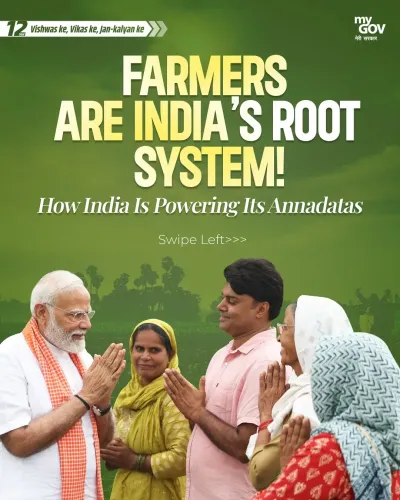
PM Modi marks 12 years of farmer welfare with Sanskrit tribute
Synopsis
Prime Minister Narendra Modi marked twelve years of farmer-prosperity initiatives on June 11, 2026, invoking a Sanskrit verse and hailing India's farmers as the civilisational backbone of the nation. The post anchors the government's long-running kisan-welfare narrative spanning PM-KISAN, PMFBY, and soil health programmes.
Key Takeaways
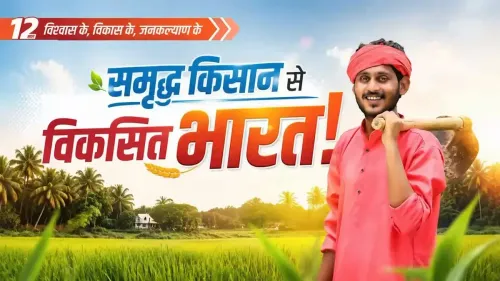
PM Modi posted on June 11, 2026 to mark #12YearsOfKisanSamriddhi , framing agriculture as the civilisational foundation of India.
He quoted a Sanskrit verse affirming that humanity sustains itself through farming and crops.
The government's flagship PM-KISAN scheme (launched February 2019 ) provides Rs 6,000 per year in direct cash transfers to eligible farmer families.
Supporting schemes include the Soil Health Card (2015) , PMFBY crop insurance (2016) , and the PMKSY irrigation programme .
Observers are watching for potential enhancements to PM-KISAN transfer amounts or new direct-benefit announcements in the next Union Budget .
Agriculture employs close to half of India's workforce, making farmer-welfare messaging a major political and policy priority.
Prime Minister Narendra Modi on Thursday, June 11, 2026, invoked ancient Sanskrit scripture and paid tribute to India's farming community, marking what the hashtag #12YearsOfKisanSamriddhi frames as twelve years of farmer-prosperity initiatives under his government. The post, shared in Hindi, positions agriculture not merely as a livelihood but as the civilisational bedrock of Indian society.
In the post, Modi wrote: 'कृषि केवल जीविका का साधन नहीं, बल्कि समाज और राष्ट्र के पोषण का मूल आधार है' — 'Agriculture is not merely a means of livelihood, but the fundamental basis of nourishing society and the nation.' He added that when the sweat of farmer brothers and sisters mingles with the soil, it becomes grain that sustains the lives of fellow countrymen.
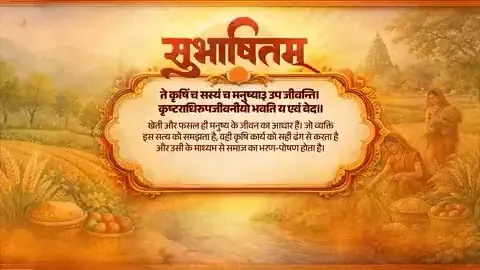
The Prime Minister also quoted a Sanskrit verse: 'ते कृषिं च सस्यं च मनुष्या उप जीवन्ति। कृष्टराधिरुपजीवनीयो भवति य एवं वेद॥' — broadly translated as: 'Humanity lives by agriculture and crops; one who knows this becomes a sustainer of cultivated prosperity.' The verse underscores the ancient roots of farming as a sacred social contract.
Context
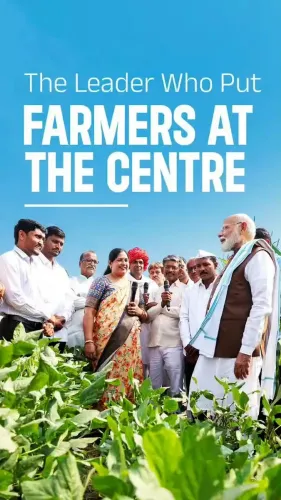
The #12YearsOfKisanSamriddhi hashtag marks a milestone in the BJP-led government's farmer-outreach narrative, which began with the party's return to power in May 2014. Over this period, the government has consistently framed agricultural policy as both an economic imperative and a civilisational duty, blending policy announcements with cultural and philosophical messaging.
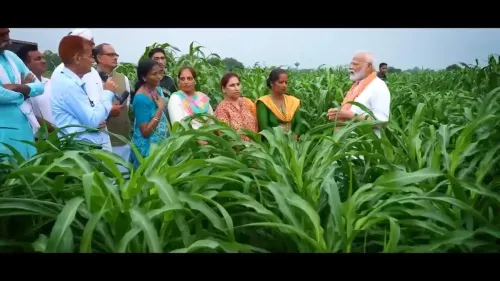
Modi's use of a Sanskrit shloka alongside a Hindi tribute is consistent with a long-running communication style that draws continuity between India's ancient agrarian heritage and present-day welfare architecture. The video attached to the post is expected to elaborate on the journey of kisan-centric programmes over the past twelve years.
Policy Backdrop
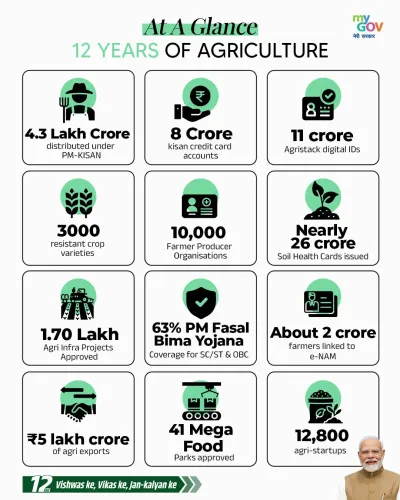
The government's flagship farmer-support scheme, Pradhan Mantri Kisan Samman Nidhi (PM-KISAN), was launched in February 2019, providing an annual direct cash transfer of Rs 6,000 to eligible landholding farmer families in three equal instalments. The scheme is among the largest direct-benefit transfer programmes in the world by beneficiary count.
Earlier interventions include the Soil Health Card scheme launched in 2015, aimed at promoting balanced fertiliser use and improving per-acre productivity. The Pradhan Mantri Fasal Bima Yojana (PMFBY), introduced in 2016, expanded crop insurance coverage to reduce farmers' financial exposure to weather and market shocks. The Pradhan Mantri Krishi Sinchai Yojana (PMKSY) pushed irrigation expansion under the slogan 'Har Khet Ko Pani'.
Together, these programmes form the policy spine that the #12YearsOfKisanSamriddhi campaign seeks to highlight, combining income support, risk mitigation, and productivity enhancement into a single narrative arc.
Stakeholders and Impact
India's agricultural sector employs an estimated nearly half the country's workforce and remains the primary source of livelihood for hundreds of millions of rural households. Any sustained policy focus on farmer welfare carries significant electoral and social weight, particularly ahead of state assembly cycles.
Farmer organisations and rural economists have broadly welcomed direct-transfer schemes such as PM-KISAN for providing a floor income, though debates continue over the adequacy of the Rs 6,000 annual transfer relative to rising input costs. The government's messaging on this anniversary is likely to be received by supporters as an affirmation of commitment, while critics may use the occasion to press for higher support prices and faster debt relief.
What's Next
Attention will now turn to whether the #12YearsOfKisanSamriddhi campaign is accompanied by fresh policy announcements — including potential enhancements to PM-KISAN transfer amounts or new direct-benefit windows — in the lead-up to the next Union Budget. State-level rollout updates on existing kisan schemes and any expansion of PMFBY coverage are also being watched closely by agricultural-policy observers. The Prime Minister's continued personal engagement with farmer-welfare messaging signals that agriculture will remain a central pillar of the government's political and policy identity through the next electoral cycle.
Point of View
Insulating farmer-outreach messaging from purely technocratic critique by elevating it to a moral register. The anniversary marker also serves as a political stocktaking moment, reminding rural constituencies of a twelve-year investment in direct transfers, insurance, and irrigation ahead of future electoral cycles. Whether the milestone is accompanied by substantive new announcements will determine whether the messaging translates into tangible policy momentum or remains primarily symbolic.
NationPress
26 Oct 2026
Frequently Asked Questions
What is #12YearsOfKisanSamriddhi about?
#12YearsOfKisanSamriddhi marks twelve years of the BJP-led government's farmer-welfare initiatives since 2014, including schemes such as PM-KISAN, PMFBY crop insurance, and the Soil Health Card programme.
What did PM Modi say about farmers on June 11, 2026?
PM Modi said agriculture is not merely a livelihood but the fundamental basis of nourishing society and the nation, and quoted a Sanskrit verse affirming that humanity lives by farming and crops.
What is the PM-KISAN scheme and how much money do farmers get?
PM-KISAN (Pradhan Mantri Kisan Samman Nidhi) is a central government scheme launched in February 2019 that provides Rs 6,000 per year in three equal instalments as direct income support to eligible landholding farmer families.
What Sanskrit verse did Modi quote about farming?
Modi quoted a verse — 'ते कृषिं च सस्यं च मनुष्या उप जीवन्ति' — which broadly translates as 'Humanity lives by agriculture and crops; one who knows this becomes a sustainer of cultivated prosperity.'
What farmer schemes has the Modi government launched since 2014?
Key schemes include the Soil Health Card (2015), Pradhan Mantri Fasal Bima Yojana crop insurance (2016), PM-KISAN direct cash transfers (2019), and the Pradhan Mantri Krishi Sinchai Yojana irrigation push, collectively targeting income support, risk coverage, and productivity.